
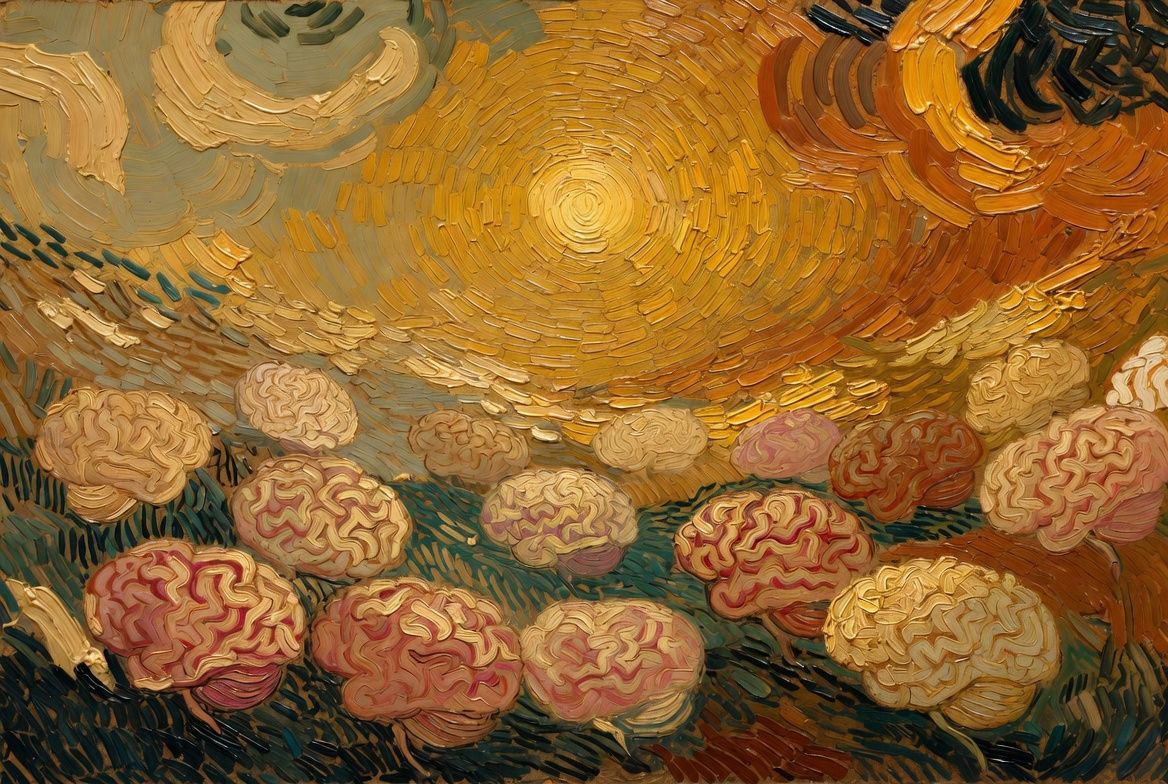

Your brain doesn’t know the difference between receiving a gift and writing a thank-you card for one. At least, not where it counts most—in the dopamine-drenched reward centers that dictate your mood, motivation, and resilience. While gratitude has long been dismissed as emotional fluff or Sunday school platitudes, neuroscientists peering into brain scanners over the past two decades have discovered something radical: saying «thanks» is less like sending a polite sentiment and more like installing a neurological upgrade.
The Gray Matter Transformation
Slide into an fMRI machine and think about something you’re grateful for. If you did this in Dr. Robert Emmons’ lab at the University of California between 2003 and 2020, researchers would have watched your prefrontal cortex—the command center for decision-making—light up like a city grid after dark. Nearby, your anterior cingulate cortex, the region policing your emotional reactions, would show heightened activity too.
But the real surprise comes weeks later. Stick with gratitude journaling for eight weeks, and follow-up scans reveal physical changes: increased gray matter density in the hippocampus, the seahorse-shaped memory center that also processes emotional context. Your brain isn’t just busy; it’s building tissue. This isn’t the temporary glow of happiness—it’s structural renovation.
«We’re seeing neuroplasticity in action,» notes Dr. Andrew Newberg, a neuroscientist whose 2008 imaging studies tracked these changes. «Gratitude isn’t just a nice emotion—it’s a neurological upgrade.»
The Chemical Payoff
That upgrade comes with a chemical payload. When you express gratitude—actually articulating it, not just feeling it—your mesolimbic pathway flares to life. This ancient reward circuit, typically associated with food, sex, and addictive drugs, dumps dopamine into your system at rates 25 to 40 percent higher than baseline states.
Think of dopamine as your brain’s save button. It encodes what’s worth remembering and repeating. By hijacking this pathway through deliberate thankfulness, you’re essentially tricking your biology into craving prosocial behavior. The evolutionary logic becomes clear in the data: gratitude evolved not to make us polite, but to bind us together, chemically reinforcing the connections that keep human groups intact.
But here’s where it gets interesting. The dopamine spike isn’t uniform. External expression—writing the letter, speaking the words—activates different neural networks than internal appreciation alone. Your brain seems to know the difference between privately counting blessings and communicating them, rewarding the latter with heavier neurochemical payouts. The posture of receiving thanks triggers yet another distinct cascade. You’re not just feeling; you’re architecting desire.
The Cortisol Crash
If gratitude builds up the brain’s reward infrastructure, it simultaneously dismantles its threat-detection systems. A 2020 meta-analysis synthesizing years of gratitude research found that consistent practitioners show cortisol levels 23 percent lower than controls. That’s not a marginal dip; it’s the neurochemical equivalent of stepping off a treadmill.
The downstream effects read like a pharmaceutical wish list. With cortisol dialed down, sleep quality jumps by 35 percent on average in self-reported studies. Your parasympathetic nervous system—the «rest and digest» network suppressed during chronic stress—gets the green light. Your heart rate variability improves. Your immune function shifts gears.
But neuroscientists remain cautious about these numbers. Most sleep and stress data relies on self-reported surveys, not polysomnography or salivary cortisol assays. The platform hosting many of these studies commercializes gratitude apps, raising the specter of publication bias toward positive results. What we know about the stress-buffering effects is suggestive and mechanistically plausible, but not yet bulletproof.
The Consistency Trap
The brain changes, but it doesn’t change immediately. Emmons’ research reveals a critical threshold: sporadic gratitude gets you temporary dopamine, but structural gray matter growth requires four to eight weeks of daily practice. Your neural architecture demands commitment.
This timeline creates a cruel paradox. The people who need gratitude most—those suffering from depression or anxiety—often struggle with the consistency required to rewire the very circuits fueling their distress. Indeed, studies show gratitude interventions work better for individuals with pre-existing mood disorders, possibly because they’re correcting more pronounced neural imbalances, but only if they can bridge the gap through those first difficult weeks.
There’s another catch buried in the research. We have no data on what happens after six months. The longitudinal picture is blank. Do hippocampal gains hold? Does the dopamine response habituate, requiring larger gratitude «doses» to achieve the same effect? The brain’s plasticity cuts both ways—unused pathways atrophy. We simply don’t know if gratitude functions like exercise (sustained benefits with maintenance) or like a course of antibiotics (permanent changes after completion).
Writing Versus Feeling
The most provocative finding rattling around gratitude research involves the mode of practice. Brain scans suggest that writing gratitude letters produces different neural signatures than silent reflection. Verbal expression to another person activates yet another distinct network. Your brain treats these as separate operations—psychologically adjacent but neurobiologically distinct.
This suggests that the «gratitude journal» industrial complex might be selling half the solution. If you want the full neurochemical architecture—dopamine reinforcement plus gray matter growth plus cortisol suppression—you might need to move beyond private rumination into the vulnerable territory of expressed appreciation. The neuroscience implies that gratitude kept private is gratitude only half-activated.
The research leaves us with a peculiar mandate. You possess an organ capable of physically remodeling itself through an act as simple as acknowledging receipt of kindness. The tools are free, the side effects are positive, and the structural changes are measurable. Yet the practice requires the one resource modern life depletes most ruthlessly: sustained attention, maintained for eight weeks minimum.
Your brain is waiting, quite literally, for you to say thank you. Whether you’ll build the habit remains the unstudied variable in the equation.



