
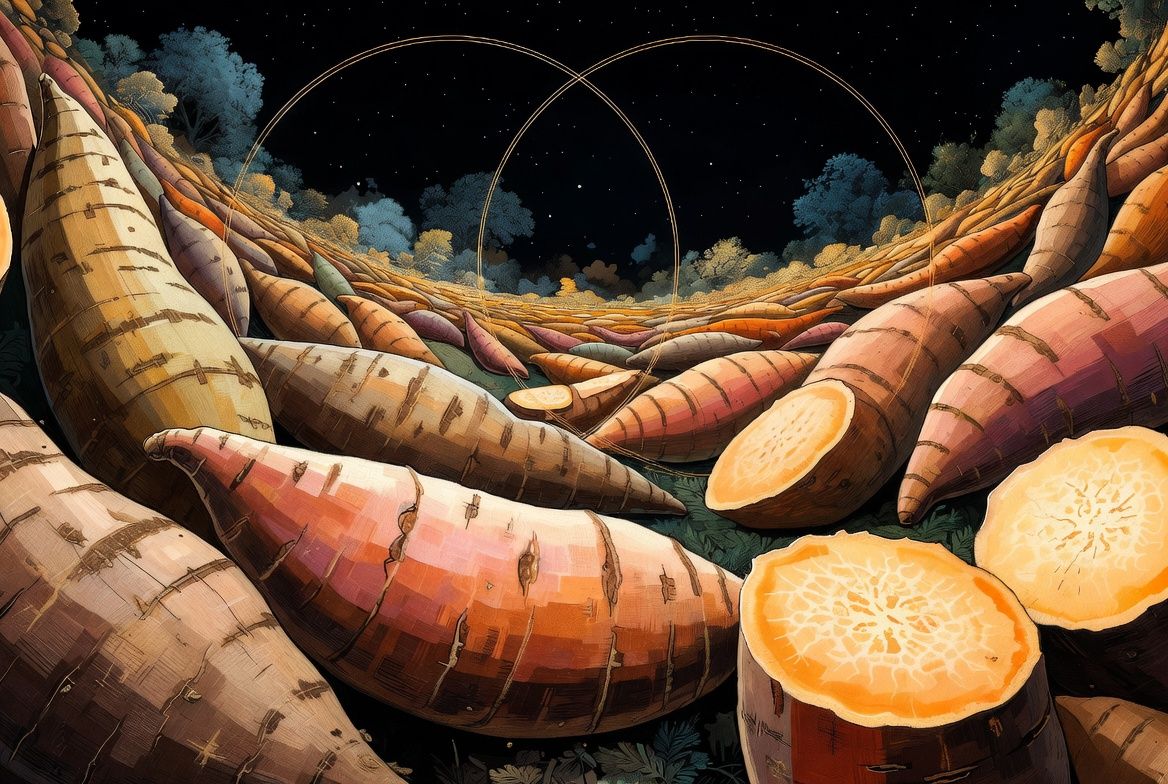

The 102-year-old Okinawan grandmother washing sweet potatoes in her garden has likely never sketched a Venn diagram. She has never categorized her life into four intersecting circles labeled «passion,» «profession,» «vocation,» and «mission.» Yet she possesses something that millions of Westerners are furiously whiteboarding in startup offices and corporate retreats, desperate to unlock: *ikigai*, the Japanese concept often translated as «reason for being.»
But here’s the tension lurking beneath the wellness industry’s latest obsession. The version of ikigai packaged in airport bestsellers and LinkedIn courses—the one promising to reveal your perfect career sweet spot—bears questionable resemblance to the philosophy that emerged from 17th-century Japanese literature or the unhurried daily rhythms of the world’s longest-lived communities. In our rush to optimize happiness, we may have flattened a profound cultural wisdom into yet another framework for professional ambition.
The Diagram That Didn’t Exist
Walk into any productivity seminar today, and you’ll likely encounter the four-circle model: what you love, what you’re good at, what you can be paid for, and what the world needs. The sweet spot where these converge? That’s your ikigai, supposedly.
But this is where it gets interesting. Anthropologists and Japanese philosophy scholars note that this graphical representation is a modern fabrication, popularized primarily by Dan Buettner’s *The Blue Zones* and subsequent Western self-help literature. While the term *ikigai* does appear in 17th-century Japanese texts, it emerged not as a life-planning methodology but as a poetic, almost untranslatable concept describing the subtle joy of existing—the feeling that makes life worth living on a Tuesday afternoon when nothing special is happening.
The traditional understanding aligns more closely with finding radiance in small routines than with plotting career dominance. Historical evidence suggests early uses referenced the pleasure of watching cherry blossoms, the satisfaction of craft, or the contentment of belonging to a place. It was rarely, if ever, about finding the intersection of marketable skills and global impact.
The Okinawan Paradox
Much of ikigai’s modern credibility stems from Okinawa, the Japanese island prefecture where residents boast exceptional longevity and where the concept supposedly permeates daily life. The narrative is seductive: find your purpose, live to 100.
Peel back the layers, however, and the picture grows more complex. While studies do correlate strong sense of purpose with reduced stress and improved cardiovascular health, the causation remains murky. More tellingly, anthropological fieldwork reveals that Okinawan elders rarely describe their longevity through the lens of structured «purpose-finding.»
Instead, they point to *moai*—tight-knit social support groups that share resources and emotional burdens—and to movement integrated into daily life rather than pursued as exercise. They cite *wabi-sabi*, the acceptance of imperfection and transience, and the concept of *wa*, or harmony with community. When researchers ask about ikigai, many describe it as emerging organically from these social bonds and simple routines rather than from a deliberate analysis of their skills and passions.
This creates a cultural misalignment that should give us pause. Japanese wellness traditions emphasize collective well-being and interdependence, whereas Western interpretations of ikigai often bend toward individual achievement and professional optimization. We’ve taken a philosophy rooted in Confucian social harmony and Shinto gratitude for ordinary moments, and duct-taped it onto hustle culture.
When Poetry Becomes a Performance Review
The collision becomes obvious when we consider how the modern framework handles the four supposed components. Traditional Japanese culture values these categories differently than Western career coaching suggests.
Take «what you can be paid for.» In historical context, economic survival was acknowledged as necessary, but rarely celebrated as a path to transcendence. Similarly, «what the world needs» in traditional ikigai emphasizes local, immediate contribution—caring for neighbors, maintaining rituals, keeping streets clean—rather than the grandiose mission statements common in Silicon Valley.
The risk isn’t merely academic gentrification. When we force ancient concepts into contemporary productivity frameworks, we create pressure rather than relief. The anxiety of not having «found» one’s ikigai becomes another failure metric, another way to feel insufficient in a culture already saturated with self-improvement mandates.
Finding the Thread Without Clutching the Map
So where does this leave the thoughtful reader seeking more meaning? Abandoning the concept entirely would mean discarding genuine wisdom about longevity and satisfaction simply because it was poorly translated.
The alternative requires holding two truths simultaneously. Yes, having a sense of purpose correlates with better health outcomes and emotional resilience. And yes, the four-circle model offers a useful heuristic for career reflection, even if it’s a modern invention. But authentic application demands stripping away the self-help gloss.
Start by rejecting the optimization mindset. Rather than auditing your life for perfect alignment between passion and profit, examine where you already experience *flow*—those hours that vanish without your noticing while you garden, converse, or solve problems. Notice what the philosopher Byung-Chul Han calls «the scent of time,» the moments when you are fully present rather than projecting into an optimized future.
Then look outward. The most robust research on Okinawan longevity doesn’t center on individual purpose statements but on *moai*—the practice of gathering regularly with a fixed group who support each other unconditionally. Purpose, it turns out, often arrives as a byproduct of belonging, not the other way around.
The Unfinished Business of Being
We don’t have definitive proof that ikigai causes longevity, or that drawing four intersecting circles will reveal your destiny. The historical record is too fragmented, the cultural translation too noisy, and human purpose too idiosyncratic to fit any diagram.
What we do know is that the Okinawans living into their 90s and 100s rarely attribute their vitality to having solved the puzzle of their existence. They cite instead the sweet potatoes tended this morning, the neighbor visited yesterday, the acceptance that some days have no measurable output but still contain immeasurable worth.
Perhaps the true secret isn’t finding your ikigai at all, but recognizing that you already have it—in the unremarkable rituals that bind you to others and to the present moment. The Venn diagram, after all, is just geometry. The poetry is in the living.



