
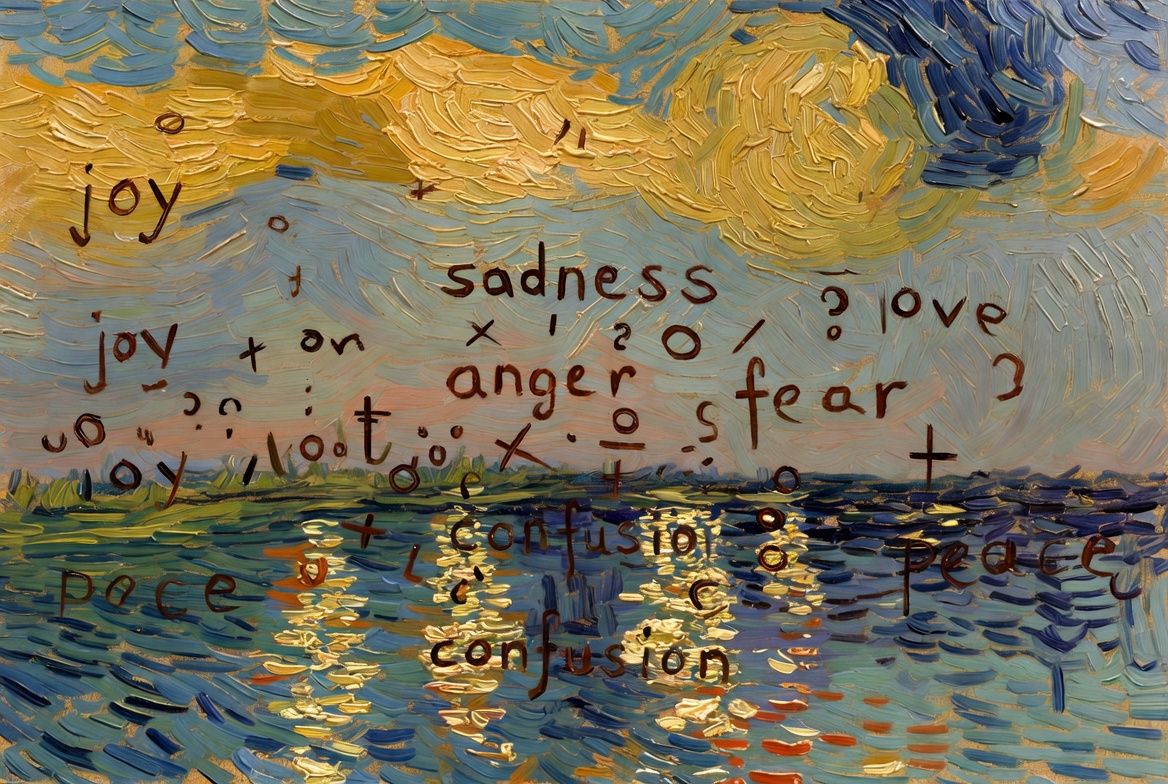

What if saying «I am furious» out loud could instantly dampen the electrical storm in your brain? In 2007, a team of UCLA researchers slid volunteers into an fMRI machine and discovered exactly that: the simple act of labeling an emotion—»this is anger,» «this is anxiety»—reduced activity in the amygdala, the brain’s fear headquarters, by roughly thirty percent. The subject didn’t need therapy, medication, or a meditation retreat. They just needed a vocabulary.
This is the central paradox of emotional regulation. We spend our lives trying to outrun our feelings, suppressing the tremor in our hands or the heat in our cheeks, only to find that acknowledgment—not struggle—holds the off switch. But that’s only half the story.
The Half-Second That Changes Everything
Emotion arrives in milliseconds. Before you consciously register the snarky email or the cut-off driver, your amygdala has already fired, flooding your bloodstream with cortisol and adrenaline. Your heart rate spikes. Your vision narrows. You are, physiologically speaking, already in motion to reply, yell, or slam a door.
The entire field of emotional regulation hinges on what happens in the gap between that biological alarm and your next move. «The skill is not about never getting triggered,» explains the Process Model of Emotion Regulation developed by Stanford psychologist James J. Gross. «It’s about inserting a pause.»
This pause is not metaphorical. It is neuroanatomical. When you deliberately engage your prefrontal cortex—the brain’s planning and reasoning center—you literally downregulate the amygdala’s alarm. Techniques like the «S.T.O.P.» method (Stop, Take a breath, Observe, Proceed) or the simple «Stoplight» visualization (Red for pause, Yellow for think, Green for act) are not feel-good mantras. They are protocols designed to buy your rational brain roughly 250 milliseconds to catch up to your nervous system.
Without that pause, you aren’t choosing your reaction; your adrenaline is. Which brings us to the hardest truth: willpower is a myth. Emotional regulation is a learned skill set, not a character trait.
Why Suppression Always Backfires
We often confuse regulation with control. We clamp down on tears, swallow rage, and paste on a smile, believing that good people keep a lid on their chaos. This is suppression, and psychological science has shown it to be toxic. When you suppress an emotion, your physiological stress response continues raging while you expend massive cognitive energy pretending you’re fine. Blood pressure stays elevated. Memory formation suffers. The emotion, denied an exit, often returns later with compound interest.
True regulation, by contrast, is modulation. It is the difference between sealing a pressure cooker and adjusting the flame. Dialectical Behavior Therapy (DBT), developed by Marsha Linehan, treats this distinction as sacred. The therapy explicitly teaches «distress tolerance»—how to survive a crisis without worsening it—rather than suppression.
Consider the urge to send a scathing text at 2:00 AM. Suppression tells you to be a «bigger person» and white-knuckle through the rage. Regulation gives you tools like «urge surfing»: observing the craving to retaliate as a temporary wave of sensation, noting how it crests and recedes in the body without acting on it. Research shows that waiting just ten minutes reduces the likelihood of impulsive action by half. The feeling doesn’t own you; you are merely hosting it for a while.
The Reinterpretation Trap
Of all the strategies in the toolbox, cognitive reappraisal—changing the meaning of a situation to alter its emotional impact—packs the strongest statistical punch. Meta-analyses show it reliably reduces negative affect with an effect size between -0.45 and -0.60, making it more potent than simple distraction. The technique is elegant: instead of «This presentation will expose me as a fraud,» you rehearse, «This is a chance to share something I’ve worked hard on.»
But here is where the research gets complicated. Reappraisal can fail, or even harm, when deployed in contexts of genuine injustice or uncontrollable trauma. Telling yourself «Maybe being laid off is a gift» while facing eviction isn’t regulation; it’s self-invalidation. The strategy works best when the situation is changeable or when you need functional coping, not philosophical resignation. Cultural context matters too—psychology suffers from a well-documented «WEIRD» bias (Western, Educated, Industrialized, Rich, Democratic), and emotional norms vary dramatically across societies. What counts as healthy reappraisal in Palo Alto might read as toxic positivity elsewhere.
When reappraisal feels like gaslighting yourself, the alternative isn’t suppression; it’s radical acceptance. Borrowed from DBT, this skill involves acknowledging reality exactly as it is, even when you hate it: «I am stuck in horrific traffic, I cannot change it, and fighting reality only increases my suffering.» Paradoxically, this surrender often provides the calm needed to navigate the problem.
Your Body Is the Steering Wheel
We tend to treat emotions as cerebral events, but they are fundamentally physical. Anxiety lives in clenched jaws; grief pools in heavy chests; rage heats the face. This is why somatic strategies often outperform purely mental efforts during high arousal.
Progressive Muscle Relaxation—systematically tensing and releasing muscle groups—breaks the feedback loop where a tense body signals danger to a vigilant brain. Diaphragmatic breathing activates the parasympathetic nervous system, the biological brake pedal. These aren’t relaxation techniques for spa days; they are emergency interventions. When your heart is hammering at 120 beats per minute, you cannot cognitively reason your way to safety. You must hack the hardware first.
Mindfulness practices, particularly the body scan, train you to notice early physical signatures of emotion—the slight tightness in the shoulders that precedes a blow-up—giving you more time to deploy your pause. An eight-week Mindfulness-Based Stress Reduction (MBSR) course, developed by Jon Kabat-Zinn, has shown significant pre- and post-test gains in regulatory capacity, literally rewiring areas of the brain associated with self-awareness.
The Eight-Week Rewiring Plan
Emotional regulation is not a light switch; it’s a muscle that atrophies without use. The timeline follows a predictable arc:
Weeks 1–2: Awareness and the Pause. Your only job is to notice. Set three daily alarms and, when they trigger, scan your body for tension. Practice the S.T.O.P. technique in low-stakes moments—waiting for coffee, standing in line—so the neural pathway is greased before you need it in a crisis.
Weeks 3–6: Strategic Pairing. Match specific emotions to specific tools. For anxiety: diaphragmatic breathing. For anger: cognitive reappraisal or decatastrophizing («What would actually happen if I failed? Really?»). For overwhelm: radical acceptance. Keep a simple log: trigger, intensity (1-10), automatic response, chosen skill.
Weeks 7 and Beyond: Generalization. Start small. Use skills during mildly annoying interactions before attempting them during family crises. Expect failure. When you explode despite your best intentions, practice self-compassion—another DBT core skill. The goal is not perfect control; it is a shorter recovery time between trigger and regulation.
The Intelligence of Feeling
We often imagine emotional intelligence as the absence of difficult feelings—the serene executive who never sweats. The research suggests the opposite. High emotional intelligence is marked not by tranquility but by flexibility: the ability to feel rage without becoming rage, to recognize fear without being ruled by it, and to choose from a menu of responses rather than defaulting to ancient survival scripts.
The thirty percent drop in amygdala activity from affect labeling is just the beginning. Name the feeling. Create the pause. Let your prefrontal cortex come online. Then, and only then, choose your move. You aren’t controlling your feelings; you are finally controlling your relationship to them.



