
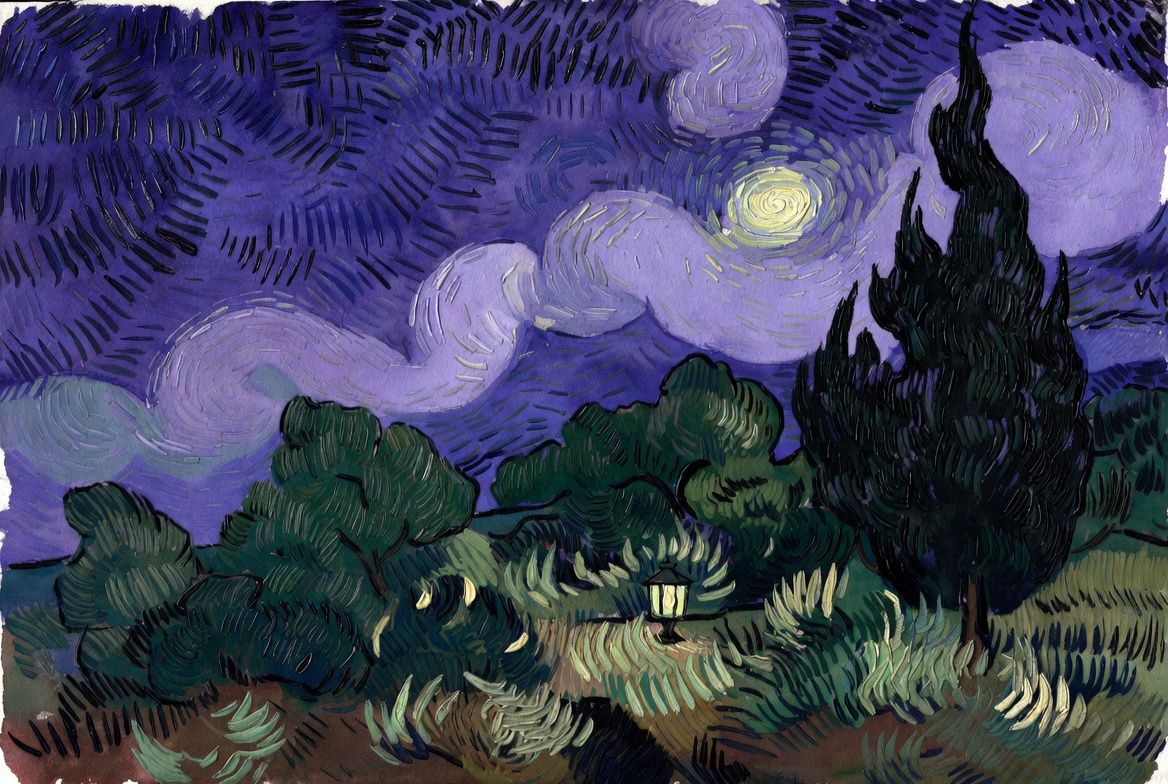

The notification buzzes at 11 PM, and instead of reaching for the phone, Sarah turns it face-down on the nightstand. In that small act of defiance—choosing the darkness of her bedroom over the blue-lit carousel of her friends’ Friday night stories—she feels something unexpected: not anxiety, but relief. A lightness. The distinct pleasure of being exactly where she is, which is exactly where she isn’t supposed to be.
This is the moment psychologists and lifestyle philosophers have been trying to name: the Joy of Missing Out, or JOMO. Unlike its anxious sibling FOMO (Fear of Missing Out), which has been dissected in countless think pieces since the early days of social media, JOMO represents a harder pivot. It is not merely the absence of anxiety, but anactive savoring of absence itself—a psychological rebellion against the tyranny of optimal living.
The Algorithm of Inadequacy
To understand why choosing to miss out feels like joy, you first have to understand the trap of never missing anything. FOMO operates on a simple but brutal equation: if experience is happening and you are not present for it, you are losing. The mechanism is ancient—social exclusion once meant literal death—but the delivery system is brand new. Social media didn’t invent comparison; it industrialized it.
The result is a particular kind of exhaustion that doesn’t show up on sleep trackers. It is the cognitive load of maintaining a parallel existence: the you that is performing life while the real you is living it, the constant background process of monitoring others’ curated highlights against your unedited reality. Psychologists note that this creates a perpetual state of future-tense living—you’re never fully where you are because you’re always aware of where else you could be, should be, would be if you were optimized correctly.
The irony, of course, is that everyone is performing, but nobody is watching. The party you’re anxious about missing? The attendees are all photographing it to prove they were there, each person simultaneously absent from the moment in their effort to document their presence.
The Radical Act of Disconnection
Where FOMO simulates scarcity—limited time, limited experiences, limited coolness—JOMO operates on an assumption of abundance. It suggests that your attention is not a passive resource to be harvested by every notification, but a finite and precious currency that you alone can budget.
This shift from passive consumption to intentional curation is where mental health enters the equation. Social anxiety, particularly in its modern manifestation, often stems not from a fear of people, but from the fear of evaluation—the constant, low-grade panic that you are being compared and found wanting. When you embrace missing out, you remove yourself from the evaluative arena entirely. You cannot lose a game you have stopped playing.
The benefits appear granular but accumulate quickly. There is the obvious: better sleep when you’re not doom-scrolling at midnight, deeper conversations when you’re not glancing at vibrating screens, reduced cortisol when your limbic system isn’t being pinged by indicators of others’ fabulous lives without context. But there is something subtler too—a reclaiming of narrative control. When you choose your absence, you author your presence.
The Architecture of Intentional Absence
JOMO is not hermitage. The critical distinction lies in choice versus compulsion. The person trapped in FOMO says yes to everything because they fear the regret of no. The person practicing JOMO says no to most things so they can say a genuine yes to what remains.
This requires a toleration of ambiguity that modern life actively discourages. To miss out joyfully, you must accept that you will never have perfect information about what you’re missing. You will not see the photo. You will not hear the gossip. You will not know if it was, in fact, the party of the year. This uncertainty—which previously generated anxiety—becomes, under JOMO, a protected space. It is the walled garden where your own experience can grow without being cross-pollinated by everyone else’s.
Therapists working with patients suffering from social comparison note something interesting: the comparison impulse weakens not when self-esteem improves, but when attention tightens. When you are genuinely absorbed in what you *are* doing—whether that’s washing dishes, reading a novel, or staring at clouds—the mirror neurons that fire when watching others’ highlight reels quiet down. JOMO, then, is less about social strategy and more about attentional training.
The Shadow Side of Optimization
There is a danger here, one that the wellness industry often obscures in its rush to commodify peace. JOMO can become another performance, another way to signal superiority. «I don’t even have social media anymore,» spoken with a certain tone, becomes merely another status marker, the digital equivalent of «I don’t even own a television.»
True JOMO carries no audience. It is not the rejection of social connection, but the prioritization of psychological coherence. It acknowledges that every yes is a no to something else, and that your life—your one finite life—deserves the dignity of your full attention, at least occasionally.
The Quiet After Logging Off
What remains when the fear subsides? For many who have navigated this shift, the answer is startlingly physical: a loosening in the chest, a lengthening of breath, the sudden awareness that they have been holding themselves tense against an invisible current. The joy of missing out is ultimately the joy of arriving—actually arriving—in your own life, without the ghost of digital elsewhere haunting the periphery.
The phone stays face-down. Sarah closes her eyes. Somewhere, a party continues without her, photos are being taken, memories made. And here, in the silence, another kind of memory forms—one that requires no documentation because it is being fully inhabited. The notification light blinks, ignored. The night is hers alone.



