

Viktor Frankl learned to spot the dying men by their shoes. In the Nazi concentration camps, he noticed that when a prisoner stopped scrubbing the mud from his leather boots—when the daily ritual of self-care collapsed into apathy—you could mark his days. The body followed the spirit. Frankl, who would survive to found the school of psychotherapy called logotherapy, understood something then that medical science has since quantified: lacking a «why» isn’t just an existential inconvenience. It’s a physiological hazard.
Researchers at the University of Michigan recently confirmed what the barbed wire hinted. In a 2022 study tracking thousands of adults, they found that people with a strong sense of purpose were 46% less likely to die during the observation period than those drifting without direction. That’s not a marginal lifestyle improvement; that’s a survival advantage comparable to quitting smoking. The mechanism isn’t mystical. Purpose lowers cortisol, regulates sleep, and immunizes against the chronic inflammation that kills us slowly. The human animal, it turns out, is built to require a narrative.
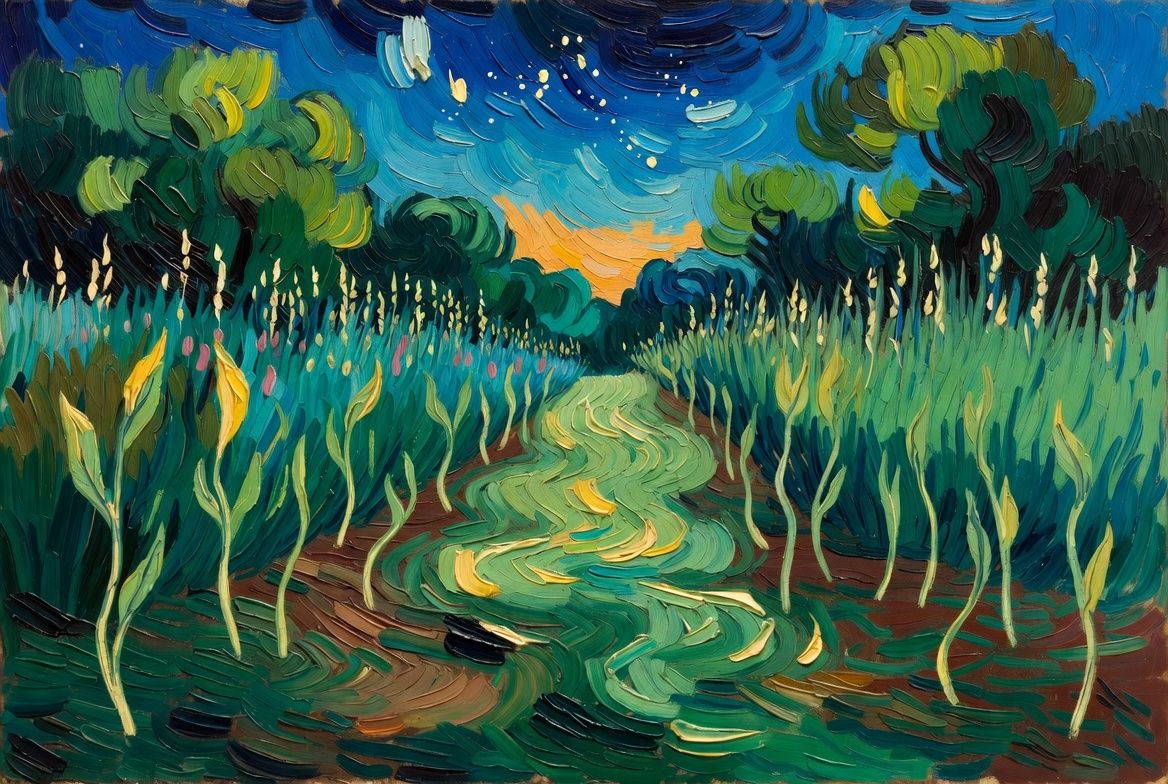
But here’s the trap: we’ve been taught to treat that narrative like a lost set of keys we’re meant to find. We wait for the thunderclap of revelation, the career pivot that finally «feels right,» the destiny that arrives like a package we forgot we ordered. The research suggests we’ve got it backward. Purpose isn’t a door you discover; it’s a garden you tend, and most of us are standing in the dirt waiting for the seeds to plant themselves.
The Myth of the Single Answer
Kendall Bronk, a developmental psychologist at Claremont Graduate University who has spent her career studying purpose, strips it down to its functional core: «applying your skills toward contributing to the greater good in a way that matters to you.» Notice what’s missing. There’s no requirement for scale. No mandate that you cure a disease or lead a movement. And yet, when researchers ask young adults why they feel anxious or depressed, those without purpose report distress at twice the rate of their peers—58% versus 36%—often because they believe their lives require a grand, capital-P Purpose that hasn’t arrived.
This confusion between purpose and glamour creates what positive psychologists call the «existential vacuum.» We fill it with distraction, with careerism, with the performance of success, while the actual components of meaning—connection, contribution, and growth—atrophy from neglect.
Viktor Frankl’s survival owed less to optimism than to action. He maintained his purpose by secretly drafting a manuscript on scraps of paper stolen from the crematoria, and by counseling suicidal prisoners to find one specific reason to survive until morning. The meaning wasn’t abstract; it was immediate, tactile, and often microscopic: completing a scientific text, protecting a fellow prisoner, simply enduring with dignity. «When we are no longer able to change a situation,» he wrote, «we are challenged to change ourselves.»
The Three Pathways and the Body That Follows
Modern research maps Frankl’s intuitive wisdom onto three concrete pathways: connection to others, contribution to something beyond the self, and personal growth. These aren’t philosophical categories; they’re biological switches. When engaged, they reduce the allostatic load—the wear and tear of stress—on the cardiovascular system. The data is stark: beyond the 46% mortality reduction, purpose-driven individuals show 24% lower rates of physical inactivity and 33% fewer sleep disturbances. Their hearts literally beat differently.
But the relationship is bidirectional and messy. While purpose clearly predicts health, robust health also makes it easier to pursue purpose—a correlation that frustrates researchers trying to establish clear causality. What seems clear, however, is that purpose acts as a buffer against the cortisol spikes that shred neural pathways and arterial walls. When you know why you’re getting up, the getting up becomes less toxic.
Why Volunteering Might Not Work (And What Will)
The self-help industry has commercialized this science into a vague prescription: «Find your passion.» Tony Robbins, whose commercial guides blend genuine insight with product placement, offers a sharper formulation: «Progress equals happiness.» But progress toward what?
Here’s where the research diverges from the Instagram aesthetic. Studies show that not all volunteering creates purpose; if the work feels obligatory or mismatched with your skills, it can increase burnout without providing meaning. Anne Colby, a Stanford researcher who studies purposeful engagement, emphasizes that the activity must be *absorbing*—it must trigger flow states where competence and challenge meet.
This explains why the standard advice—»take a strengths assessment and serve others»—often fails initially. The VIA Character Strengths Survey and the «Wheel of Life» assessment (where you rate satisfaction across domains from career to spirituality on a 0–10 scale) are useful tools, but only if you treat them as starting hypotheses, not verdicts. Purpose isn’t discovered through introspection alone; it’s validated through experimentation.
Steve Pavlina, writing in 2005, proposed a brute-force method that cuts through romanticism: sit down and write 50 to 100 answers to the question «What is my true purpose?» The first twenty will be clichés (family, wealth, happiness). By forty, you’ll hit the psychological bedrock where recurring themes emerge. The exercise works not because the fifty-first answer is magic, but because the sheer repetition forces you to distinguish between inherited expectations and genuine values.
The Quiet Purpose of Midlife and Beyond
Perhaps most radically, the research insists that purpose is provisional. It shifts across life stages, sometimes evaporating entirely after retirement or during major transitions—precisely when the health benefits are needed most. Patrick Hill’s longitudinal research found that maintaining purpose through midlife predicts longevity fourteen years later, but only if that purpose evolves. The parent who finds meaning in raising children must cultivate new sources when the nest empties; the executive who defines herself by her title must reconstruct identity when the title is removed.
This fluidity contradicts the cultural narrative of the «calling»—that singular vocational destiny revealed in youth. In reality, purpose often resides in what Frankl called the «defiant power of the human spirit»—the无数个 small choices to engage rather than withdraw. It can look like mentoring a junior colleague, mastering a musical instrument in your sixties, or the simple, radical act of gratitude journaling that retrains the brain to notice significance.
The Audit You’re Avoiding
So how do you actually do this without enrolling in an expensive coaching program? The evidence points to a iterative loop, not a one-time fix.
Start with the paper exercise: four columns. Values, Strengths (moments of flow), Passions (what you’d do unpaid), and Contribution (who benefits when you succeed). Look for the overlap, but don’t wait for perfect alignment. Choose one low-stakes experiment—two hours of volunteer work, a side project, a difficult conversation you’re avoiding—and track not the outcome, but the felt sense of engagement.
Keep what researchers call a «meaning journal,» noting moments of awe or gratitude. Review it weekly for patterns. The Meaning Movement, a research-based collective, emphasizes that meaning often arrives retrospectively; we recognize it in the rearview mirror, rarely through the windshield.
Crucially, schedule a quarterly «purpose review.» Ask: Is this still consonant with who I’m becoming? The question acknowledges that the self is a moving target. Purpose isn’t the compass that keeps you on one path; it’s the muscle that helps you navigate when the path disappears.
When the Medicine Becomes the Poison
A final caveat, often buried in the footnotes: the wellness industry has weaponized this science. Coaching platforms promising to «unlock your purpose» often sell the very static, destination-based thinking that creates anxiety. The data showing 46% mortality reductions and the Frankl quotes are compelling, but they can be used to pressure people into performative meaning-making—treating purpose as another metric to optimize, another form of productivity.
The research is clear that purpose correlates with health, but it remains stubbornly personal. For some, it will be the quiet tending of a family; for others, the loud disruption of an unjust system. Both register physiologically. The only wrong answer is the one that feels like a costume you can’t remove.
Frankl survived the war weighing fifty pounds less than when he entered, but carrying a theory that would outlast the Third Reich. He didn’t find his purpose; he constructed it, moment by moment, in circumstances designed to obliterate meaning. The rest of us have less excuse to wait for the perfect conditions. The shoes need scrubbing. The garden needs tending. The choice to begin is itself the first act of meaning.



