
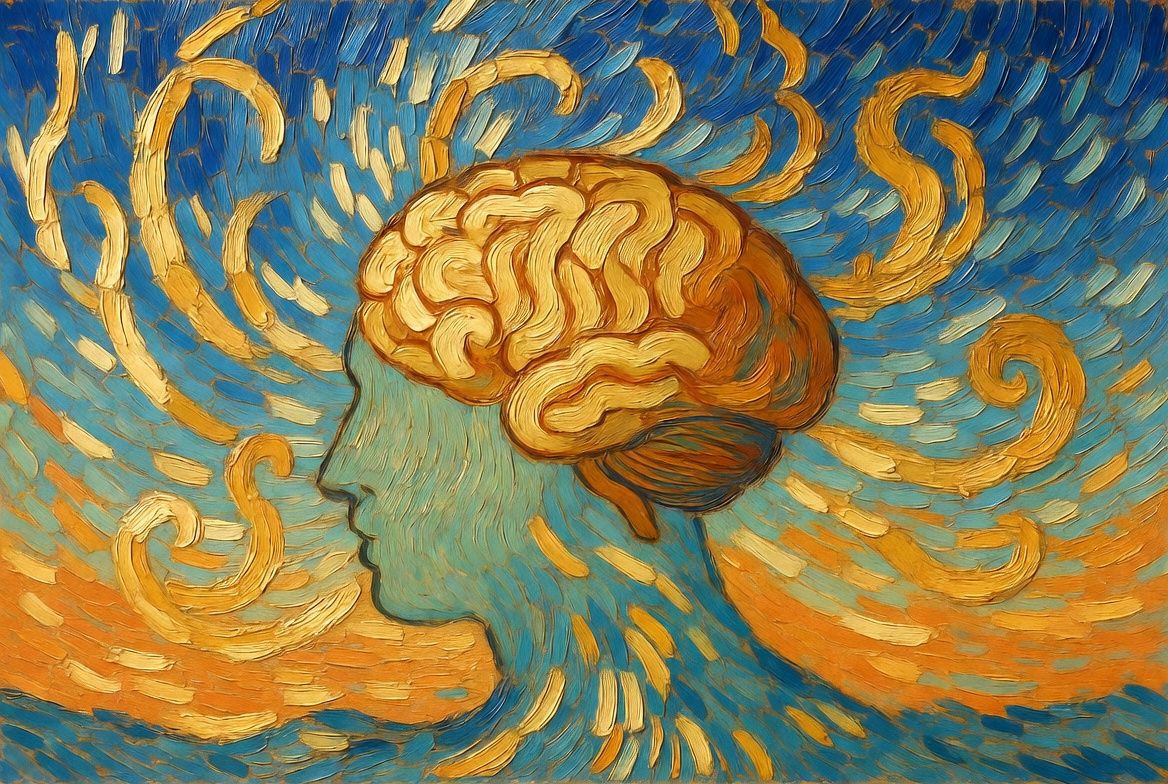

The 21-Day Neural Shift: Why Your Gratitude Journal Works Better Three Times a Week
If you’re writing in your gratitude journal every single night before bed, you might be doing it wrong. That’s not self-help contrarianism—it’s neuroscience. According to research from UC Berkeley’s Greater Good Science Center, participants who counted their blessings once weekly reported greater happiness boosts than those who forced the habit daily. The brain, it turns out, adapts to repetition; gratitude works best when it remains somewhat fresh, like a surprise encounter rather than a chore.
But when you do sit down to write—whether it’s Sunday evening or Wednesday afternoon—something remarkable happens inside your skull. Within three weeks of consistent practice, your brain begins to structurally remodel itself. This isn’t mood regulation; it’s neuroanatomy.
Your Brain’s Reward Circuitry: The Hardware of Gratitude
Express gratitude for your morning coffee, and your ventral striatum lights up like a slot machine hitting jackpot. This same region—the brain’s reward center—floods with dopamine whether you’ve won money or simply acknowledged that the barista remembered your order. The American Brain Foundation notes that gratitude simultaneously activates the medial prefrontal cortex, the brain’s CEO for social cognition and decision-making, while dialing down the amygdala’s threat-detection systems.
Here’s where it gets interesting: neuroplasticity means these aren’t temporary blips. Each time you deliberately scan for the positive, you’re carving neural pathways, making it physically easier for electricity to flow through circuits associated with contentment. Psychologists describe this as “pruning” the brain’s negativity bias—that evolutionary survival mechanism which kept our ancestors alert for predators but now manifests as 3 AM anxiety spirals. After several weeks, the anterior cingulate cortex—your emotional regulation hub—shows strengthened connectivity, essentially upgrading your brain’s shock absorbers.
The chemical cascade extends beyond dopamine. Gratitude triggers serotonin release while simultaneously suppressing cortisol, the stress hormone that, in chronic doses, erodes hippocampal neurons and inflames cardiovascular tissue. This biochemical shift activates the parasympathetic nervous system—your “rest and digest” mode—improving heart rate variability, a metric so reliably predictive of cardiac health and emotional resilience that clinicians use it to forecast longevity.
The Protocol: Specificity Over Frequency
The research draws a sharp line between journaling that changes your brain and journaling that merely passes time. The sweet spot appears to be one to three sessions weekly, lasting roughly fifteen minutes each. In those sessions, specificity is everything. “I’m grateful for my family” is neurological white noise; “I’m grateful my sister sent that article about urban gardening because she remembered I’ve been anxious about my balcony plants” creates a dopamine-rich memory trace.
Studies from the University of Manchester reveal that participants who wrote detailed gratitude lists before bed fell asleep faster and stayed asleep longer, likely because reduced cortisol levels quiet the hypothalamic-pituitary-adrenal axis that keeps us wired. Meanwhile, research cited in JAMA Psychiatry tracked 49,275 older women and found those scoring highest on gratitude scales showed a 9% lower risk of all-cause mortality over four years—though Harvard Health rightly cautions this shows correlation, not causation; grateful individuals likely practice other healthy behaviors too.
The most potent entries focus on people rather than possessions, and on surprises rather than routines. When you record that a friend called unexpectedly or that you avoided a traffic jam you’d anticipated, you’re training your brain to recognize contingency—the sense that good things aren’t guaranteed but are gifts. This explains why gratitude letters, whether sent or unsent, produce outsized happiness returns: they force you to articulate specific debts of gratitude to specific humans, activating the brain’s social bonding networks alongside its reward centers.
When the Data Gets Messy
But the literature isn’t seamless. While sources uniformly cite a 25% happiness increase and up to 30% reduction in depression symptoms, tracing these figures to specific peer-reviewed methodologies proves difficult. Much gratitude research relies on self-reported mood scales rather than fMRI scans or blood cortisol assays, leaving room for placebo effects and response bias.
There’s also the frequency debate. While UC Berkeley recommends three weekly entries, psychologist Sonja Lyubomirsky’s work suggests once weekly maximizes benefits—a discrepancy that likely reflects different study populations and measurement tools, but one that should give adherents permission to experiment. Daily journaling may trigger “hedonic adaptation,” where the brain habituates to the exercise and stops releasing reward chemicals.
Additionally, the research landscape carries commercial undertones. Several prominent sources promoting gratitude journaling sell journals, courses, or counseling services—a reminder that even science-backed wellness trends exist within market ecosystems.
The Cultural Code and the Personal Experiment
What works in Berkeley works—apparently—in São Paulo and Ankara. Cross-cultural studies validate gratitude journaling across Brazil, Poland, Turkey, and Malaysia, suggesting the neural architecture of appreciation transcends cultural context. Whether framed through Islamic thankfulness or Christian grace, the mechanism holds: intentional reflection on received benefits rewires neural patterns.
The practical implications are startlingly democratic. You don’t need special equipment, a retreat, or twenty hours weekly. You need a scrap of paper, a pen, and the discipline to write three specific sentences, three times a week, for at least three weeks. That’s the minimum effective dose—the point at which neuroplasticity kicks in and the prefrontal cortex begins its quiet renovation.
After three weeks, practitioners report not just improved mood but altered perception: the same commute reveals different details; the same stressors feel less catastrophic. Your brain has, quite literally, changed its default settings. You’re not forcing positivity; you’ve built a neurological structure where positivity is the path of least resistance.



