
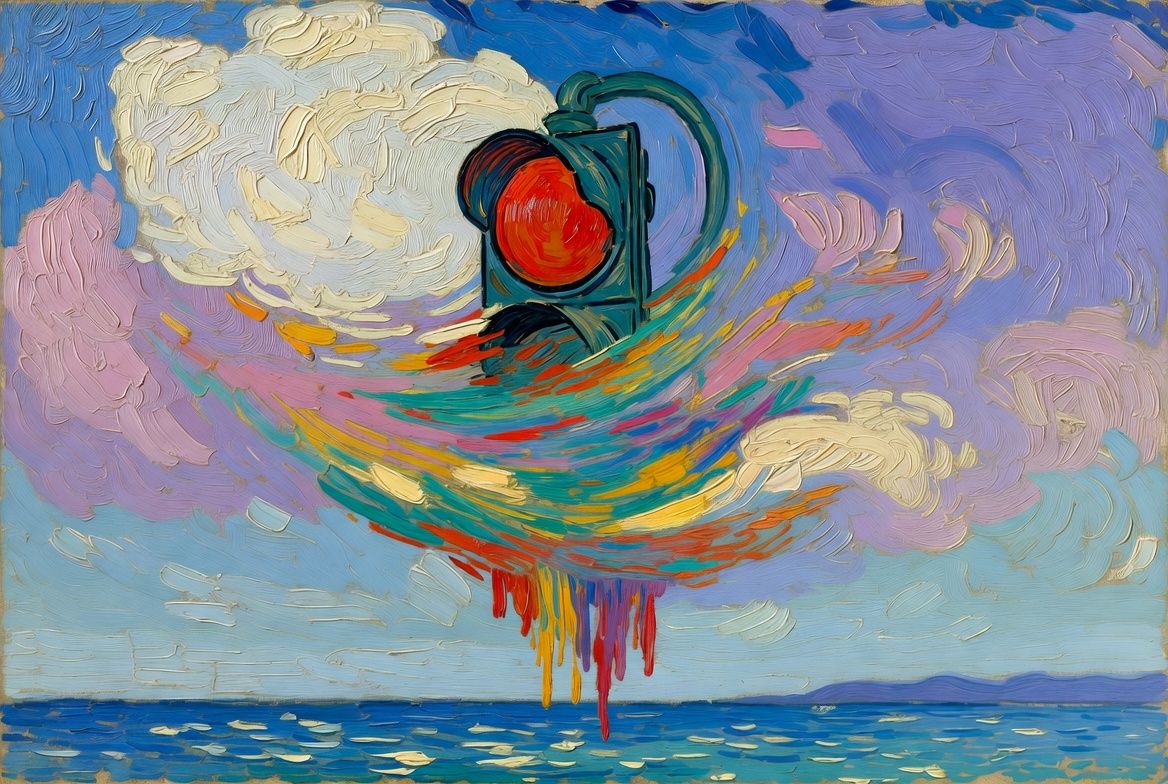

The traffic light turns red just as you reach the intersection. In that split second, your shoulders tense, your jaw locks, and a silent scream builds in your chest: *Not now. Not today. This can’t be happening.*
You haven’t moved, but you’re already exhausted. This is the physics of resistance—expending energy against an immovable object, leaving you depleted before the real challenge even begins.
Psychologist Marsha Linehan, who pioneered Dialectical Behavior Therapy (DBT) in 1993, identified this precise moment as the battleground for what may be the most misunderstood skill in modern mental health: **Radical Acceptance**. It is not, as the name might suggest, a Buddhist surrender or a passive shrugging of shoulders. It is a deliberate, tactical decision to stop burning fuel on a fire that cannot be extinguished, conservation of emotional energy that allows you to actually drive again when the light turns green.
The Second Arrow: Why Fighting Hurts More Than the Blow
Linehan’s framework rests on a distinction that sounds simple until you try to apply it: pain is inevitable, but suffering is optional. The research consistently shows that Radical Acceptance operates within DBT’s Distress Tolerance module—skills designed not to eliminate emotional agony, but to prevent it from metastasizing into something worse.
When we resist reality—whether it’s a diagnosis, a breakup, or that red light—we create what therapists call «secondary suffering.» As one clinician summarized in the research: «Fighting what is already happening just leads to more pain.» The initial hurt (the first arrow) comes from life itself. The second arrow—the one that often kills us—is the one we fire at ourselves through denial, bargaining, and the endless mental loop of *this shouldn’t be happening*.
Radical Acceptance means catching that second arrow mid-flight. It is the practice, according to sources medically reviewed by clinical psychologists like Cimone Safilian-Hanif, of «fully acknowledging and embracing the present moment, including its difficulties, without attempting to change or control it.» But here’s the critical nuance that separates it from toxic positivity: you don’t have to like it. You don’t have to approve. You simply stop pretending it isn’t real.
The Architecture of Letting Go
This is where Radical Acceptance diverges from the pop-psychology advice to «just get over it.» Linehan developed a structured, almost mechanical process for what looks like passive resignation from the outside. The research outlines two primary frameworks: a simplified four-step version used in clinical worksheets, and Linehan’s original ten-step protocol.
The four-step process functions like an emergency brake for emotional spirals:
1. **Isolate the event** you’re struggling to accept (not the story about it, just the facts).
2. **Trace the causal chain**—how did this happen, stripped of «shoulds» and blame?
3. **Accept the emotional wave** that follows without judging it as good or bad.
4. **Build the bridge**—if anything in the situation can be changed, accept what must stay and plan for what can move.
For deeper work, Linehan’s ten-step method includes specific cognitive maneuvers: observing your own resistance like a scientist, conducting a literal pros-and-cons analysis of accepting versus rejecting reality, and using «coping statements» as mental anchors. These aren’t affirmations. They are factual observations: *»I cannot change what has happened.» «The present moment is the only one I have control over.» «This is what happened, and I can handle it.»*
The mechanics matter because Radical Acceptance is, paradoxically, exhausting work initially. Manhattan CBT therapists note that strong emotions can create a «barrier to practice,» requiring auxiliary skills—like TIPP (Temperature, Intense Exercise, Paced Breathing) or ACCEPTS (Activities, Contributing, Comparisons)—to first stabilize the nervous system before acceptance becomes possible.
When Acceptance Becomes a Trap
But this is where the skill becomes dangerous. The research highlights a critical exception that could save lives: **Radical Acceptance is inappropriate in abusive or exploitative situations.**
In contexts involving domestic violence, workplace harassment, or immediate danger, acceptance can metastasize into learned helplessness. When safety is at stake, the goal isn’t to accept reality—it’s to change it, escape it, or survive it. Clinical sources explicitly warn against applying these techniques to situations where boundary-setting and protective action are paramount. The skill is a lifeboat for uncontrollable pain, not a prison for controllable injustice.
This limitation reveals the true shape of Radical Acceptance: it is a prerequisite for wise action, not a substitute for it. As Andrew Harris, a therapist with two decades of experience cited in the research, explains, «Denying the facts of reality will not change the facts.» Only by seeing the terrain clearly—accepting the diagnosis, the loss, the limitation—can we stop wasting energy on denial and direct it toward values-based change or meaningful adaptation.
DBT, ACT, and the Geography of Control
Radical Acceptance doesn’t exist in a vacuum. It shares DNA with Acceptance and Commitment Therapy (ACT), but the divergence tells us something about the human relationship with control.
ACT frames acceptance explicitly in service of values—accepting anxiety so you can give the speech, accepting grief so you can honor the love. DBT, born from Linehan’s work with suicidal and self-injuring patients, is more primal. It asks: Can you accept reality long enough to survive the next five minutes? It is survival first, values second.
Traditional Cognitive Behavioral Therapy (CBT), by contrast, often teaches us to challenge and change distorted thoughts. DBT and ACT suggest something more radical: what if the thought isn’t distorted? What if it’s just a thought, and you can let it exist without fighting it? As one ACT practitioner noted, the goal isn’t to change the thought—it’s to change your relationship with it.
This distinction matters culturally. One DBT team lead observed that Radical Acceptance can feel «counterintuitive in Western cultures that value control and ‘Manifest Destiny’ mentalities.» We are raised to believe that with enough effort, we can bend reality to our will. Radical Acceptance asks us to recognize the exact perimeter of our control—a boundary that, paradoxically, marks the beginning of actual power.
The Alchemy of Finally Seeing
The research suggests that Radical Acceptance works through a kind of emotional alchemy. By validating feelings as understandable responses rather than failures to «think positive,» it drains the shame that fuels suffering. By practicing cognitive defusion—seeing thoughts as mental events rather than commands—it creates space between stimulus and response. And by stopping the war with reality, it conserves the energy needed for whatever comes next.
Linehan’s original 1993 proposal has since been validated in dozens of randomized controlled trials. DBT remains the «gold-standard» treatment for chronic suicidal behavior in borderline personality disorder, with its distress tolerance module—including Radical Acceptance—serving as the emergency brake for emotional dysregulation.
Yet the skill remains underutilized because it feels, at first, like defeat. It is only after the fact—when the shoulders drop, the jaw unclenches, and the breath returns—that practitioners realize: acceptance isn’t the end of the fight. It’s the end of the *unnecessary* fight. And in that cessation, there is suddenly room to breathe, to plan, and to move again—exactly when the light finally turns green.



