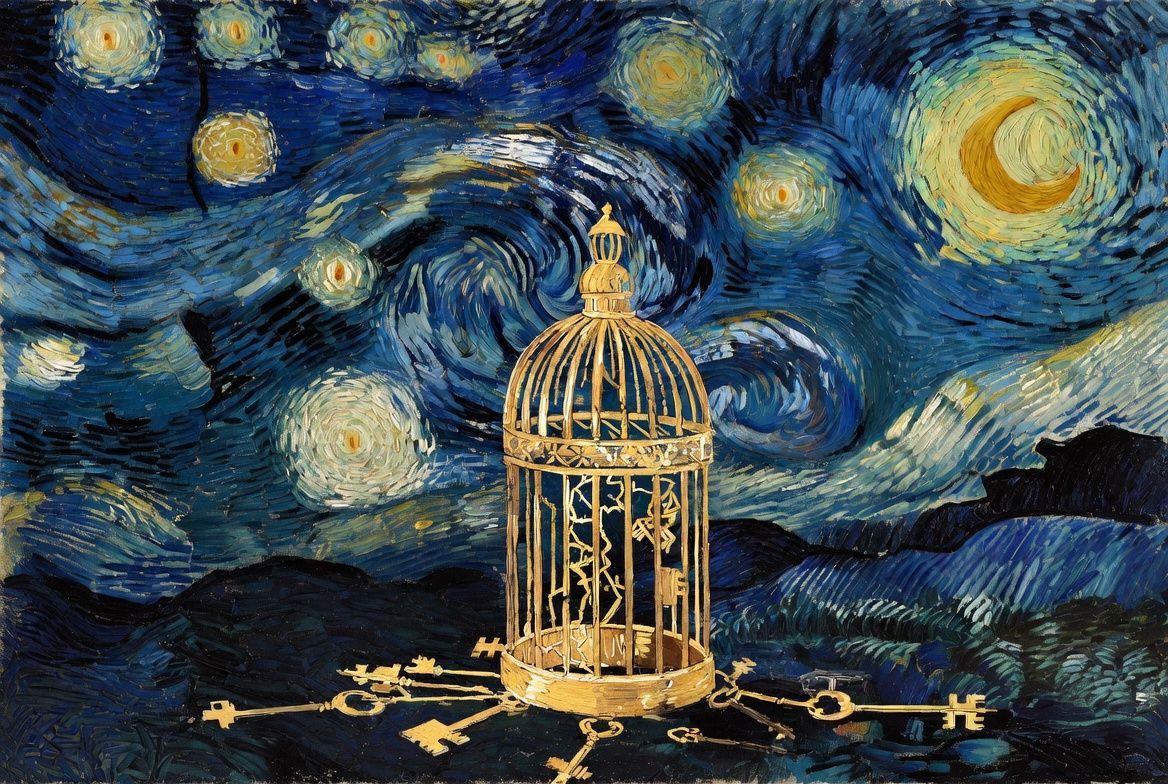

The Private Prison You Didn’t Know You Built
«Until you make the unconscious conscious, it will direct your life and you will call it fate.» Carl Jung dropped this warning a century ago, yet most of us still live as if our worst moments—those inexplicable rages, those sudden withdrawals, those compulsions to please or to hide—are simply bad luck or character flaws. They are neither. They are messages from a prisoner you’ve kept in solitary confinement since childhood, and shadow work journaling is the structured conversation that might finally set you both free.
But here is the first trap: This is not journaling as you know it. If you have ever filled a Moleskine with breezy recaps of your day or gratitude lists that feel like emotional panhandling, you have not done shadow work. Shadow work journaling is a deliberate archaeological excavation, requiring you to dig specifically into what Jung called the «shadow»—the repository of every trait, memory, and desire your ego rejected to secure social acceptance. This includes not just the shameful rage you felt at your father’s funeral, but also the assertiveness you labeled as «selfish» at age six, or the creativity you abandoned because a teacher called it «showing off.» According to guides compiled by specialized platforms like Reflection.app, the practice demands techniques foreign to casual diarists: timed free-writing where the hand cannot stop moving, and written dialogues where you literally interview the parts of yourself you have disowned.
The access point to all of this is your inner child, and this is where the practice becomes non-negotiablely serious. Research consistently points to ages zero through seven as the critical developmental window when your brain formed the emotional templates now running your adult relationships. Your reactions to criticism, your people-pleasing compulsions, your inability to trust—these are not adult decisions but childhood survival strategies frozen in time. As mindset coach Kenz Groh emphasizes, healing this «living part of the personality» requires more than documenting memories; it demands **reparenting**, an active, ongoing relationship where you—the adult—return to provide the safety, boundaries, and nurturing your younger self was denied. The journal becomes the meeting room where these two selves negotiate a ceasefire.
But entering that room without a protocol is reckless. Unlike the wellness industry’s cheerful encouragement to «journal your feelings,» legitimate shadow work requires safety rails. Sources converge on a strict container: **one to two sessions per week, maximum, lasting only 15 to 30 minutes.** (Some guides suggest up to 40 minutes, but warn that超过了 risks emotional flooding.) The sequence matters as much as the schedule. Effective prompts follow a specific cognitive arc, moving from narrative—*What happened?*—to affect—*What did I feel?*—to need assessment—*What did I need?*—and finally to integration—*What did I learn, and what do I want now?* This structure prevents the free-association spiral that leaves people raw and ungrounded, staring at walls for hours.
There is science behind the structure, not just mysticism. Research by Dr. James Pennebaker on expressive writing, cited by guides like mylifenote.ai, reveals that translating emotional experience into written language measurably reduces amygdala activation—the brain’s panic button—while strengthening prefrontal regulation. In essence, the act of writing moves trauma from the reactive, animal part of the brain to the narrative, human part. You are not just «processing feelings»; you are performing neurobiological alchemy, turning the lead of unconscious reaction into the gold of chosen response.
So what exactly do you write? The prompt taxonomy is more sophisticated than the «What are you grateful for?» industrial complex suggests. Elizabeth Perry, an ICF-certified transpersonal coach who compiled 75 clinically informed prompts, organizes them into five theaters of operation: Family System (exposing inherited patterns), Codependency (identifying enmeshment), Boundaries (tracking where your limits were violated), Body & Emotional Memory (somatic tracking of stored trauma), and Self-Compassion (cultivating the internal nurturing parent you never had). Some practitioners use «dialogue prompts,» literally asking questions to the shadow self on the page and waiting—pen hovering—for the unconscious to answer in a different handwriting of the mind. Reflection.app offers over 30 prompts in categories ranging from Shame and Self-Worth to Career, but adds a crucial caveat: not every prompt will resonate, and forcing the wrong excavation can be as damaging as ignoring the wound entirely.
Now for the contradictions that the glossy Instagram infographics won’t show you. Despite the apps and coaches selling shadow work as a self-guided panacea, the research presents a unified warning: **this is not sufficient for severe trauma.** If you carry diagnoses of PTSD, experience dissociation, or find yourself spiraling into suicidal ideation during or after writing, the journal is not your therapist—it is a trigger. Sources uniformly advise that while shadow work is generally safe for deep self-exploration, it is contraindicated as a standalone treatment for active mental health crises. The resistance you feel might be natural discomfort; or it might be your nervous system correctly identifying that you are poking a minefield without a demolition expert.
There is also the matter of commercial bias. Several of the most comprehensive guides—including those from Reflection.app and mylifenote.ai—exist primarily to funnel users toward paid apps, courses, or coaching packages. This doesn’t invalidate the Jungian psychology at their core, but it does create an incentive to frame the practice as sufficiently complex that you must buy *their* specific container for it. The truth is messier: the tools are simple (paper, pen, timer), but the emotional labor is brutal, and no amount of digital prompting can replace the need for professional therapeutic support when childhood wounds reveal themselves as complex trauma.
The goal, after all, is not to kill your shadow but to integrate it. Emotional freedom does not arrive when you finally eradicate your jealousy, your neediness, or your rage. It arrives when those parts stop hijacking your steering wheel because they have been heard, acknowledged, and parented by the conscious self. You are not editing your personality; you are reclaiming the energy you spent keeping half of it locked in the basement.
Start, if you must, with one twenty-minute session this week. Ground yourself first—feet on the floor, three deep breaths. Write to your seven-year-old self. Ask what they needed that they didn’t get. Then—and this is the part the prompts cannot do for you—speak back to them with the voice you needed then: «I see you. I am here now. You are safe.» If that sentence makes you cry, good. That is the unconscious becoming conscious. That is you taking back the wheel.