
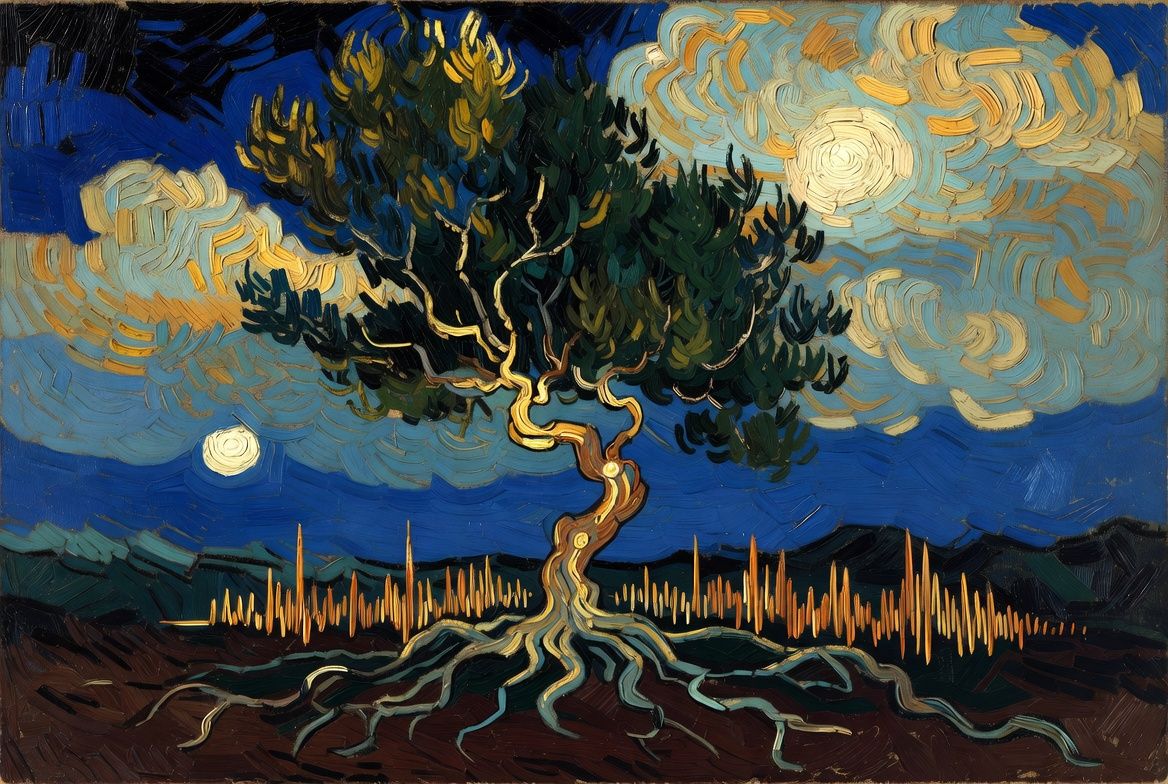

Harriet Tubman paused mid-mission to take a nap.
While guiding enslaved people to freedom through the Underground Railroad—arguably the most high-stakes logistics operation in American history—Tubman didn’t just rest when she reached safety. She stopped *during* the journey. She found concealment, closed her eyes, and slept. Not because she was lazy. Not because she lacked urgency. But because she understood something that modern neuroscience is only now validating: rest isn’t the opposite of survival. It is the engine of it.
This historical detail, resurrected by Tricia Hersey through her Nap Ministry and the 2022 manifesto *Rest Is Resistance*, shatters our contemporary understanding of what it means to care for ourselves. We have been sold a version of self-care that looks like bath bombs and Sunday afternoon yoga—nice if you can afford it, trivial if you can’t. But the research tells a different story. Rest isn’t luxury. It’s biological necessity. And for those paying attention, it’s also an act of political warfare.
The Trap of the Wellness Industry
Hersey didn’t start The Nap Ministry because she was relaxed. She started it in 2013 while pursuing a Master of Divinity at Emory University, overwhelmed by the grind of academic production and what she recognized as the «violence of capitalism» embedded in her schedule. Her solution wasn’t more efficient time management or a better planner. It was public napping. It was admitting, in broad daylight, that she refused to participate in the cult of constant productivity.
This refusal positions Hersey’s work—now a New York Times bestseller rated 4.6 out of 5 stars by over a thousand readers—squarely against the $4.5 trillion wellness industry, which typically sells rest as a commodity you purchase rather than a right you claim. The wellness complex suggests that if you’re burned out, you simply need a better vacation package, a meditation app subscription, or the right adaptogenic herbs. But as Hersey frames it, rooted in Black Liberation Theology and Womanism, rest becomes radical only when it disrupts rather than reinforces economic systems that demand our perpetual output.
«When we rest, we are refusing to be extractable,» Hersey writes. This isn’t metaphor. The systematic review of sustainable self-care published in 2024 confirms that chronic stress without recovery doesn’t just make us tired—it rewires our neurobiology toward pathology.
Your Nervous System Is Keeping Score
Here is where the story moves from political theory into biological imperative. The National Institute of Mental Health and the American Psychological Association have established that when the fight-or-flight response activates without adequate recovery periods, the body begins to accumulate damage. Cortisol floods the system. The amygdala remains hypervigilant. Sleep deprivation specifically increases risk for depression and anxiety disorders, creating a feedback loop where mental illness both causes and results from insufficient rest.
But here’s what makes this data genuinely alarming: you don’t have to be sleep-deprived in the traditional sense to suffer these effects. You can get eight hours nightly and still exist in a state of chronic sympathetic activation—what somatic practitioners call «functional freeze.» This happens when your body never completes its stress response cycles, storing tension in the psoas muscle, the jaw, the diaphragm. You are resting, technically, but you are not accessing *deep rest*—the parasympathetic state where genuine recovery occurs.
Rick Hanson, a psychologist researching somatic techniques, describes this as the difference between being still and being calm. One looks like rest. The other actually is.
The Body Knows What the Mind Denies
This is where the research gets practical—and slightly strange. Peter Levine, a pioneer in trauma resolution, developed a concept called «pendulation» that sounds more like physics than psychology. The technique involves moving your attention deliberately between zones of comfort and discomfort in the body, oscillating for 10 to 15 seconds at a time between what Levine calls the «trauma vortex» and the «healing vortex.»
It works like this: When you notice tension in your shoulders (the trauma vortex), you don’t force relaxation. Instead, you pendulate—shift attention to where you feel ease, perhaps your hands resting warm in your lap (the healing vortex). Then back to the tension. Then back to the ease. This neurological zig-zagging gradually expands your capacity to tolerate presence without triggering full fight-or-flight.
Other somatic techniques include «stress completion»—literally shaking or swaying for ten seconds to discharge unresolved survival energy—and grounding through specific breathing patterns (inhale for four counts, hold for four, exhale for six) practiced for three to five minutes. These aren’t relaxation techniques in the spa-day sense. They are biological interventions designed to complete stress cycles that capitalism interrupts.
But that’s only half the story.
Why We Can’t Just Sleep When We’re Dead
The research reveals a cruel paradox: those who need deep rest most often have the least access to it. While Hersey’s framework builds on historical examples of Black communities using rest as collective survival strategy—from Tubman’s strategic napping to church basement sleep-ins—the systematic barriers remain concrete. Workplace expectations that blur into infinite availability, economic precarity that demands side hustles, and the racialized dimensions of «laziness» stereotypes all create structural impedance to the parasympathetic state.
The 2024 systematic review on sustainable self-care identifies this clearly: quick fixes like caffeine or crash-sleep recovery are insufficient precisely because they don’t address the nervous system’s need for consistent, patterned downregulation. Sustainable self-care requires what the researchers call «proactive mental health maintenance» rather than reactive recovery from stress. This means building resilience through regular somatic practice, physical activity that stimulates endorphins while lowering cortisol, and—crucially—collective rather than individual approaches to rest.
This distinction matters. The research notes that when rest remains purely individualistic—something you do alone in your expensive apartment with your expensive weighted blanket—it fails to challenge the systems extracting labor from your community. Hersey insists that rest must be «a collective liberation tool,» which explains why The Nap Ministry holds public sleep sanctuaries and group deep-rest workshops. You rest *with* people, not just *for* yourself.
The Architecture of Refusal
So where does this leave us? With a clear-eyed understanding that ignoring rest isn’t stoicism—it’s physiological self-sabotage. With techniques like pendulation and grounding that offer concrete methods for accessing the parasympathetic state. And with the recognition that choosing to rest, especially for marginalized bodies in productivity-obsessed cultures, constitutes what Hersey calls «a radical act of faith.»
The contradictions in the research are worth naming. While the biological necessity of rest is settled science, the pathway from individual practice to systemic change remains under-theorized. Hersey’s framework explicitly bridges this gap by positioning personal rest as inherently political, but not all mental health research agrees on the efficacy of individual acts of resistance against structural exploitation. Some critics argue that framing rest as resistance risks obscuring the need for policy changes—paid leave, shorter work weeks, housing security—that make rest structurally possible.
What we do know is this: when Tubman slept during missions, she wasn’t being unproductive. She was being strategic. She recognized that a nervous system flooded with stress hormones makes fatal mistakes. The same is true for us. The question isn’t whether we can afford to rest. Given the research on sleep deprivation and mental health disorders, the question is whether we can afford not to.
Your body is already keeping score. The only choice left is whether you’ll listen before the bill comes due.


