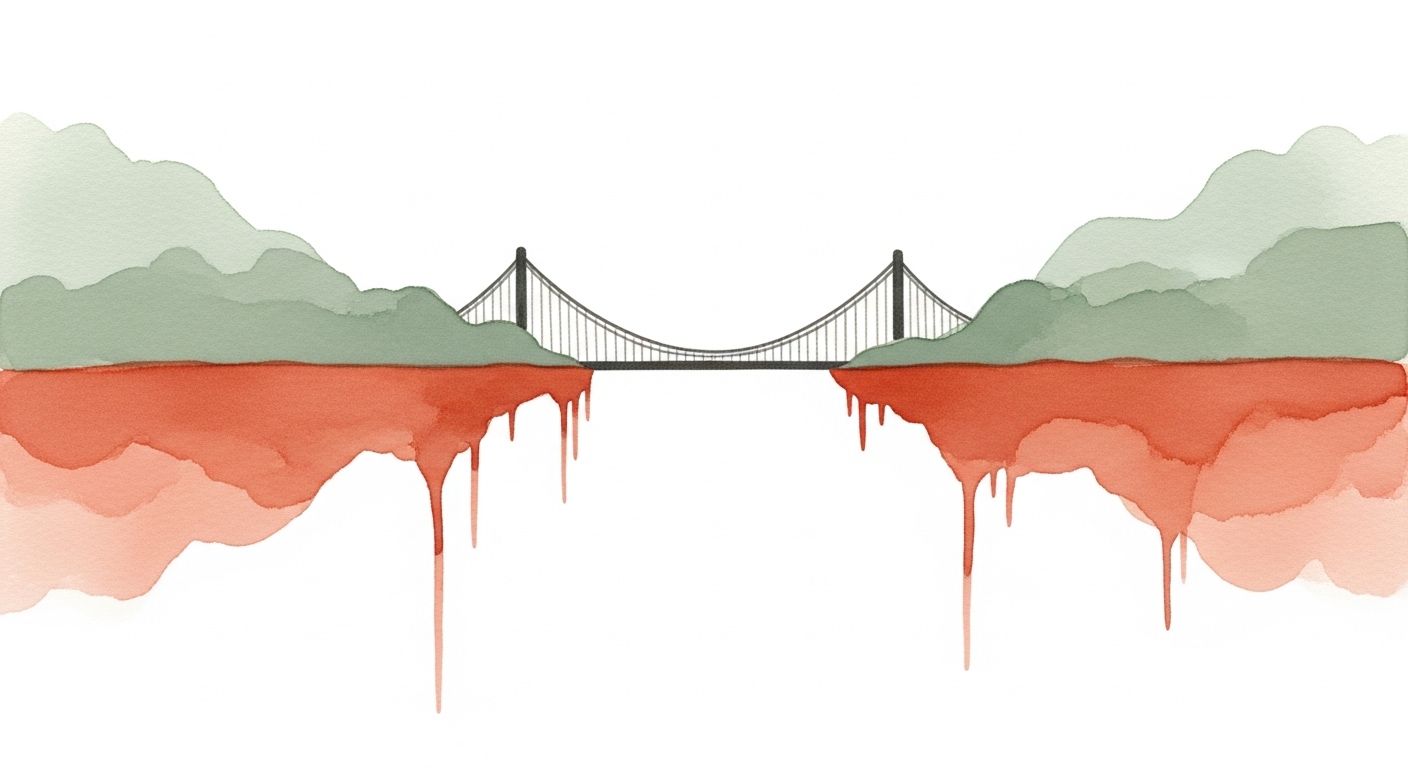

The Mortality Rate of Solitude
At roughly nine o’clock this morning, while you were finishing your coffee, approximately sixteen people died because they were lonely. By midnight, the tally will reach one hundred. Over the course of a year, this quiet killer—moving through strokes, heart failures, and accelerated dementia—will claim roughly 871,000 lives worldwide, a figure the World Health Organization released in June 2025 alongside an uncomfortable comparison: chronic loneliness now carries a mortality risk equivalent to smoking fifteen cigarettes a day.
But that is only half the story. While isolation subtracts years, connection multiplies survival. According to a sweeping meta-analysis of 148 studies cited by the U.S. Surgeon General, robust social integration increases your odds of survival by 50 percent—an effect comparable to quitting smoking, and roughly double the benefit of regular exercise. We have spent decades obsessing over diet and gym memberships while ignoring the stethoscope of friendship.
When the Body Treats Rejection Like a Wound
This isn’t metaphorical poetry about broken hearts. Your nervous system processes social rejection with the same biological hardware it uses for physical injury. Chronic loneliness triggers a state of hypervigilance that floods the body with cortisol and inflammatory markers, effectively accelerating cellular aging. The Surgeon General’s 2023 advisory traces a direct pathway from this biological dysregulation to a 26 percent increase in early mortality risk, a 30 percent jump in heart disease, and a 50 percent spike in dementia likelihood.
«We are a social species» is not a motivational poster slogan; it is a neurobiological fact hard-wired into our stress-response systems. When the gap between desired and actual connection persists—what the WHO defines as the subjective state of loneliness, distinct from the objective condition of isolation—the body enters a sustained threat mode. The result is a paradox of modernity: surrounded by digital connectivity, our physiology is screaming that we are alone on the savanna, vulnerable to predators.
The Geography of Isolation
If your mental image of loneliness involves elderly widows staring through rain-streaked windows, the data demands a radical update. The loneliness curve is U-shaped, but the deepest trough sits not with the elderly, but with the young. Between 17 and 21 percent of adolescents and young adults (ages 13 to 29) report chronic loneliness—a peak that contradicts the assumption that youth is a season of boundless social energy. Meanwhile, up to one in three older adults suffer isolation, often through the accumulated losses of mobility, bereavement, and retirement.
This is where it gets interesting: loneliness is not distributed evenly by geography or privilege. Low-income countries report loneliness rates of 24 percent—more than double the 11 percent found in wealthy nations, according to the WHO’s 2025 findings. Within borders, the burden falls heaviest on populations already navigating structural barriers: people with disabilities facing physical access constraints, migrants wrestling with language and documentation, LGBTQ+ individuals encountering discrimination, and refugees disconnected from cultural scaffolding. In the UK, the Office for National Statistics recently clocked adult loneliness at 27 percent—a figure that translates not just into private suffering, but into public balance sheets.
The £2.5 Billion Emptiness
Britain’s government has attempted to monetize the void. According to the State of Life research group, moving a single person from «often lonely» to «rarely lonely» generates £8,100 in annual societal value—a calculation that attempts to capture avoided healthcare costs, productivity gains, and the nebulous but real metric of «well-being value» (or WELLBYs, in the clinical parlance of the UK’s «Green Book» valuation method). For employers specifically, the bill arrives at £2.5 billion annually, footed through absenteeism and turnover linked to social disconnection.
These figures reveal a stark economic truth: we have built systems optimized for efficiency that systematically strip away the friction of human encounter. Remote work, algorithmic feeds replacing public squares, and housing markets that atomize communities don’t just make us sad; they make us expensive. When the Swiss Re Institute modeled these impacts in 2024, they found that loneliness wasn’t merely a public health footnote but a macroeconomic drag.
The Architecture of Belonging
The solution, however, is not simply to instruct isolated individuals to «join a club» or download a friendship app. Both the WHO and the U.S. Surgeon General agree that effective intervention requires what they term the «SOCIAL» framework—Systemic Framework Of Cross-sector Integration and Action across the Lifespan. This represents a wholesale shift from viewing loneliness as a personal failure to recognizing it as an infrastructure problem.
Implementation looks less like therapy and more like urban planning. The WHO’s 2025 recommendations call for embedding social-connection metrics into health, education, and employment policies, effectively treating relationships as preventative medicine. This means designing cities where third spaces—libraries, parks, cafés—are accessible and inviting rather than privatized. It means healthcare systems screening for isolation alongside blood pressure. It means schools and workplaces explicitly structuring interaction rather than assuming it happens organically between scheduled obligations.
Critically, the data suggests we must distinguish between the subjective ache of loneliness and the objective reality of isolation. While the former is well-documented, high-quality longitudinal data on the latter remains scarce—a gap that complicates causal claims. Most large-scale findings remain correlational; while the effect sizes rival smoking, definitive causal chains are still under investigation. Furthermore, economic valuations may prioritize what can be measured (productivity, healthcare utilization) over the intangible texture of belonging.
What We Owe Each Other
Yet the direction of the evidence is unambiguous. We are witnessing a confounding of predictions: never have we had more tools to communicate, and never have we been so likely to die from the lack of conversation. The vulnerability maps tell us that youth need intergenerational mentorship as urgently as the elderly need inclusion. The economic models tell us that community centers return better investment than pharmaceutical interventions for depression. The biology tells us that our bodies keep the score of every ignored text and canceled coffee.
The WHO did not declare a pandemic in 2025. They declared something perhaps more radical: that sustainable happiness is not a private luxury but a public utility, maintained by the invisible architecture of mutual recognition. In an era of quantified everything, the research presents a humbling truth—some of the most vital data points are the ones that vanish when we fail to show up for each other.