
The Forty-Five Minute Mirage
At 6:00 AM, while one group of wellness devotees is massaging hand cramps midway through page two of their morning exorcism, another group is already pouring coffee—having spent exactly ten minutes jotting down «warm socks, intact roof, no traffic on Tuesday.» Guess which group has the empirical evidence to prove they’re actually getting happier?
For three decades, Julia Cameron’s Morning Pages ritual has dominated the self-improvement landscape. The method is uncompromising: three pages of longhand, stream-of-consciousness writing, completed daily before your brain fully boots up. It’s a hefty commitment, typically swallowing fifteen to forty-five minutes of precious morning time, and it has spawned a legion of devoted practitioners who swear the practice clears mental clutter and sparks creativity. Yet here is the uncomfortable truth that the leather-bound journal industry would prefer you ignore: despite thirty years of anecdotal evangelism, not a single randomized controlled trial has measured whether ninety consecutive days of Morning Pages actually raises life satisfaction scores.
Meanwhile, the humble gratitude journal—often dismissed as the lightweight cousin to Cameron’s intensive method—rests on a bedrock of 64 randomized controlled trials. A comprehensive 2023 systematic review aggregating these studies found that spending just ten minutes once or twice weekly listing what you’re thankful for produces a 0.48 standard deviation improvement in life satisfaction. Translate that from statistical jargon, and you’re looking at a 7% measurable bump in happiness. For context, that’s roughly equivalent to the psychological benefit of doubling your income, achieved in the time it takes to brew a pour-over.
The Brain Dump vs. The Bullet Point
To understand why these two practices occupy such different scientific universes, you have to look at their lineage. Morning Pages emerged from Julia Cameron’s 1992 book The Artist’s Way, a spiritual guide to unblocking creativity. It traces its conceptual DNA back to James Pennebaker’s pioneering work in the 1980s on «expressive writing»—the practice of vomiting words onto paper to process trauma and subconscious anxiety. The mechanism is essentially therapeutic drainage: you’re clearing the pipes of rumination, self-doubt, and half-dreamt anxieties before they clog your decision-making.
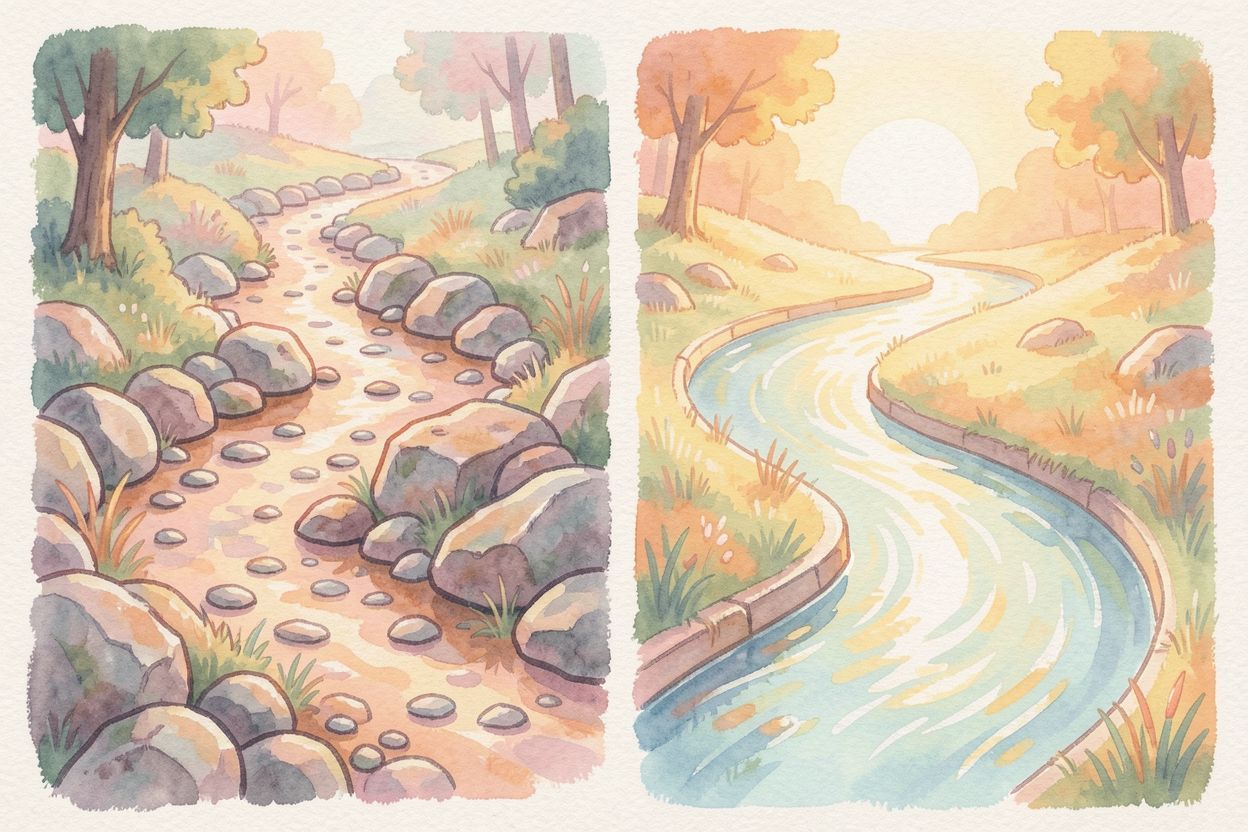
Gratitude journaling, by contrast, was adopted early by positive psychology researchers as a direct intervention for hedonic well-being. Rather than processing negativity, it builds positive affect through appreciation, leveraging what psychologists call «positive reframing.» Both practices reduce stress, but they arrive at the destination via opposite highways. Morning Pages excavates the muck; gratitude journaling plants flowers in the soil.
The data asymmetry is stark. When researchers at George Mason University tracked 70 adults with elevated anxiety, they found that twelve weeks of gratitude journaling reduced mental distress and increased well-being. In a separate, almost surreal study, adults who journaled about their emotions healed from biopsy wounds at a rate of 76%, compared to 42% for non-writers—suggesting the physiological potency of structured emotional processing.
But Morning Pages? The research is silent on happiness outcomes. Sources document practitioner loyalty—one blogger reported 241 consecutive days of practice, feeling «off» on the rare mornings she skipped—but the empirical record contains no direct measurement of whether those three pages translate to higher life satisfaction scores.
The Paradox of Frequency
Here is where the story takes a counter-intuitive twist that should upend your morning routine. Conventional wisdom suggests that if ten minutes of gratitude is good, thirty minutes must be better, and daily practice must be superior to weekly. The research suggests the exact opposite.
Gratitude journaling suffers from hedonic adaptation—the same psychological force that makes a new car stop feeling special after two weeks. When you write the same list daily, the brain normalizes the good feelings and stops registering them. Consequently, gratitude practice works better when done less frequently. The optimal dosage, according to the 2023 review, is that modest ten-minute session performed once or twice weekly. Any more, and the benefits plateau or even diminish.
Morning Pages, conversely, demands daily adherence to work. Practitioners report benefits plateauing around the thirty-day mark of consistent practice, but the ritual requires showing up every morning. Miss a day, and you’re technically «behind.» Over the course of a year, that’s a difference of approximately 273 hours invested versus 17 hours. The math is brutal: one practice demands roughly 90% less time while delivering quantifiable results; the other requires a part-time job’s worth of commitment with no happiness metric to validate the investment.
Cognitive Whiplash and the Science of Mixing
Astute readers might wonder: why not simply perform both? Do the brain dump, then pivot to appreciation? The research here offers a yellow flag. Because the practices operate through opposing psychological mechanisms—one excavating anxieties, the other cultivating appreciation—immediately alternating them may create what psychologists call «cognitive interference.»
Imagine attempting to meditate immediately after a shouting match, or trying to savor a fine wine while still tasting the burned toast. Morning Pages puts you in an analytical, often critical headspace; gratitude journaling requires appreciative presence. One source in the research notes that combining them back-to-back can produce «cognitive whiplash,» neutralizing the benefits of each.
This doesn’t mean they’re incompatible, only that they may require temporal separation. The sophisticated approach—which current data supports but doesn’t explicitly test—might involve Morning Pages on days when you need clarity, and gratitude journaling when you need an emotional lift, rather than attempting to stack them like pancakes.
The Bias in the Binder
It would be journalistic malpractice to dismiss Morning Pages entirely. The practice clearly benefits some people, particularly those grappling with creative block or free-floating anxiety. Reduced mental clutter and enhanced creativity are genuine outcomes, even if they’re currently documented primarily through testimony rather than trials.
But the comparison reveals a troubling pattern in wellness culture. Morning Pages has been marketed for decades through Cameron’s bestselling franchise, creating a self-reinforcing cycle where popularity substitutes for evidence. Many online sources promoting the practice include affiliate links to expensive journals or Cameron’s courses—a commercial interest that is conspicuously absent from the academic studies on gratitude, which emerge primarily from university psychology departments.
The gratitude research, meanwhile, has the boring virtue of having been tested, replicated, and measured without a product to sell at the end of the funnel.
The Verdict for the Time-Poor
So which practice boosts happiness more? The numbers don’t equivocate. If your goal is measurable, empirically validated improvement in life satisfaction, gratitude journaling wins decisively. It offers a 7% happiness boost for a time investment that rounds to zero in the context of a weekly calendar. It works specifically because it doesn’t demand daily perfection; it respects the brain’s tendency to habituate to repetition.
Morning Pages may serve as valuable emotional hygiene—particularly if you’re an artist wrestling with resistance, or someone processing undiagnosed anxiety that needs a daily pressure valve. But consider it a tool for clarity, not happiness. If you’re choosing between the two based strictly on which will make you wake up feeling better about your life next month, the evidence suggests you should close the leather-bound «Artist’s Way» journal and pick up a simple legal pad.
Write down three things that went unexpectedly well last Thursday. Spend ten minutes on it. Then go make your coffee. The science says you’ll be happier than the person still rubbing their wrist after page three.