
The Mortality of Loneliness Is Equivalent to Smoking 15 Cigarettes Daily
That is not a metaphor. According to a landmark meta-analysis by Holt-Lunstad and colleagues, social isolation increases your risk of premature death by 26 to 32 percent—precisely the same physiological damage as a pack-a-day smoking habit. And here is the paradox that should keep you awake at night: you can be surrounded by people and still be smoking that pack.
We have spent a decade optimizing for network size. LinkedIn connections, Instagram followers, sprawling wedding guest lists—we have conflated social volume with social health. But the data tells a different story, one that is quietly revolutionary. When researchers from the Canadian Social Connection Survey tracked mental health outcomes against friendship counts, they discovered a precise mathematical curve: each additional close friend reduces anxiety by 4.7 percent and depression by 4.0 percent. The catch? These benefits hard-stop after friend number five.
The Optimal Number Is Smaller Than You Think
Thompson et al. (2020) identified a curvilinear relationship that contradicts everything social media platforms want you to believe. Four close friendships optimally reduce anxiety; three reduce depression; four specifically target loneliness. Beyond five connections, the mental health benefits not only plateau—they invert. Why? Because intimacy requires cognitive and emotional bandwidth we cannot mass-produce.
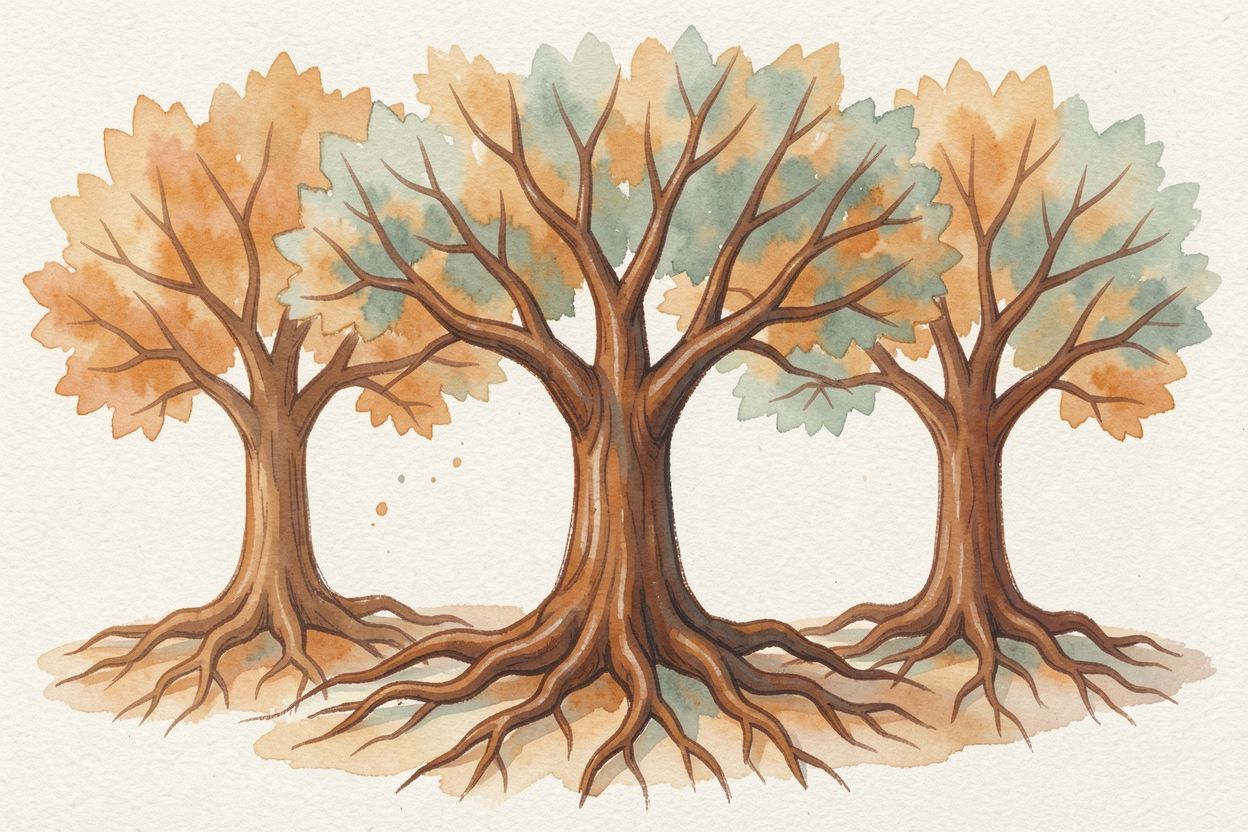
Think of it like this: you can water ten seedlings or you can nourish three trees to their full canopy. The research is unambiguous—three to five high-quality relationships provide superior protection against mental illness than twenty casual acquaintances. Your brain does not tally headcounts; it calculates felt safety.
Reciprocity: The Invisible Architecture of Connection
But what distinguishes a «close» friend from a convenient one? Lodder et al. (2015) discovered the mechanism: reciprocity. In their study of young adults, only relationships where both parties independently identified each other as friends predicted lower loneliness. Unilateral ties—those one-sided bonds where you assume closeness they do not feel—provided no protective benefit whatsoever.
This is where vulnerability enters as a biological necessity, not a personality trait. The American Psychological Association’s 2023 Monitor on Masculinity revealed a devastating cost of emotional suppression: men who adhere to traditional stoic norms possess 2.5 times lower social support strength, placing them at significantly higher risk for isolation. We have culturally coded vulnerability as weakness, but neurology codes it as the prerequisite for binding. You cannot have reciprocal intimacy without mutual disclosure; you cannot have mutual disclosure without the risk of rejection.
The Density Advantage: Why Your Friends Should Know Each Other
Here is a finding that upends the modern preference for privatized friendships. The APA Monitor (2023) reported that individuals with dense networks—where friends know each other and form interconnected webs—experience 40 percent higher life satisfaction than those who maintain isolated, dyadic one-on-one ties.
This explains the Scandinavian paradox. Despite having some of the world’s highest rates of single-person households, Scandinavian countries report remarkably low loneliness. Compare this to Japan, where 30 percent of adults report profound isolation despite living in densely populated urban centers, or Nigeria, where fewer than 10 percent feel isolated despite similar economic pressures. The variable is not proximity; it is integration. Living alone is not the disease; living atomized is.
The Gender Gap in Intimacy
The barriers to these three-to-five golden relationships are not equally distributed. The research identifies a specific empathy perception gap in male socialization—traditional masculine norms discourage vulnerability, which in turn prevents the reciprocal disclosure necessary for deep bonds. When Stanford’s Community Project intervened to target these precise empathy gaps, participants increased their number of close friendships by 0.44 per person—a modest numerical gain that represents a seismic shift in social reality.
This suggests that for half the population, the loneliness epidemic is not a result of social deprivation but of social training. We have taught men to gather contacts while withholding connection, creating a generation with 500 LinkedIn endorsements and no one to call at 3 AM.
Why Weak Ties Cannot Cure Strong Loneliness
You might wonder about the career networking events, the alumni mixers, the «weak ties» that sociologists like Granovetter famously linked to job opportunities. These have value, but not for the crisis at hand. Weak ties provide information; strong ties provide belonging. And belonging, according to the Canadian Social Connection Survey, increases life satisfaction by 0.29 points per unit of social support—an increment that compounds daily across decades.
The Dunbar number—the theoretical cognitive limit of 150 relationships—remains disputed by researchers like Lindenfors et al. (2021), who argue for greater cultural variability. But the debate about maximum capacity misses the point. The urgent question is not how many people you can know, but how many know you—authentically, reciprocally, completely.
The Prescription
If you are scanning your mental Rolodex and realizing you have optimized for breadth, the research offers specific corrective measures. First, audit for reciprocity: of the people you consider close, how many would name you in return? Second, engineer density: introduce your friends to each other, creating the network density that amplifies well-being by 40 percent. Third, practice strategic vulnerability—disclosure begets disclosure, and the Stanford data suggests even modest empathy training yields measurable increases in intimate bonds.
Technology companies are already racing to fill the gap with AI companions and virtual social spaces. But the data is clear: artificial intimacy supplements; it does not substitute. Your nervous system evolved for the specific chemistry of mutual gaze, shared silence, and the terrifying risk of being fully seen.
You do not need more friends. You need three to five who would notice if you vanished, who know your middle names and your failures, who create a web dense enough to catch you. Everything else is just background noise—and statistically speaking, background noise will not save your life.