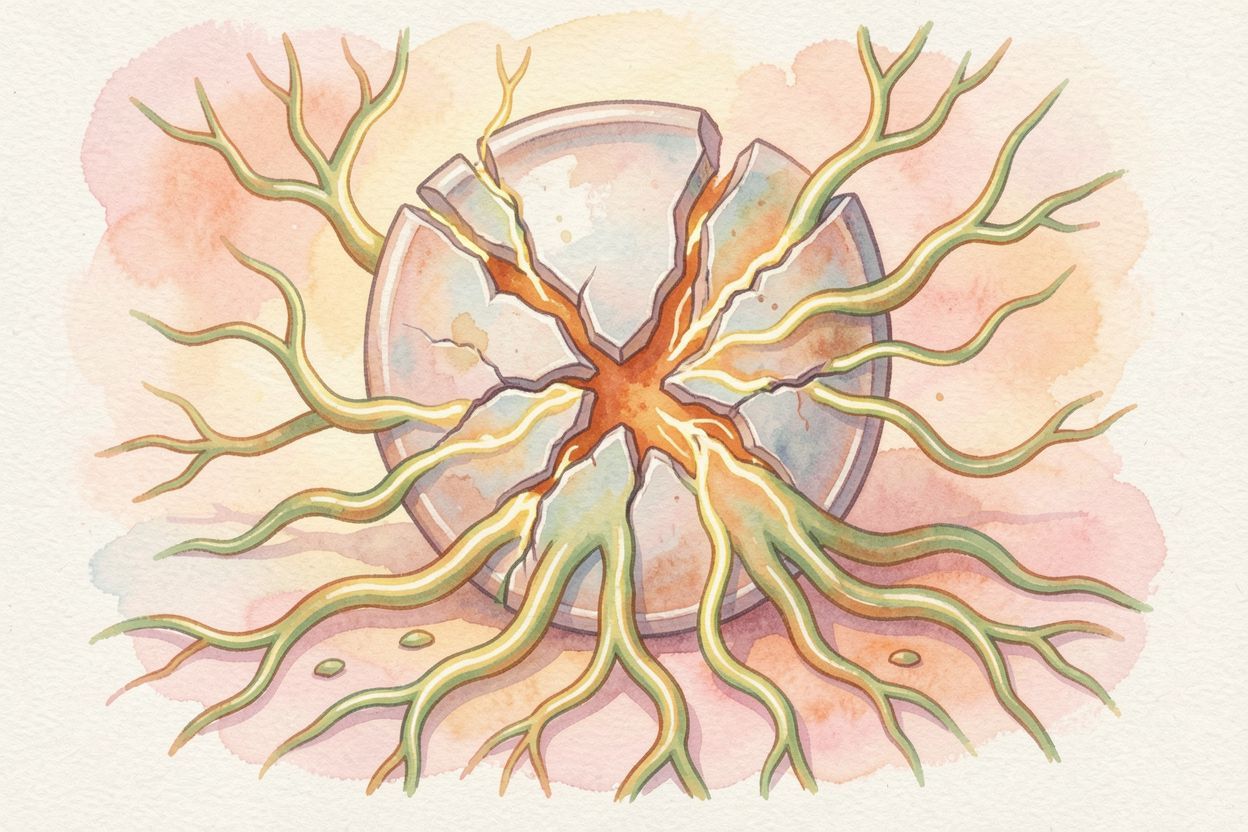

The Three-Symptom Cliff: Where Your Emotional Armor Cracks
Researchers at Johns Hopkins University discovered something unsettling about emotional resilience: it behaves like a circuit breaker. Up to a point, it’s remarkably effective at shielding your sleep from mental health stressors. But the moment you cross the threshold of three simultaneous mental health symptoms—whether that’s anxiety, low mood, or intrusive thoughts—that protection vanishes entirely. Even the most psychologically robust individuals see their sleep quality collapse, as if someone flipped a switch.
This finding upends the common assumption that resilience is purely a matter of willpower. It suggests that emotional fortitude isn’t infinite; it’s a physiological resource that requires nightly replenishment. And the primary mechanism for that replenishment isn’t meditation, exercise, or therapy—though those help. It’s sleep itself.
The Bidirectional Trap: How Insomnia Turns Into a Mental Health Disorder
Stanford Medicine researchers have quantified the relationship between sleepless nights and psychological distress with unsettling precision. People with insomnia aren’t just slightly more vulnerable to mental health struggles; they are ten times more likely to develop clinical depression and seventeen times more likely to develop anxiety disorders than the general population. These aren’t marginal risks; they are gravitational pulls.
But the relationship isn’t a one-way street. Just as poor sleep drags down mental health, conditions like anxiety and depression disrupt circadian rhythms, creating what sleep scientists call a «bidirectional» cycle. Columbia University researchers note that sleep deprivation in otherwise healthy individuals increases anxiety and distress levels significantly. The brain essentially loses its ability to distinguish between minor irritations and genuine threats, leaving you emotionally sunburned by everyday friction.
The Neural Reset: Why Your Amygdala Needs a Nightly Reboot
This is where it gets interesting. The damage isn’t just psychological—it’s structural. When you’re sleep-deprived, your amygdala—the brain’s threat detection center—goes into overdrive. According to research cited by the Keil Psych Group, this overactivity produces a 60% increase in reactivity to negative emotional stimuli. You’re not imagining that everything feels worse after a bad night’s sleep; your brain is literally processing negative input with enhanced sensitivity.
During healthy sleep, particularly REM cycles, the brain performs something like emotional garbage collection. It processes the day’s experiences, consolidates memories, and removes metabolic toxins. Elizabeth Blake Zakarin at Columbia University puts it simply: «Just like our electronics need to be charged, sleep may recharge or reset the brain to optimize functioning.» Without this reset, emotional regulation degrades not by choice, but by neurobiology.
When the Crash Exceeds the Speed Limit
Which brings us back to that Johns Hopkins finding about the three-symptom threshold. Their data reveals that resilience acts as a buffer—but only up to a point. If you’re experiencing one to three mental health symptoms, high resilience can minimize their impact on your sleep quality. But accumulate four or more symptoms, and even the most resilient constitution can’t prevent sleep disruption.
This explains why «pushing through» often backfires. When mental health symptoms multiply, they overwhelm the very sleep system needed to regulate them. It’s like trying to fix a leaky boat while the water is still rushing in. The implication is stark: you cannot will your way to emotional stability if your sleep architecture is compromised. You need to fix the infrastructure first.
The 41% Solution: Evidence-Based Interventions That Actually Work
The good news is that the equation works in reverse just as powerfully. Cognitive Behavioral Therapy for Insomnia (CBT-I) isn’t merely a sleep treatment; it’s a potent mental health intervention. Research from the Recovery Village shows that CBT-I produces a 41% reduction in depression symptoms and a 34% reduction in anxiety symptoms—results that rival or exceed many pharmaceutical interventions, without the dependency risks that sleep medications carry for anxiety-prone individuals.
Between 70% and 80% of patients undergoing CBT-I experience meaningful symptom reduction. Meanwhile, adults who consistently sleep less than seven hours per night are 2.5 times more likely to report frequent mental distress. The numbers suggest a clear hierarchy: sleep isn’t a luxury that follows emotional wellness; it’s the foundation upon which wellness is built.
The Six-Minute Rule and Other Biological Hacks
You don’t need clinical intervention to start moving the needle. The American Heart Association has documented that reading before bed can cut stress levels by half—in approximately six minutes. This isn’t mystical; it’s physiological. The practice lowers cortisol and primes the parasympathetic nervous system for rest.
Similarly specific: your bedroom should be between 60 and 67 degrees Fahrenheit (15-19°C). This isn’t about comfort; it’s about facilitating the slight drop in core body temperature that signals your brain to initiate sleep. Meanwhile, blue light from screens can suppress melatonin production by up to 55%. Implementing a «digital sunset»—cutting screens 60 to 90 minutes before bed—can reduce sleep onset time by roughly 21 minutes.
Consistency matters more than recovery. Weekend sleep catch-up is better than nothing, but research indicates it doesn’t fully compensate for weekday sleep debt. Your circadian rhythm isn’t fooled by Saturday morning lie-ins. Maintaining a consistent schedule improves sleep efficiency by 13-18% within just two weeks.
Becoming a Professional Sleeper
The most effective mindset shift might be viewing yourself not as someone who *needs* sleep, but as a «professional sleeper»—someone who treats sleep hygiene as non-negotiable infrastructure for peak performance. This means recognizing that emotional resilience isn’t something you generate during the day; it’s something you restore at night.
If you’re currently caught in the cycle—waking at 3 AM with racing thoughts, or feeling your temper flare over minor inconveniences—the research suggests starting with the biology before the psychology. Adjust the thermostat. Pick up a paperback. Set a ruthless lights-out time.
And if sleep remains elusive despite these measures, consider that you may have crossed the three-symptom threshold where self-care isn’t sufficient. That’s not a failure of discipline; it’s data. It may be time to seek CBT-I or professional support not just for your sleep, but for the emotional resilience that depends on it.