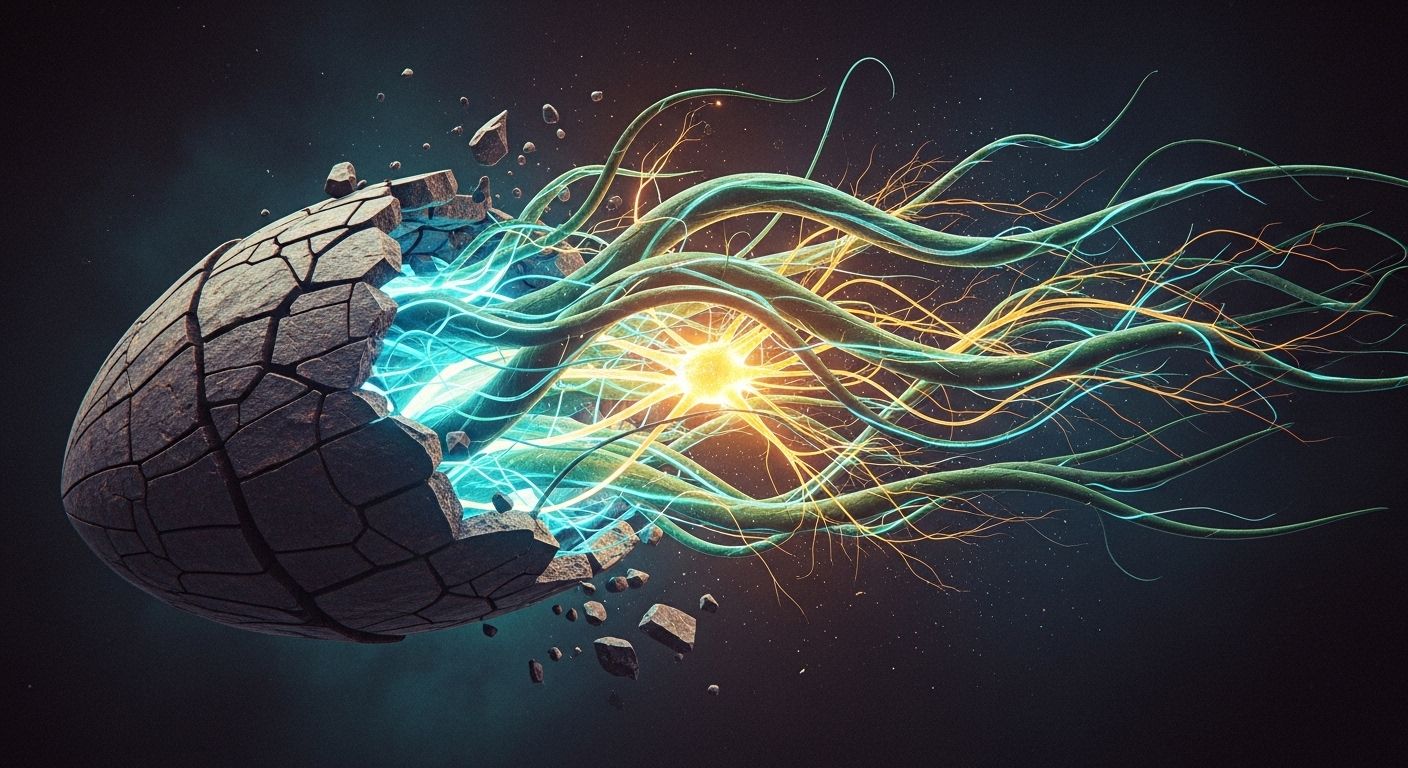

By the time they reach Harvard University, nearly half of the student body has experienced clinical depression. A quarter have contemplated suicide. These are the «smart kids»—the ones who were praised from age four for their innate brilliance, who learned to treat their own intelligence as a precious, brittle artifact to be protected at all costs. According to psychologist Carol Dweck’s decades of research, this is not a coincidence. It is the inevitable endpoint of a single, devastating belief: that your qualities are carved in stone.
The Intelligence Trap: Why «Smart» Is a Dangerous Label
When Dweck and her colleagues presented four-year-olds with a choice between puzzles—either an easy one they knew they could solve or a harder one that might teach them something—they witnessed a schism that would predict the children’s lives decades later. The children praised for their intelligence («You must be smart at this») overwhelmingly chose the easy puzzles. Those praised for their effort («You must have worked really hard») chose the challenging ones.
This divergence creates two fundamentally different species of unhappiness. The fixed-mindset child, now grown, spends sixteen years «working on the easiest stuff to prevent failure,» as one former student confessed online. They lie about their scores to preserve the «smart» label. They develop crippling social anxiety, depression, and what Dweck calls the «tyranny of the now»—a life spent proving rather than improving. «I was inferior and depressed,» wrote another commenter reflecting on their fixed-mindset years, «but now I can always see things in a growth manner.»
The growth-mindset child, meanwhile, learns that effort is not a sign of deficiency but the very mechanism of growth. When Dweck’s seventh-grade participants with growth mindsets were asked about intelligence, one replied with devastating simplicity: «I think intelligence is something you have to work for… Just by doing that I’m increasing my intelligence.»
The Neuroscience of «I Can’t Do This Yet»
Your brain physically processes failure differently depending on which belief system you hold. When fixed-mindset individuals make mistakes, their brains show minimal activity—essentially, they ignore the error to protect their ego. Growth-mindset brains, conversely, light up in the anterior cingulate cortex and dorsolateral prefrontal cortex, regions associated with error correction and learning. They are literally paying deeper attention to what went wrong.
This biological difference explains why the addition of a single word—»yet»—can alter your neurological response. Transforming «I can’t do this» into «I can’t do this yet» shifts the brain from threat-detection mode to learning mode. The mistake becomes information rather than indictment. As one recovered fixed-mindset sufferer wrote after discovering this reframing: «I don’t fear setbacks and mistakes anymore. The human brain can achieve incredible things.»
The Hidden Catch: Why Mindset Alone Won’t Make You Happy
But here is where the pop-psychology narrative often crumbles. Simply believing you can grow does not automatically confer happiness. Recent experimental research with Chinese adolescents reveals a crucial mediating factor: self-efficacy. Growth mindset only correlates with meaning and life satisfaction when it builds genuine confidence in one’s capabilities. The belief must be validated by actual effort and small wins; otherwise, it becomes another form of toxic positivity.
Furthermore, gratitude moderates the effect. Individuals high in dispositional gratitude show strong links between growth mindset and happiness; those low in gratitude do not. The brain needs evidence that effort leads to improvement, and it helps to appreciate that improvement when it arrives. «There is no such thing as a pure growth mindset,» Dweck herself warns. We all carry fixed-mindset triggers—criticism, setbacks, encounters with others’ talent—that temporarily stall our growth neural pathways.
The 40/40/20 Reality Check
Approximately 40% of the population operates primarily from a fixed mindset, another 40% from a growth mindset, with the rest floating in between. But crucially, these are not immutable personality types. They are cognitive habits that can be rewired through neuroplasticity—the brain’s ability to form new connections throughout life, though this requires active effort after age twenty-five.
A 45-minute online intervention taught 12,000 ninth-graders about the neuroscience of malleable intelligence. The result? Reduced fixed-mindset beliefs, improved GPAs for lower-achieving students, and increased enrollment in advanced math courses. But the change is not permanent. Like physical fitness, mindset requires maintenance; old neural pathways never fully disappear, they simply become less traveled.
Building the Growth Identity
Sustainable change comes not from thinking positive thoughts but from identity-based habits. Instead of setting outcome goals («I will become a writer»), you adopt process identities («I am someone who writes every morning»). Leah Culver’s transformation from «non-runner» to self-identified runner happened not through self-affirmation but through repetitive action that rewired her self-concept.
The language you use to children—whether you praise their «genius» or their grit—creates neural pathways that persist for decades. When you tell a child «You’re so smart,» you are not giving them a gift. You are handing them a burden that will make them avoid challenges, lie about failures, and potentially end up in that 50% depression statistic at elite universities.
The Choice That Remains
Your beliefs about whether abilities are fixed or developable are not abstract philosophical positions. They are biological filters determining whether your brain processes errors as threats or as data, whether you approach challenges with hope or dread, and ultimately, whether you interpret your life as a test to be passed or a capacity to be expanded.
The research is clear: shifting from a fixed to growth mindset reduces anxiety and depression, improves relationships, and creates what 143 creativity researchers agreed is the number-one ingredient in creative achievement—perseverance. But this shift requires more than reading an article. It demands that you start saying «yet,» start praising process over product, and start building the hard evidence of your own capability, one deliberate challenge at a time.
Because in the end, the fixed mindset offers you one guarantee: the profound unhappiness of an unchanging self.