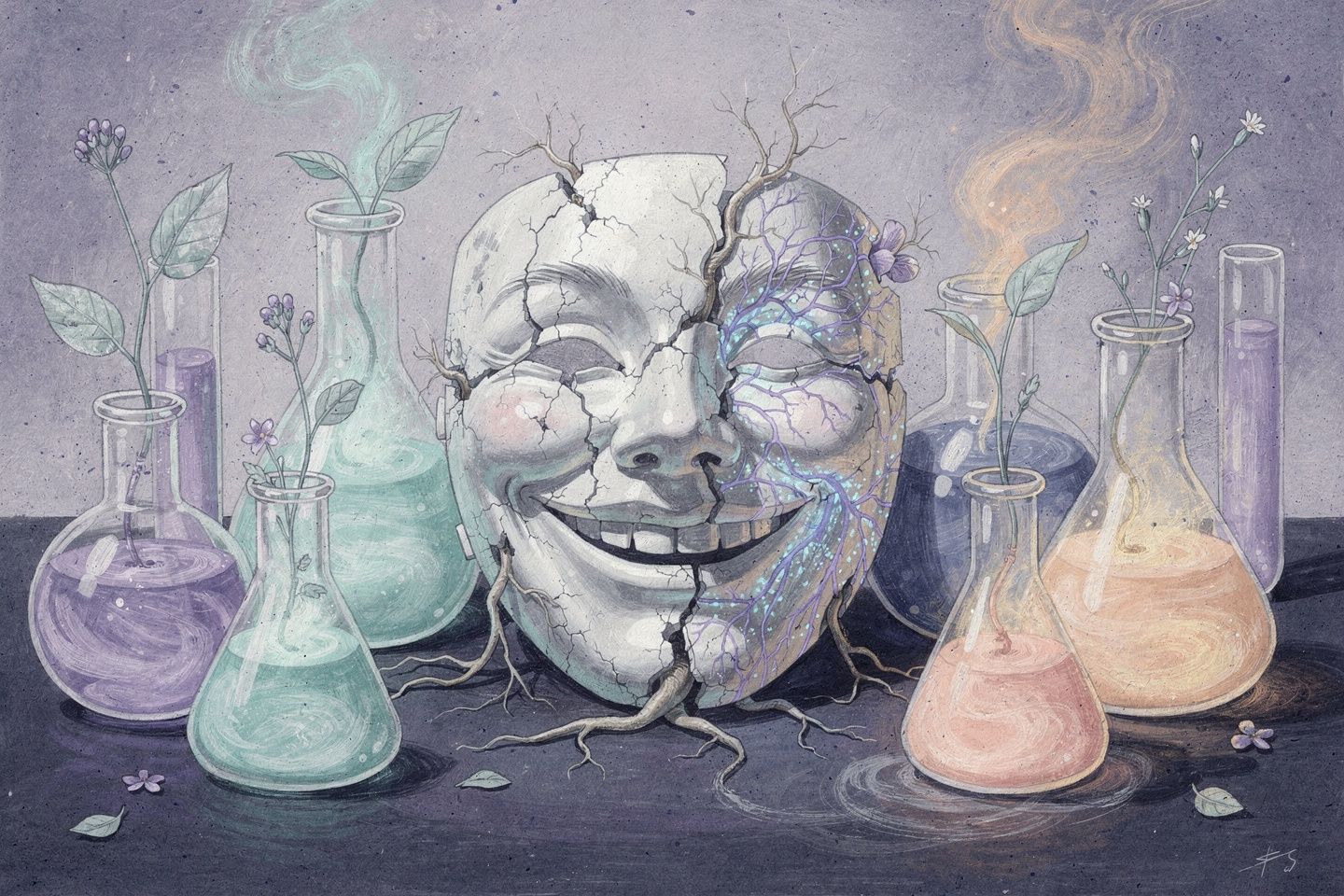

Your nervous system cannot tell the difference between a genuine smile and a performance—but it knows, with devastating precision, when you are forcing yourself to feel something you do not.
When you tell a grieving friend that «everything happens for a reason,» or assure a stressed colleague that «it could be worse,» you are likely not being cruel. You are probably attempting to help. Yet according to research published in *Clinical Psychology Review*, these well-intentioned phrases trigger the same physiological stress responses as physical danger: elevated heart rates, pupil dilation, and surging cortisol levels. The pursuit of constant positivity, it turns out, is not just ineffective—it is biochemically toxic.
The Happiness Trap: When Optimism Becomes Gaslighting
Toxic positivity is not merely an overdose of good vibes. It is the systematic dismissal of authentic human emotion through the enforcement of a «happy only» regime. As defined by clinical psychologists at the Therapy Group of DC, it is the «excessive and inappropriate overgeneralization of a happy, optimistic state across all situations»—a relentless reframing that transforms legitimate grief into personal failure.
The mechanics are insidious. When someone expresses pain and hears «just stay positive,» the message received is not encouragement but invalidation. Their nervous system registers rejection. Research from Avid Counseling demonstrates that this emotional suppression—forced cheerfulness in the face of genuine distress—increases stress hormones and creates fertile ground for Generalized Anxiety Disorder, major depression, and social isolation. In essence, the pressure to be okay when you are not okay makes you decidedly less okay.
The phrases are familiar enough to sound benign: «Good vibes only.» «Think happy thoughts.» «At least you have a job.» Yet these statements function as emotional bouncers, denying entry to the full spectrum of human experience. Mark Manson, author of *The Subtle Art of Not Giving a F*ck*, argues the point with characteristic bluntness: «The avoidance of suffering is a form of suffering. The denial of failure is a failure.»
The Curated Self: How Social Media Manufactured Emotional Straitjackets
If toxic positivity were merely interpersonal, it might be manageable. But sometime around January 2020—the baseline date when Google searches for «toxic positivity» began to double—a cultural shift amplified the pressure exponentially.
Social media platforms have become digital panopticons of performative joy. According to research compiled by Best Choice Counselling, 83% of social media content showcases exclusively positive moments, creating an emotional monopoly where vulnerability appears as failure. With over 100 million Instagram posts tagged #goodvibes, the platform functions less as a social network and more as a highlight reel of impossibly curated existence.
The statistics reveal a population drowning in artificial cheerfulness. In workplace settings, 67% of employees admit to hiding negative emotions behind forced smiles—a phenomenon that Resilience Lab research links to a 40% increase in workplace stress. We have built a culture where emotional honesty requires more courage than pretending, where admitting «I am struggling» feels like a social transgression.
This digital smile factory has particularly pernicious effects on intimate relationships. Couples who maintain positive facades despite genuine unhappiness are three to twenty-five times more likely to develop clinical depression than those who permit authentic discord, according to relationship data cited by Best Choice Counselling. The marriage dies in silence, preserved only by the embalming fluid of «at least we have each other.»
The Body’s Betrayal: When Silence Becomes Sickness
The costs of this emotional theater extend beyond psychology into measurable physiology. When you suppress anger to appear gracious, or swallow grief to avoid «negativity,» your body registers the deception.
Studies on emotional validation versus suppression reveal striking physical divergences. Individuals who receive emotional validation demonstrate lower blood pressure and decreased vascular resistance—the literal relaxation of the cardiovascular system. Conversely, those forced to maintain toxic positivity exhibit the opposite: heightened sympathetic nervous system activation that, when chronic, correlates with cardiovascular disease and respiratory illness.
Your body keeps a ledger of every «I’m fine» uttered through clenched teeth. The research is clear: authentic emotional processing is not indulgent; it is biological maintenance.
The Validation Alternative: Supporting Without Fixing
If toxic positivity is the art of dismissal, healthy support is the practice of presence. The distinction lies not in the absence of struggle but in the validation of it.
Healthy positivity, as clinicians distinguish it, acknowledges difficult experiences while maintaining hope—the difference between «This is hard, and I am here» versus «This is hard, so stop talking about it.» Emotional validation, according to therapist Janika Veasley, is the act of taking «the time to learn, understand, and accept the other person’s emotions and experience» without attempting to edit them.
The shift is linguistic but profound. Replace «It could be worse» with «That sounds difficult.» Exchange «Everything happens for a reason» for «I understand why you’d feel that way.» Most crucially, swap «Just stay positive» for the radical question: «How can I support you right now?»
This approach creates what psychologists call psychological safety—the conditions under which authentic relationships actually form. When you validate rather than fix, you signal that the other person’s reality is legitimate, that their pain does not need a silver lining to earn your attention. As one researcher noted, «Validation isn’t coddling—it’s creating space for people to process pain without judgment.»
The Boundary of Empathy: Protecting the Authentic Self
Building authentic relationships requires more than just better listening; it demands the architecture of healthy boundaries. This means recognizing that you cannot validate others from an empty vessel, nor should you absorb their emotional labor as your own performance metric.
Boundaries in healthy support function as permission slips for emotional honesty. They allow space for others to express authentic experiences without judgment, while simultaneously protecting your own capacity for genuine response. Setting these limits—announcing that you are available for listening but not for toxic positivity performance—creates the conditions for mutual vulnerability.
The cultural variations on this theme are instructive. Whether examining Japanese *ganbatte* (do your best), Indian *santosha* (contentment), or Brazilian *jeitinho brasileiro* (finding a way), the line between healthy cultural resilience and toxic positivity falls at the point of denial. When cultural pressure to maintain face transforms from «we endure together» into «your suffering embarrasses us,» it crosses into the territory of harm.
The Permission to Feel
We are living through an epidemic of emotional pluralism denied. The research is unambiguous: emotional suppression through forced positivity increases anxiety, depression, and physical illness while undermining the very relationships it seeks to protect. Yet the solution is not pessimism—it is precision.
Authentic relationships require the courage to say, «I am not okay,» and the grace to hear it without panic. They demand that we retire the phrase «positive vibes only» in favor of «all vibes welcome here.»
The data suggests this shift is already beginning. Since 2020, searches for toxic positivity have doubled—a signal, perhaps, that we are collectively tiring of the performance. We are beginning to understand that resilience is not the absence of breakdown but the presence of support that survives it.
Your nervous system knows the difference. It is time the rest of us caught up.