
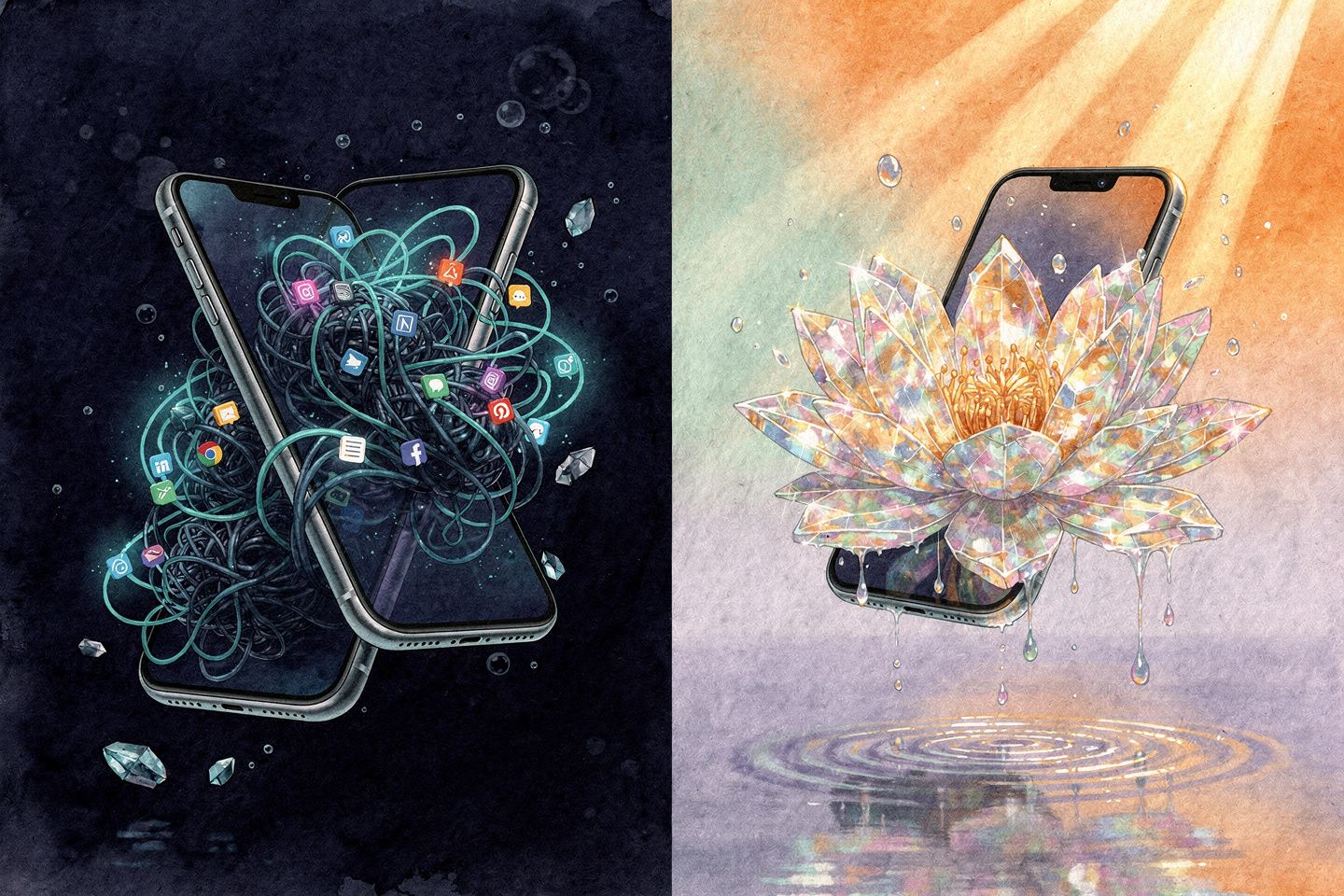

The Wellness Trend That Would Kill You—If It Were Real
You cannot, under any circumstances, detox from dopamine. Attempt it literally, and you would die. Dopamine isn’t a toxin seeping into your brain from TikTok binges; it is the neurotransmitter keeping your heart beating, your lungs breathing, and your ability to blink intact.
Yet here we are, six years into the «dopamine detox» craze, with millions attempting to cleanse themselves of the very chemical that makes consciousness possible. The irony would be delicious if it weren’t so exhausting. But buried beneath the pseudoscientific packaging lies something genuinely valuable—a recognition that our brains are buckling under the weight of infinite scroll and notification cascades. The problem isn’t the science; it’s the metaphor.
How a Psychiatrist’s Clinical Tool Became a Viral Delusion
Dr. Cameron Sepah never intended to start a wellness movement that treats neuroscience like astrology. In 2019, the California-based psychiatrist published a LinkedIn post outlining «Dopamine Fasting 2.0″—a cognitive-behavioral protocol designed to help patients break compulsive loops of gaming, gambling, and social media binging. His framework was specific: identify behaviors triggered by emotional cues, abstain temporarily to weaken the association, then rebuild healthier habits.
Then the internet happened.
Within months, Silicon Valley executives were boasting about weekend-long «dopamine fasts» where they avoided eye contact, exercise, and even small pleasures, believing they were scrubbing their neural receptors clean. «You can’t actually detox from dopamine,» Dr. Sepah clarified later, watching his clinical terminology mutate into wellness mysticism. What he had described as behavioral therapy was being practiced as monastic asceticism.
This is where it gets interesting: despite the biological impossibility, people reported feeling better. Their focus sharpened. Their anxiety dimmed. The «detox» was fake, but the benefits were real. Something else was happening beneath the surface.
The Thirty-Day Declutter That Actually Rewires Attention
Enter Cal Newport, the Georgetown computer scientist who had been quietly building the antidote to digital chaos since 2019. While the dopamine detox crowd was fasting from sunshine, Newport was testing something far more radical: intentional use.
His «digital declutter»—thirty days of strict technology rules followed by selective reintroduction—doesn’t promise to reset your neurochemistry because it doesn’t need to. The practice works by disrupting what researchers call «variable reward schedules,» the same psychological mechanism that keeps gamblers at slot machines. Every notification, every like, every auto-playing video exploits your brain’s uncertainty circuits, creating compulsion loops that erode working memory and emotional regulation.
The data supports the discipline. When study participants at the University of Pennsylvania limited social media to thirty minutes daily, loneliness and depression dropped measurably within weeks. Systematic reviews published in the *International Journal of Environmental Research and Public Health* confirm that structured digital reduction improves attention spans, reduces cognitive overload, and enhances information processing.
But Newport’s framework adds a crucial element missing from the fasting fad: values. Before touching a screen during the declutter, participants must define what they actually care about. The technology that survives the thirty days must serve those values explicitly. Everything else stays gone.
The Cold Shower Plot Twist
If you cannot purge dopamine, you can certainly modulate how your brain responds to it. This is where the wellness industry’s accidental science proves most compelling.
Dr. Anna Lembke, Stanford’s chief of addiction medicine, has documented what she calls the «pain-pleasure balance.» The brain seeks equilibrium; flood it with supernormal stimuli (Instagram, TikTok, DoorDash) and it downregulates dopamine receptors, leaving you in a chronic state of craving. The solution isn’t elimination—it’s strategic exposure to natural dopamine triggers that restore receptor sensitivity.
The hack is almost comically simple: cold water. Submerging yourself in cold water for two to three minutes spikes dopamine release by approximately 250 percent, creating a clean, sustainable elevation that doesn’t trigger the compensatory crash of digital browsing. Similarly, neuroscientist Dr. Jennifer Heisz has demonstrated that regular aerobic exercise restores dopamine receptor density within four to six weeks.
Even light becomes a lever. Dr. Andrew Huberman’s research at Stanford shows that ten to thirty minutes of early-morning sunlight raises baseline dopamine levels, while nighttime light exposure (particularly between 10 p.m. and 4 a.m.) suppresses them. The implication is almost too obvious: the same people doing «dopamine detoxes» while staring at their phones in dark bedrooms are actively working against their stated goals.
The ADHD Vulnerability and the Grayscale Solution
Not everyone faces this battle with equal armor. For individuals with ADHD, the neurological deck is already stacked toward impulsivity and reward-seeking. Recent research reveals they are 9.3 times more likely to develop problematic smartphone use, their brains particularly susceptible to the dopaminergic slot machines vibrating in their pockets.
But this population also reveals the most elegant technological hack. When ADHD users switch their phones to grayscale—draining the vivid reds and blues from app icons—daily screen time drops by twenty to forty minutes immediately. The mechanism is pure behavioral economics: remove the visual variable reward, and the compulsion loses its teeth. Notification batching (grouping alerts rather than allowing them to interrupt continuously) shows similar efficacy.
These interventions suggest that digital minimalism isn’t about willpower. It’s about architecture. You don’t need to white-knuckle through boredom; you need to redesign the environment that manufactures false urgency.
When Detox Becomes Dangerous
The pursuit of clarity can, paradoxically, destroy it. Extreme dopamine fasting—prolonged isolation, severe dietary restrictions, avoiding human contact—carries documented risks of increased anxiety, loneliness, and nutritional deficiencies. Cedar Oaks Wellness Center and other clinical observers have noted that patients attempting week-long or month-long digital blackouts often experience withdrawal-like symptoms, emerging not with renewed focus but with social disconnection.
This is the critical distinction: digital minimalism is a curatorial practice, not an ascetic one. The goal is never to eliminate pleasure or connectivity, but to align them with intention. As Dr. Susan Albers of the Cleveland Clinic notes, a more accurate term for what Sepah originally proposed would simply be «cognitive behavioral therapy»—using mindfulness to change habits, not chemistry.
The Moderate Path Forward
So where does this leave the average person staring at four hours of daily screen time (the Australian average) or nine hours (the self-reported high-use threshold)?
The evidence points toward a hybrid approach that borrows from everyone except the extremists. Start with Newport’s thirty-day digital declutter: remove addictive apps entirely, establish phone-free zones (bedrooms and dining tables), and define high-value offline activities before reintroducing any technology. Pair this with biological supports: morning sunlight, cold showers, and regular exercise.
Monitor not just screen time, but mental clarity itself. If after three weeks of structured minimalism you still feel foggy or anxious, the issue may not be digital—it may be clinical depression or another condition requiring professional support.
The dopamine detox was never really about dopamine. It was about reclaiming agency from systems designed to harvest attention. You don’t need to starve your brain to feed your mind. You just need to remember that the bleakest screen is the one you don’t remember choosing to open.


