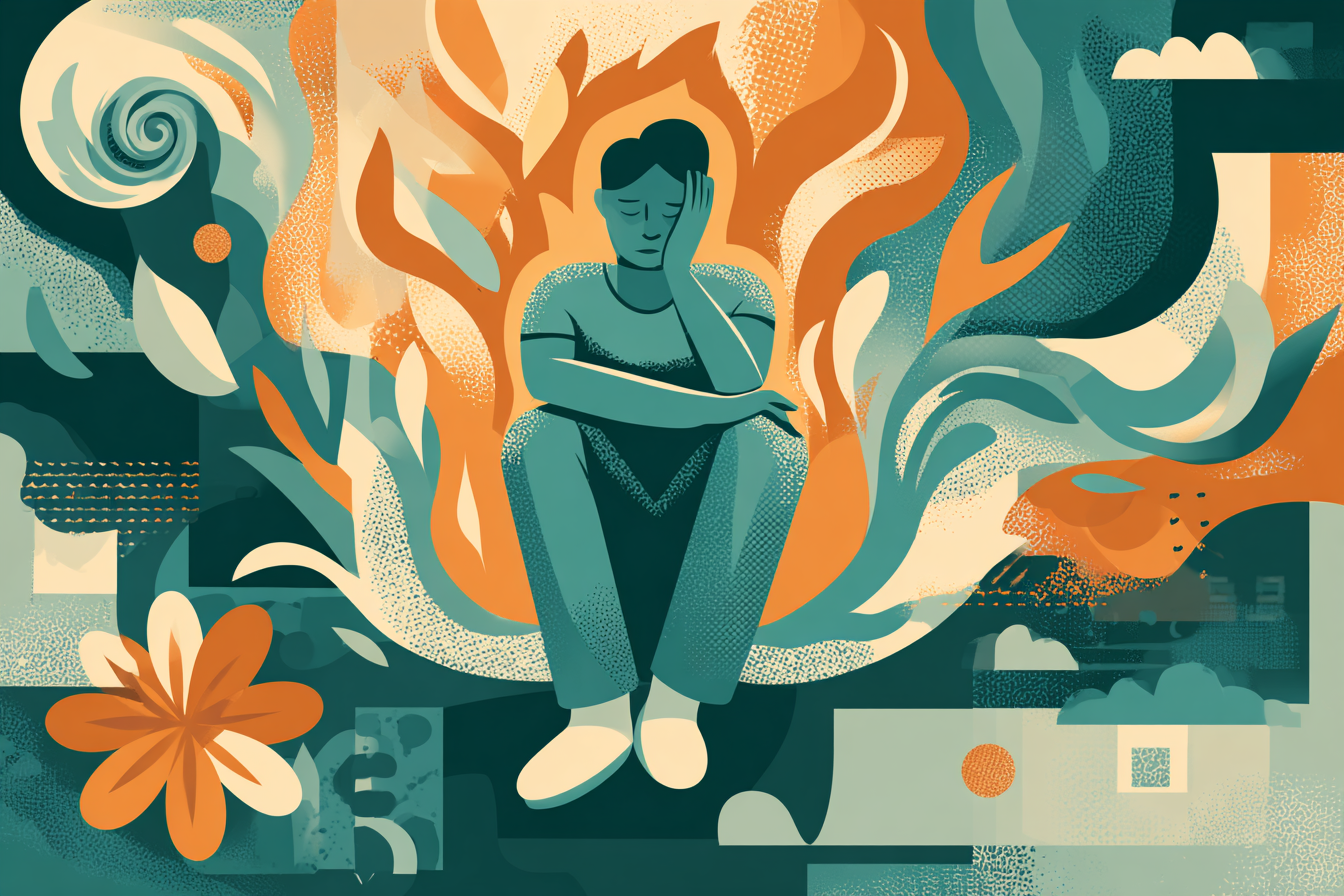

You’re sleeping eight hours, maybe ten. You’re taking weekends off. You might even be on vacation, toes buried in sand, and yet your chest still feels like it’s wrapped in piano wire. You’re not depressed—you can still laugh at jokes, still feel love for your family—but something has snapped inside your ability to *function*.
This is the central paradox of burnout: it masquerades as laziness or moodiness when it’s actually a systemic shutdown. The World Health Organization calls it an «occupational phenomenon.» The American Psychological Association calls it a state of exhaustion. Your body, meanwhile, calls it a five-alarm fire through headaches, heart palpitations, and a memory that’s suddenly sieving information like a leaking boat.
The Sleep That Doesn’t Refresh
The first sign isn’t just tiredness—it’s a specific flavor of exhaustion that outlasts rest. According to Mental Health America, this is the «drained» feeling that persists even after a full night’s sleep, as if your internal battery has lost the ability to hold a charge. You wake up behind the eight ball and stay there.
This isn’t fatigue from the flu or the tiredness of new parenthood. It’s a cellular-level depletion. The APA notes that while rest alone can reverse early burnout, prolonged exposure triggers something more sinister: your body stops producing the cortisol rhythm necessary for alertness, leaving you simultaneously jittery and hollow. Think of it like a car left running in neutral—the engine’s screaming, but you’re not moving an inch.
When Your Favorite Tasks Turn to Ash
Here’s where the story gets personal. Burnout doesn’t announce itself with dramatic collapse. It begins with a quiet betrayal: the project you loved last year now feels like a stranger’s burden. The caregiving that once fulfilled you becomes something you dread before opening your eyes.
HelpGuide describes this as «behavioral disengagement»—a fancy term for the Sunday Scaries that bleed into every day of the week. You’re not just procrastinating; you’re actively grieving the loss of enjoyment while still performing the motions. This is the point where many people misdiagnose themselves as «just in a slump» or «needing more discipline.» But that’s only half the story.
The Cynicism That Creeps In
After the enthusiasm drains, something colder seeps into the empty space. The APA identifies this as cynicism—the perception that negative factors are «permanent, pervasive, and personal.» Suddenly, your difficult boss isn’t just having a bad month; they’re proof that «management is always toxic.» Your snoring neighbor isn’t just inconsiderate; they’re evidence that «people are fundamentally selfish.»
This isn’t pessimism. It’s a psychological defense mechanism, the mind’s attempt to create emotional distance from demands it can no longer metabolize. The Cleveland Clinic adds a fourth «P» to the pattern: passivity. You stop trying to fix things because your brain has decided nothing works anyway. Once you’re here, you’re not just stressed—you’re structurally detached from the meaning of your work.
Your Brain Starts Dropping the Ball
But the sabotage isn’t just philosophical. It’s neurological. That foggy inability to remember why you walked into a room? The increased typos in emails you used to write flawlessly? That’s not aging or distraction.
Mental Health America lists «struggling to focus or making more mistakes than usual» as a core warning sign, while the Mayo Clinic notes «lack of focus or forgetfulness» as part of the cognitive profile. Behind the scenes, chronic stress is essentially flooding your prefrontal cortex with cortisol, gumming up the machinery you need for executive function. You’re not getting stupid; your brain is overheating, and it’s starting to warp the plastic.
The Body Fires Every Alarm It Has
This is where it gets interesting—or rather, where it gets physical. Burnout doesn’t stay in your head. The research from Deloitte and WHO lists a cascading symphony of bodily complaints: chronic headaches, gastrointestinal rebellion, dizziness, heart palpitations, chest pain, and muscle tension that feels like you’re wearing a suit of armor two sizes too small.
These aren’t psychosomatic figments. They’re the hypothalamic-pituitary-adrenal axis throwing every emergency lever it can find. When emotional exhaustion meets cognitive decline, your body steps in with the biological equivalent of a check engine light. Ignore the chest tightness at your peril: the Cleveland Clinic warns that severe physical symptoms like fainting or heart palpitations require immediate medical evaluation, not just a bubble bath.
When You Ghost Your Own Life
Parallel to the physical collapse comes a social one. You start declining invitations—not because you’re busy, but because interaction feels like another performance you can’t afford. The Cleveland Clinic identifies «withdrawing from social obligations» as a key marker, while Mental Health America notes the isolation that accompanies frequent physical symptoms.
This withdrawal creates a dangerous feedback loop. Social connection is the primary buffer against burnout’s progression, yet burnout makes connection feel impossible. You’re not just avoiding brunch; you’re severing the support lines that could pull you back from the edge.
The Measurable Decline
Eventually, the numbers catch up with you. Deadlines slip. Output drops. The Mayo Clinic cites «difficulty completing daily tasks» and «increased absences» as performance red flags. In corporate surveys, 90% of respondents report that burnout impacts their productivity—a statistic that masks the individual tragedy of a nurse making calculation errors or a teacher forgetting a student’s IEP meeting.
This decline isn’t visible just to managers. It’s visible to you—which triggers the final, most devastating symptom: the collapse of self-efficacy.
The Voice That Says You’re Broken
The APA calls this «ineffectiveness,» characterized by diminished accomplishment and self-doubt. You begin negative filtering—seeing only your failures while your successes evaporate from memory. This is the bridge between burnout and depression, the point where role-specific exhaustion threatens to become a global worldview.
Unlike clinical depression, burnout is typically situation-specific—the WHO’s ICD-11 classification recognizes it as tied to chronic workplace stress that hasn’t been successfully managed. But here’s the caveat: left untreated, that specificity erodes. The APA and Cleveland Clinic emphasize that while burnout isn’t classified as a medical condition *per se*, its sequelae—cardiovascular disease, major depressive disorder, immune dysfunction—certainly are.
The Neurodivergent Complication
But not everyone burns out at the same rate or recovers on the same timeline. Mental Health America notes that neurodivergent individuals—those with ADHD, autism, or sensory processing differences—experience burnout through an added layer of complexity. For them, burnout isn’t just about workload; it’s about the erosion of «masking» capacities, sensory overload, and the exhaustion of navigating environments not built for their neurology.
The recovery period for neurodivergent burnout often extends longer than the standard estimate, requiring not just rest but structural accommodation: quiet spaces, predictable routines, and the removal of sensory irritants that neurotypical people barely register.
The Recovery Reality
So how long does it take to come back from the edge? The data suggests a sobering timeline: two to six months of targeted, systematic intervention. Not a weekend. Not a long lunch. Recovery requires boundary-setting, workload adjustment, and often professional support. The APA recommends fundamentals that sound simple but require architectural changes to your life: seven to nine hours of sleep, minimum 5,000 steps daily, and five to ten minutes of mindfulness practice.
But here’s the contradiction in the literature: while self-care is the prescribed medicine, the WHO and Deloitte data suggest that individual wellness strategies are insufficient without organizational or systemic change. You can meditate all you want, but if you’re working in a chronically understaffed unit or caregiving without respite, you’re refilling a leaking bucket.
Reading the Smoke Signals Before the Fire
The critical insight across all nine major medical sources is that burnout progresses in stages, and the earliest signs—constant exhaustion, dread of loved tasks, and emotional blunting—are reversible with intervention. Wait until you’re experiencing chest pain, complete cognitive failure, or total cynicism, and you’re looking at a six-month recovery instead of a six-week reset.
The check engine light is flashing. It’s been flashing in your headaches, your forgotten appointments, your Sunday dread. The question isn’t whether you’re «tough enough» to push through—it’s whether you’ll honor the warning before the engine seizes completely.