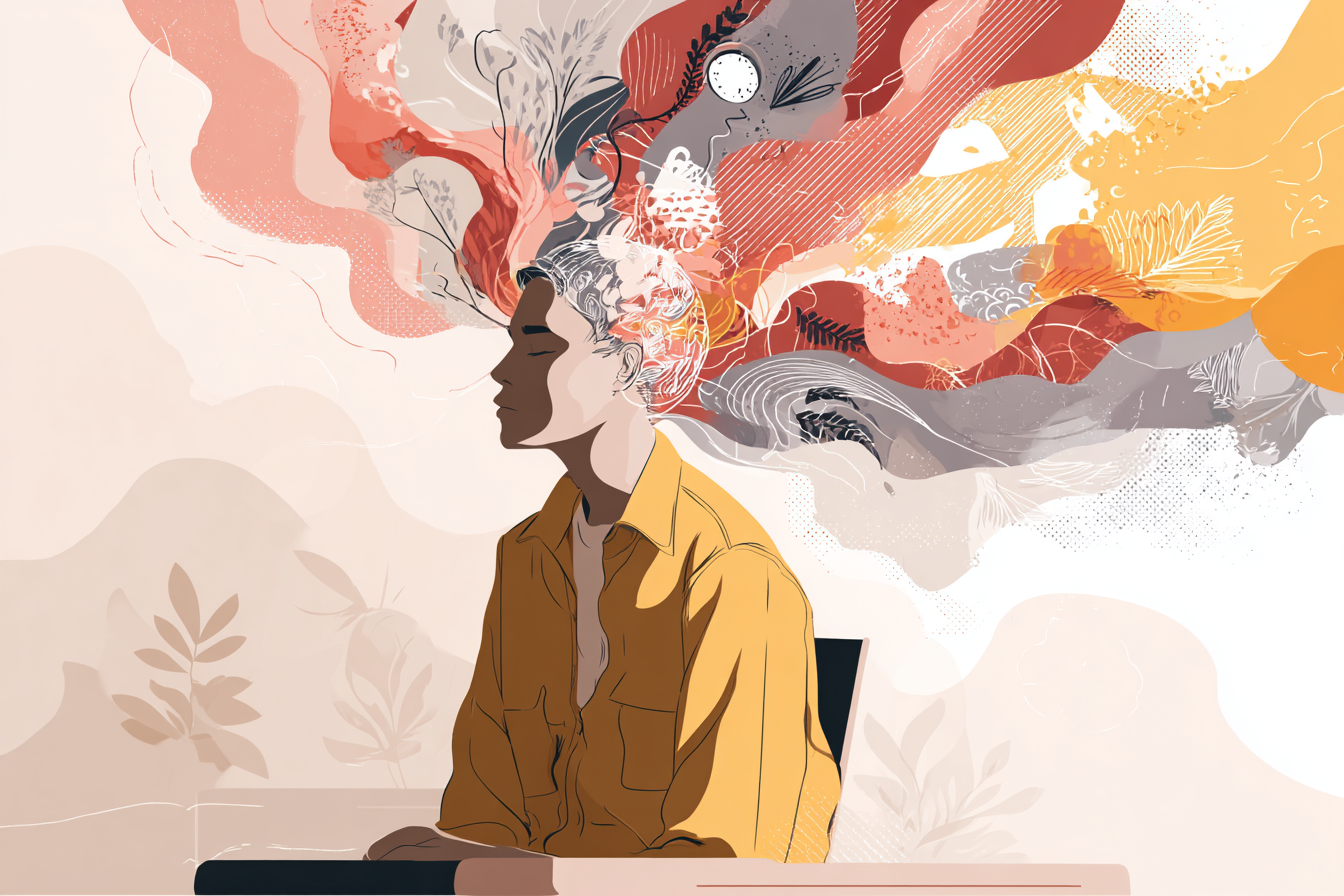

The exhaustion starts with a peculiar detail: you wake up tired. Not the kind of tired that coffee fixes, but a cellular depletion that persists regardless of how many hours you spent unconscious. This is the third sign of burnout, and by the time you notice it, you’ve likely already passed through the first stage—ironically named the «honeymoon phase»—where your dedication actually masked the beginning of your undoing.
The Five Harbingers: When Enthusiasm Turns to Ash
Burnout doesn’t announce itself with a collapse. It creeps through five distinct stages, beginning with that honeymoon period where you willingly work late, powered by adrenaline and purpose. Then comes stress onset: the Sunday dread that lingers into Tuesday. Chronic stress follows—where caffeine becomes a food group and irritability becomes your default setting. Finally, you arrive at full burnout, which, left unaddressed, calcifies into habitual burnout: a state of such profound depletion that removal of the stressor doesn’t restore you.
Research consistently identifies five warning signs that you’re sliding down this slope. The first is existential: every day feels bad. Not dramatic or tragic—just uniformly gray, a low-grade fever of dissatisfaction that infects mornings, afternoons, and evenings alike.
Second, your responsibilities—whether reports or laundry—start feeling like a waste of energy. This isn’t laziness; it’s cynicism, a protective psychological detachment that convinces you nothing matters enough to warrant the effort.
Third comes that bone-deep exhaustion, the kind that sleep doesn’t touch. Fourth, you notice you’re spending the majority of your day on tasks that feel either crushingly dull or impossibly overwhelming—with no middle ground, no «flow state» in sight.
Finally, and perhaps most dangerously, nothing feels meaningful. The project you once championed, the promotion you coveted, even your personal relationships seem drained of significance. When these five conditions converge, you’re not just stressed. You’re approaching a condition that now affects 21% of workers so severely they require time off, and costs the UK economy alone £28 billion annually in lost productivity and sick days.
Your Brain on Empty: The Three Dimensions of Drain
But what exactly is happening neurologically? Psychologists Christina Maslach and Michael Leiter established that burnout manifests through three interconnected dimensions. First, emotional exhaustion—you have nothing left to give, empathy becomes a finite resource that runs out by 10 AM. Second, depersonalization—you develop a cynical, detached attitude toward colleagues, clients, or family members, viewing them as obstacles rather than humans. Third, reduced personal accomplishment—you feel ineffective, as if your work produces no value regardless of external validation.
In healthcare, where 52% of nurses and 50.3% of physicians report high burnout levels, this creates a dangerous paradox: those trained to care become unable to do so. The phenomenon extends beyond medicine, however. Teacher retention systems report that nearly 80% of educators cite lack of appreciation as their primary reason for leaving—suggesting that burnout is often less about workload and more about perceived futility.
Reverse the Damage: The Three R Protocol
The research offers a structured escape route called the «Three R» approach, and it works only if you apply all three steps—not just the comfortable ones.
**Recognize.** This requires brutal honesty. Ask yourself: Is my workload unsustainable? Have I lost the ability to feel grateful? Am I shrinking from social connection? Do I feel respected? Have I lost pride in my output? If you’re answering no to gratitude and respect while your hours balloon, you’re not in a slump. You’re in the danger zone.
**Reverse.** This is where most advice columns tell you to «practice self-care,» but the evidence suggests something more aggressive. Immediately shift responsibilities where possible—delegation isn’t nice, it’s necessary. Practice micro-boundaries: fifteen minutes of quiet time when full breaks aren’t feasible, a short walk that physically removes you from the environment. Cognitive Behavioral Therapy techniques help reframe the negative thought spirals («This job is killing me» becomes «This job is mismanaged, and I am allowed to have limits»). Mindfulness isn’t just meditation apps; it’s breathing exercises that interrupt the stress response before it floods your system with cortisol.
**Build Resilience.** This is the long game. It requires physical infrastructure: sleep hygiene that prioritizes restoration, movement that reminds your body it isn’t trapped. But it also requires emotional scaffolding—reintroducing activities that spark joy not as indulgences, but as physiological necessities. For neurodivergent individuals, this stage takes longer and requires additional accommodations; sensory overload and the exhaustion of social masking mean recovery periods extend beyond standard timelines, and «micro-boundaries» become essential survival tools rather than luxuries.
Why «Self-Care» Is Sometimes an Insult
Here’s where the narrative gets uncomfortable. Much of the burnout literature focuses on individual responsibility—your lack of boundaries, your insufficient resilience. But the research reveals a contradictory truth: proactive stress-management (planning and prevention) proves more effective than reactive approaches, yet systemic factors often make prevention impossible.
Healthcare workers don’t burn out simply because they lack yoga routines. They burn out because of moral injury—when institutional demands force them to act against their values—and because of staff shortages that turn eight-hour shifts into fourteen-hour marathons. When an organization reduces administrative burdens and adjusts workloads, recovery becomes possible. When they don’t, individual resilience strategies amount to telling someone to swim harder while ignoring the anchor tied to their ankle.
This creates a tension in the research itself. Some sources suggest burnout causes permanent neurological changes, while others emphasize complete recoverability. The honest answer lies somewhere in between: untreated burnout can lead to habitual patterns that require professional intervention to unlearn, but the condition itself is not necessarily a life sentence—provided both the individual *and* the system change.
The Recovery Reality Check
So how do you know if you’re merely stressed or actually burned out? Stress feels like too much *of* something; burnout feels like not enough *for* anything. Stress produces urgency; burnout produces emptiness. And crucially, stress resolves when the project ends or the deadline passes. Burnout persists even when you remove the stressor, which is why 23.3 million sick days are lost to it annually in the UK alone—you can’t rest your way out of a system that has depleted your capacity to feel restored.
If you recognize the five signs—if every day feels bad, if your energy feels wasted, if exhaustion has become your baseline, if your tasks feel impossible, if meaning has evaporated—treatment isn’t optional. It’s medical. Professional help becomes necessary when symptoms impact daily functioning: when you cannot sleep despite fatigue, when you dread work with physical nausea, when cynicism has replaced all engagement.
Your Monday Morning Intervention
You don’t need to quit your job today—though you might need to eventually. Start with the micro-boundary: fifteen minutes of non-negotiable quiet before checking email. Question the narrative that your exhaustion validates your work ethic. Challenge the belief that this is «just how it is.»
Build your exit ramp using evidence, not just willpower. Move your body, even briefly—studies show fifteen minutes of walking restores cognitive function. Reframe one negative thought daily. Sleep like it’s your job, because recovery requires physiological repair, not just permission to collapse.
And if you’re managing others? Know that nearly 80% of employees leave because they feel invisible, not because they lack grit. The £28 billion question isn’t why workers are breaking down, but why we’re still debating whether the problem is personal weakness or systemic failure.
Burnout isn’t a badge of honor. It’s a warning light that the engine has been running hot for too long. The good news—backed by research across 125 countries—is that warning lights can be heeded before the engine seizes. The bad news is that no amount of positive thinking can replace the hard work of removing yourself from the conditions that burned you out in the first place.