
The Happiness Chemical That Wasn’t
We’ve been chasing the wrong molecule. For decades, self-help books and wellness influencers have sold us a simple story: dopamine is the “happy chemical,” and if we could just boost it—through better habits, bigger achievements, or the right supplements—we’d find joy. The reality is stranger and more humbling. Dopamine doesn’t make you happy; it makes you hunt.
Neuroscientists Kent Berridge and Morten Kringelbach mapped this distinction through decades of research at the University of Michigan. They found that dopamine circuits light up in anticipation of reward, driving what scientists call “incentive salience”—a fancy term for the magnetic pull of wanting. When you smell coffee brewing before the first sip, or feel your phone buzz with a notification, that surge is dopamine. But here’s the crucial distinction: animals with destroyed dopamine systems still smile when fed sugar water, while animals with artificially boosted dopamine will chase rewards they don’t actually enjoy. The chemical driving your midnight scroll through social media isn’t delivering pleasure; it’s delivering craving.
So where does the actual joy live?
The Sugar Cube of Bliss
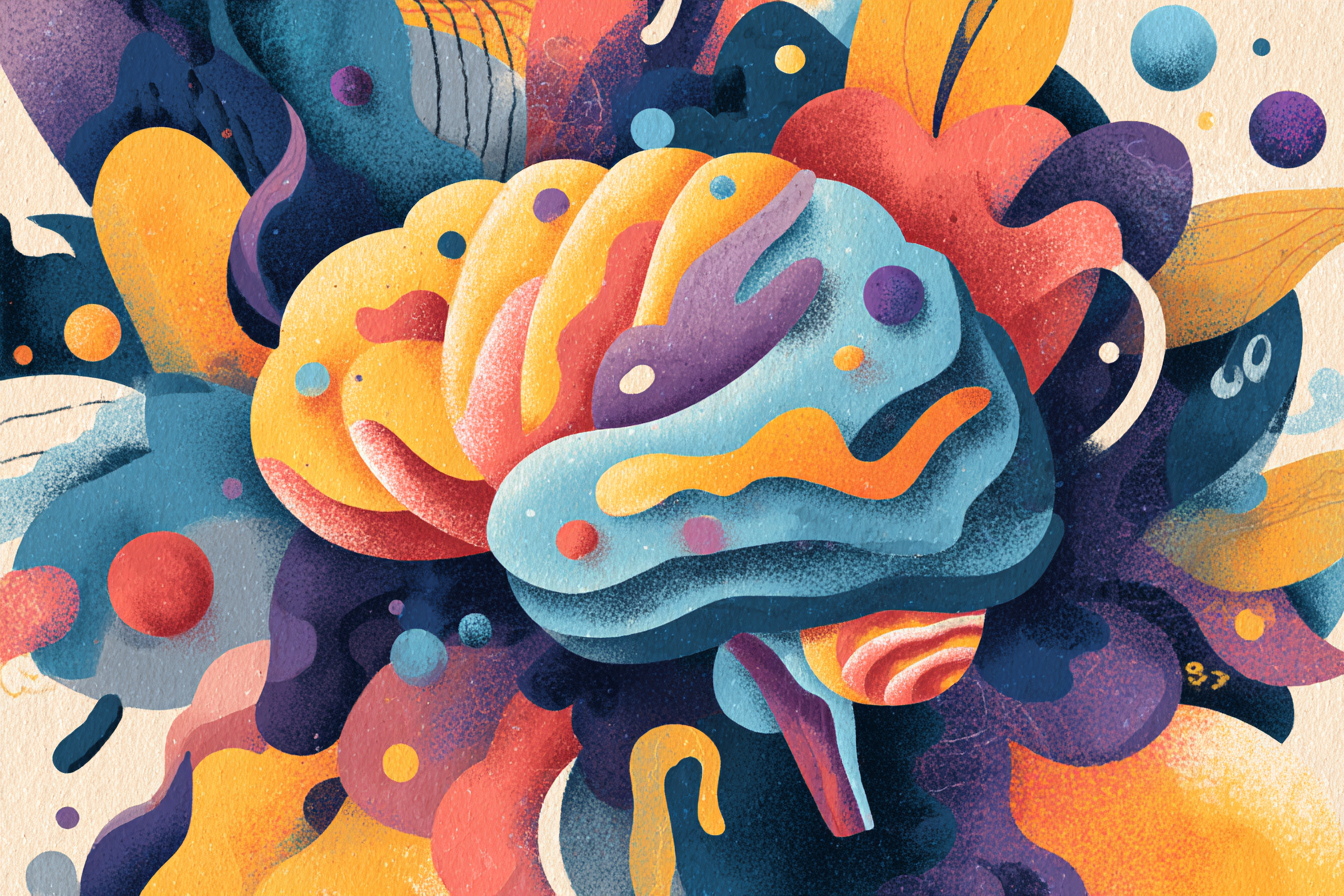
If you could zoom into the brain’s reward circuitry, you’d find tiny pockets of tissue—about one cubic centimeter in humans, roughly the size of a sugar cube—scattered through the nucleus accumbens and ventral pallidum. These “hedonic hotspots” don’t run on dopamine. They run on opioids and endocannabinoids. When researchers stimulate these hotspots with morphine or anandamide (the brain’s natural cannabis-like compound), they can more than double the intensity of pleasure responses, producing what Berridge calls pure “liking” independent of any desire to chase more.
This explains one of the great mysteries of exercise: the runner’s high. For years, we blamed endorphins—opioid molecules that seemed the obvious culprit for exercise-induced euphoria. But studies from the University of Arizona in 2012 revealed the real star is anandamide, an endocannabinoid that crosses the blood-brain barrier to light up those hedonic hotspots. Your “bliss molecule” isn’t an opioid; it’s closer to the active compound in cannabis, released during sustained aerobic activity and social touch.
But that’s only half the story.
The Brain’s Emotional Weather System
If dopamine is the gas pedal and the opioid hotspots are the actual ride, serotonin is the shock absorbers. It doesn’t generate joy so much as prevent joy from bottoming out. Research from Frontiers in Youth Mental Health in 2023 confirms that low serotonin correlates with the emotional static of distress, fear, and shame, while healthy levels reduce rejection sensitivity and stabilize mood. Think of it as the confidence infrastructure—necessary for sustaining pleasure, but not sufficient to create it.
Then there’s oxytocin, the social glue that complicates the picture in fascinating ways. Released during hugging, meaningful conversation, and sexual intimacy, it dampens amygdala activity—the brain’s threat detector—allowing us to lower our guard with others. But here’s where it gets interesting: men may rely more heavily on vasopressin, a closely related neuropeptide, for bonding. The “cuddle hormone” isn’t universal; it’s part of a complex social chemistry that varies by sex and context.
And what about calm? That’s GABA’s territory. A 2012 study published in the Journal of Alternative and Complementary Medicine found that a single 60-minute yoga session increased GABA levels by 27 percent compared to reading. While other sources rate confidence in GABA’s role as lower than for dopamine or opioids, the finding suggests we can chemically dismantle anxiety through deliberate physical practice.
The Blueprint and the Builder
This might sound like destiny written in neurotransmitters, but the research offers a radical freedom. Twin studies consistently show that genetics account for roughly 50 percent of happiness variation—the hand you’re dealt. The other half is plastic, moldable through neuroplasticity. The same hotspots that generate pleasure can be strengthened; the same dopamine circuits can be recalibrated.
German researcher Tobias Esch tracked 1,597 participants to map what he calls the “U-curve of happiness.” Life satisfaction bottoms out in mid-life (ages 40-50) when stress-relief systems dominate and cortisol spikes. But after 55, something shifts. Older adults don’t just adapt; they transform. Their brains move from dopamine-driven seeking (Type A) and stress-driven relief (Type B) toward what Esch calls “assertion motivation” (Type C)—a state powered by serotonin and opioid satisfaction rather than restless wanting.
This is the satisfaction paradox: your brain learns to want less and enjoy more. The neural architecture becomes less about the chase and more about the savoring.
The Laboratory of Daily Life
The neuroscience points toward a specific, almost mechanical approach to engineering joy. First, stop trying to flood yourself with dopamine. Instead, structure your days for small, frequent completions—micro-wins that trigger dopamine’s motivational signal without the crash of constant anticipation.
Second, activate the hotspots directly. Moderate aerobic exercise (think 30 minutes of sustained effort, three times weekly) spikes anandamide. Social touch and meaningful conversation spike oxytocin. Gratitude journaling and acts of kindness modestly elevate serotonin. These aren’t vague wellness suggestions; they’re chemical interventions with measurable neurochemical correlates.
Third, build the infrastructure. The 27 percent GABA boost from yoga isn’t just relaxation; it’s chemical proof that you can dampen anxiety through practice. Combined with sleep, omega-3 fatty acids, and regular physical activity, these behaviors don’t just make you feel better—they reshape the reward circuitry itself.
There are contradictions in the data worth noting. Some sources describe dopamine-driven euphoria during love that mimics cocaine’s effects, seemingly contradicting the “motivation not pleasure” finding. The resolution lies in interaction: dopamine amplifies the signal, but the actual pleasure requires the opioid and oxytocin networks to fire in concert.
The Future of Feeling
Within the next decade, we may see portable fMRI or near-infrared spectroscopy devices that provide real-time feedback on these reward circuits. Imagine knowing, objectively, whether your nucleus accumbens is actually firing during a activity, or whether you’re just habit-chasing. It sounds like science fiction, but the trajectory points toward democratized neurofeedback.
Until then, the evidence suggests happiness isn’t a single chemical to be optimized. It’s an orchestra requiring four distinct sections: the wanting system (dopamine), the liking system (opioids and endocannabinoids), the stability system (serotonin), and the social system (oxytocin and vasopressin). Half your starting volume is genetic; the other half is a skill you can rehearse.
Your brain isn’t a vessel to be filled with happiness. It’s a network to be conducted.