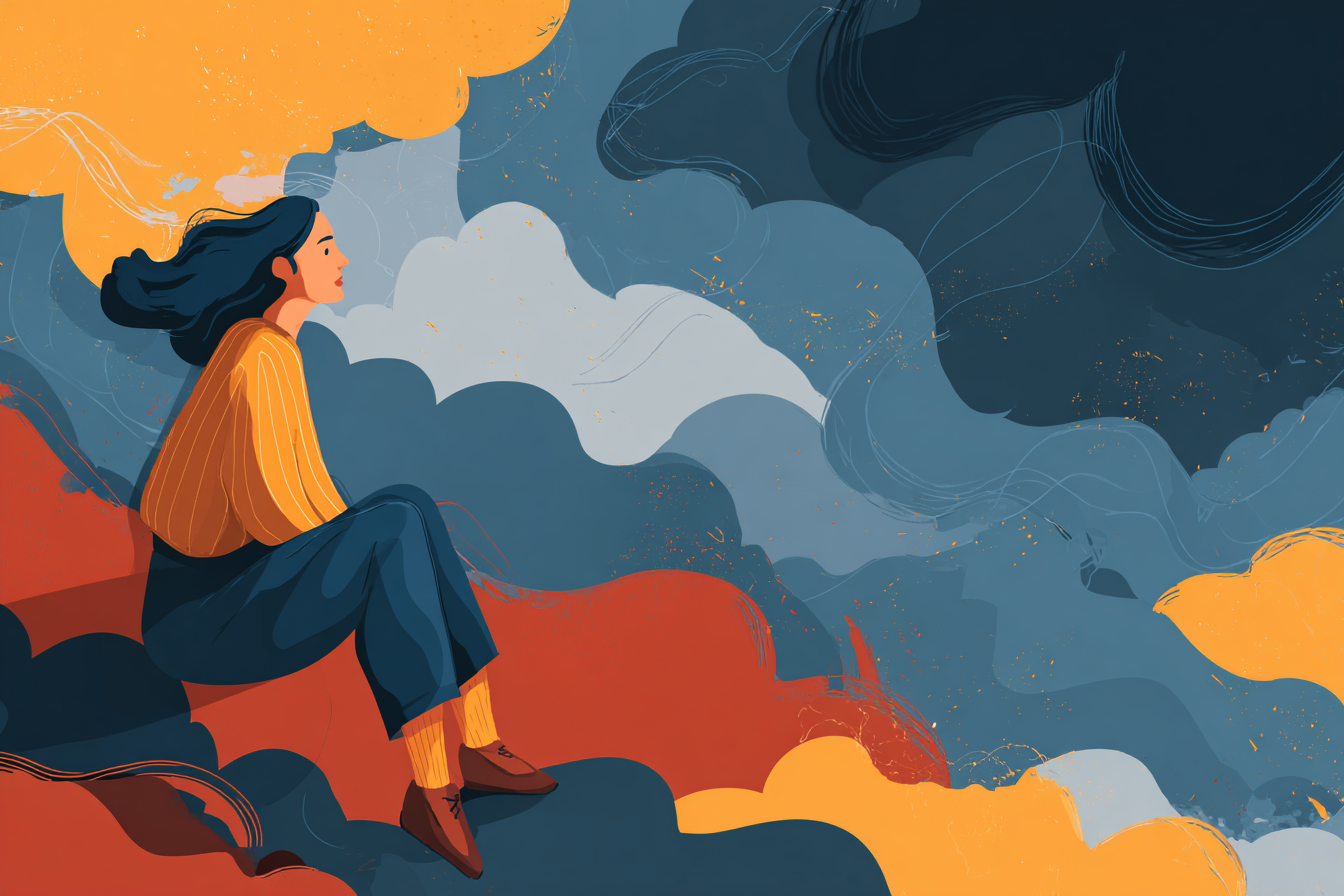

Your body is keeping secrets from you.
It knows you’re burning out long before your conscious mind catches on—sometimes two to four weeks before the emotional crash, sometimes longer. While you’re still convincing yourself that you’re just «busy» or «in a rough patch,» your immune system is already waving red flags. The headaches that started last month aren’t from dehydration. The stomach knots that appear every Sunday evening aren’t random. That chest tightness when you open your laptop? It’s not a heart attack, but it is an SOS.
This is the cruel irony of burnout: we treat it as a mental health crisis that manifests in the mind, yet the evidence suggests it begins as a physiological event. Research consistently shows that physical symptoms—persistent fatigue that refuses to yield to rest, frequent colds, digestive disturbances, muscle tension in the neck and shoulders—often serve as the first harbingers of collapse. When researchers looked at who was most at risk, they found a telling threshold: people experiencing five or more physical symptoms simultaneously carry a dramatically higher probability of progressing to full burnout. Your body isn’t just the canary in the coal mine; it’s the first responder.
The Three-Headed Beast
But what exactly are we talking about when we say «burnout»? The term gets thrown around liberally—»I’m so burned out from that weekend trip»—but clinically, it has a specific, three-dimensional personality that distinguishes it from ordinary exhaustion.
First, there’s emotional exhaustion: the sensation of being emotionally overextended and depleted, as if your capacity for feeling has been hollowed out. This is the component everyone recognizes, the «I have nothing left to give» sensation.
Second comes cynicism or depersonalization—a psychological withdrawal from your work and the people around you. Tasks you once cared about become mechanical. Colleagues become obstacles. The mission becomes meaningless. This isn’t just having a bad day; it’s a protective emotional callus that forms when the system stays overloaded for too long.
Third, and often overlooked, is reduced professional efficacy. This is where the tragedy deepens because it creates a feedback loop: you’re working harder but accomplishing less, which drives you to work even harder, accelerating the spiral. You begin to doubt your competence despite evidence of past success.
The World Health Organization, which formally classified burnout as an occupational phenomenon in 2019, insists that all three dimensions must be present to meet the clinical definition. You can be exhausted without being burned out. You can hate your job without being burned out. But when exhaustion meets detachment meets ineffectiveness, you’ve entered the syndrome.
The Slow Creep: How Enthusiasm Becomes Habitual Burnout
Burnout doesn’t ambush you—it courts you gradually, moving through five distinct stages that can span months or years. Understanding this progression is crucial because intervention at earlier stages requires different tactics than crisis management at later ones.
It begins with the Honeymoon Phase: high job satisfaction, energy, and commitment. You might be working long hours, but the fuel tank feels infinite. Then comes the Onset of Stress: some days are harder than others. You notice the first physical symptoms—perhaps that Sunday night dread or the inability to fall asleep without scrolling through work emails.
Stage three is Chronic Stress: the difficult days outnumber the easy ones. You’re persistently tired, perhaps drinking more coffee or alcohol to manage energy and anxiety. You start avoiding certain colleagues or tasks.
Then arrives Burnout itself: the symptoms become entrenched. You feel empty, your performance drops significantly, and you may experience oscillating between escapist behavior (binge-watching, overeating, substance use) and obsessive work behavior that yields diminishing returns.
Finally, Habitual Burnout: the symptoms become so embedded that they feel like personality traits. This is where burnout transitions from an acute condition to a background radiation of existence, often requiring organizational-level interventions or extended medical leave to resolve.
Here’s where the research gets uncomfortable: by the time most people recognize they’re in stage four, they’ve already passed through three opportunities for prevention.
The Workplace Is Not Coincidental
Burnout is not a lifestyle choice or a personal failing of resilience—it’s an occupational phenomenon by definition. This distinction matters because it shifts the locus of responsibility. While depression can strike regardless of circumstance, burnout is specifically «conceptualized as resulting from chronic workplace stress that has not been successfully managed.»
This explains the timeline. When Herbert Freudenberger first studied burnout in 1974, he wasn’t observing executives or factory workers—he was watching addiction counselors in free clinics, people who had entered helping professions with deep passion only to find themselves emotionally hollowed out by unrelenting demand without commensurate resources.
The statistics paint a stark picture of how widespread this has become. In 2021, the American Psychological Association found that 79% of workers had experienced work-related stress in the previous month. By 2022, Willis Towers Watson reported that 44% of U.S. workers were actively seeking new employment, with burnout cited as a primary driver. We’re not looking at an individual psychology problem; we’re looking at an organizational epidemic.
The Depression Question: Where the Experts Disagree
If you’re experiencing these symptoms, you might wonder: is this burnout or is this depression? The honest answer is that the medical community is still negotiating the boundary.
Some researchers argue burnout is distinct—situational rather than biological, linked specifically to work context rather than generalized across life domains. Others note that the symptom profiles overlap so significantly that distinguishing them in a clinical setting proves challenging. What we do know is that untreated burnout significantly increases the risk for developing clinical depression and anxiety disorders, suggesting that even if they aren’t identical, they exist on a continuum of mental health risk.
The practical implication? If you’re debating whether to call your experience «burnout» or «depression,» you’ve already passed the threshold where you should seek professional guidance. The label matters less than the intervention.
Reading the Signals
So what should you actually watch for? Beyond the physical early warnings, the landscape of symptoms includes cognitive changes—»brain fog,» difficulty concentrating, or that peculiar sensation of staring at a document while your mind refuses to process the words. There’s social withdrawal, not just from colleagues but from friends and family. There’s the paradoxical increase in working hours paired with decreasing output, the irritability that surprises you in its intensity, and the profound sense that nothing you do makes a difference.
The critical differentiator remains persistence. Everyone has weeks where sleep doesn’t help, where work feels pointless, where the to-do list feels insurmountable. But when these states endure for two to three weeks without relief, when weekends don’t restore you and vacations fail to reset your nervous system, you’re no longer dealing with stress—you’re dealing with burnout.
Your body tried to tell you. The question is whether you’ll listen before it becomes the only story your life can tell.