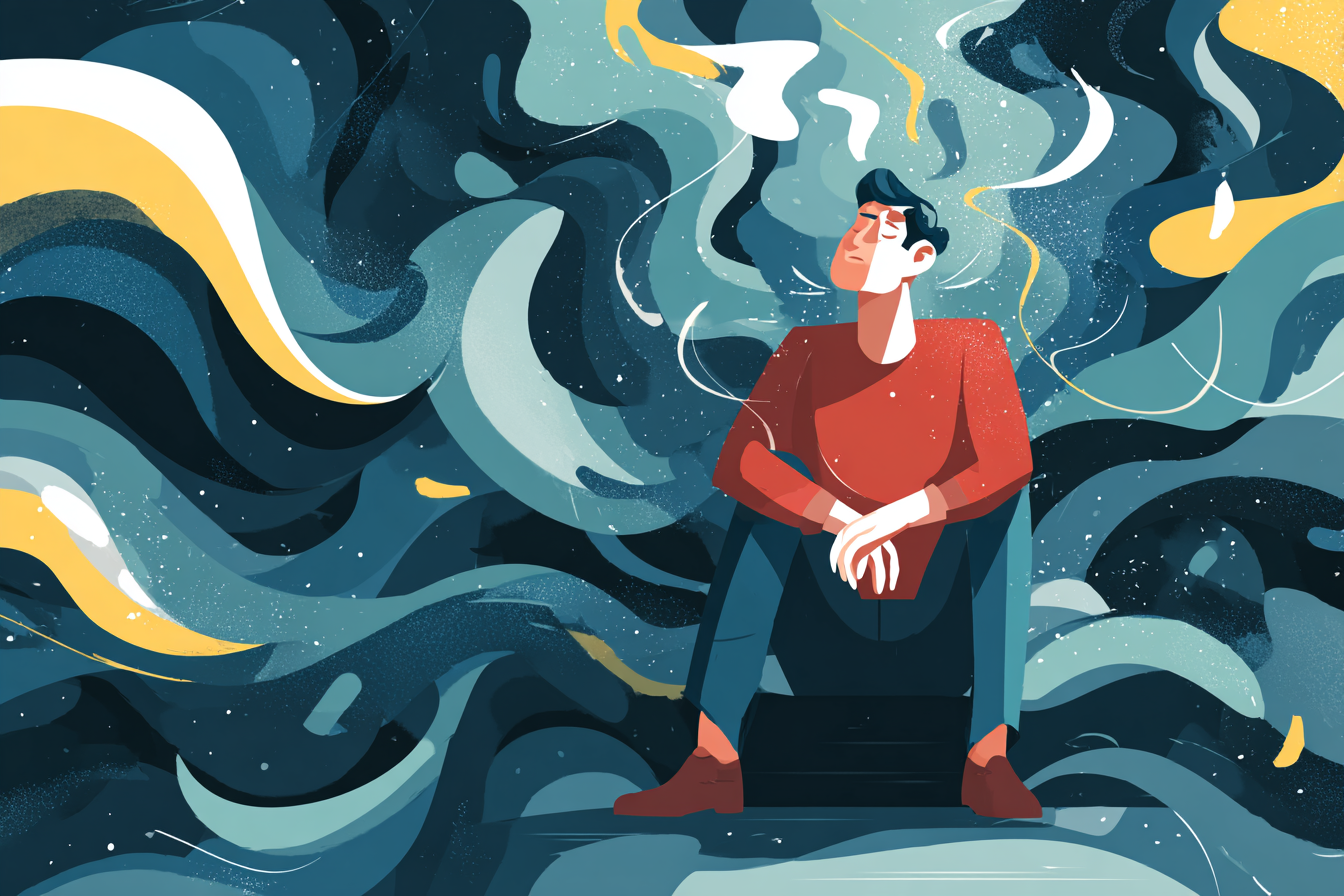

The Exhaustion That Sleeps
You slept eight hours. You drank the water. You took the Sunday off. And yet, by Tuesday afternoon, your skull feels filled with wet sand, and the simple act of answering an email requires the mental effort of translating ancient Greek. This is the first deception of burnout: it masquerades as ordinary tiredness while remaining stubbornly immune to rest.
According to the Mayo Clinic, this persistent exhaustion—the kind that clings to your bones even after a full night’s sleep—is the cardinal sign that stress has metastasized into something more sinister. The World Health Organization, which classified burnout as an «occupational phenomenon» in its 2019 ICD-11 revision, defines this state not merely as fatigue but as «energy depletion» so profound that it persists despite adequate recovery time. Unlike the sharp spike of stress, which might dissipate after a deadline passes, this exhaustion is chronic, chemical, and cellular. Research published in PMC by Feller et al. (2022) found that individuals with clinical burnout display above-normal cortisol levels and physiological markers of tension that remain elevated even when the patient is technically «resting.»
When Caring Starts to Hurt
But exhaustion is only the entry fee. The second warning sign sneaks in as emotional anesthesia. You might notice yourself laughing hollowly at a colleague’s joke, feeling nothing when your child tells you about their school day, or staring at a project you once loved with the emotional engagement of sorting laundry. The WHO calls this «increased mental distance from one’s job,» but in plain terms, it is the hardening of the heart.
Dr. Christina Guthier, cited in workplace psychology research, describes this as a «reduced capacity to cope with stress» that manifests as cynicism—a protective shell that forms when empathy becomes too expensive to maintain. This isn’t the occasional Monday morning grumble; it’s a persistent sense that your work is meaningless, that your colleagues are obstacles, and that nothing you do changes the outcome. HelpGuide describes this stage as caring about your work seeming like «a total waste of energy.» In high-achievers—who comprise a disproportionate number of burnout cases due to perfectionistic «I can do everything» mindsets—this detachment often arrives last, long after the body has begun to scream.
The Cognitive Glitch
Here is where it gets interesting: your brain begins to drop packets of information like a faulty Wi-Fi connection. You walk into a room and forget why. You stare at a spreadsheet and the numbers swim. You make uncharacteristic errors in tasks you’ve performed for years.
This third sign—reduced professional efficacy—represents the final component of the WHO’s triad of burnout dimensions. Unlike simple distraction, this cognitive impairment is structural. The Teladoc Health research notes that burnout can mimic ADHD symptoms, with sufferers experiencing poor memory, concentration lapses, and impaired executive functioning. A 2022 narrative review in PMC found that even after cognitive behavioral therapy (CBT), some burnout patients continued to underperform on cognitive tests compared to controls, suggesting that the neurological impact of chronic workplace stress may outlast the stressor itself.
The Body’s Rebellion
Your physiology doesn’t respect the boundary between «work stress» and «personal health.» The fourth cluster of warning signs arrives as somatic betrayal: headaches that bloom behind your eyes each afternoon, gastrointestinal distress with no dietary cause, sleep that is either elusive or unrefreshing despite sufficient hours in bed, and immune systems that wave white flags at the first cold virus.
Legacy Community Health (2025) lists appetite changes, chronic pain, and frequent illness as physical red flags. The research by Feller et al. links clinical burnout to elevated triglycerides and LDL cholesterol—literal markers of stress etched into your blood chemistry. These aren’t psychosomatic figments; they are measurable biological consequences of a nervous system stuck in permanent fight-or-flight mode. When 48% of remote workers report burnout symptoms according to 2023 APA Workforce Survey data, the body becomes the ledger where unpaid emotional labor is recorded.
The Emotion You Can’t Name
The fifth sign is perhaps the most insidious because it masquerades as a character flaw rather than a symptom. It is the irritability that snaps at a barista’s mistake, the hopelessness that whispers «why bother» when facing a once-exciting challenge, or the sudden, disproportionate rage at a jammed printer.
This emotional dysregulation—swinging from irritability to numbness—signals that your psychological resources are overdrawn. The Teacher Retirement System of Texas (TRS) wellness research identifies «increased irritability, short temper, or sensitivity to minor issues» as critical indicators, while the Calm Editorial Team describes the state as «feeling empty, emotionally drained, and unable to keep up with life’s demands.» When 80% of employees cite lack of appreciation as their primary reason for leaving a job, according to TRS metrics, this emotional volatility often represents the final straw before resignation or collapse.
The Vacation Paradox
But here is the cruel twist that distinguishes burnout from ordinary stress: the beach won’t fix it.
Stress, as HelpGuide’s research clarifies, is characterized by over-engagement—anxiety that surges and then, crucially, resolves when the pressure lifts. Burnout is defined by disengagement, by a sense of futility that persists even after you remove the stressor. Feller et al. found that while burnout symptoms «diminish markedly during a break from work such as a vacation, the relief is temporary; unless work-related stress is reduced, burnout tends to reappear after returning to work.»
This is the diagnostic litmus test. If you return from holiday feeling refreshed but crash by Wednesday, you are not dealing with mere exhaustion. You are dealing with an occupational phenomenon that has rewired your stress response.
What Recovery Actually Looks Like
The research offers both sobering news and a roadmap. Sobering because, as the PMC review notes, some cognitive deficits may persist even after treatment. Hopeful because the «Three R» framework—Recognize, Reverse, Resilience—provides an evidence-based escape route.
Recognition requires honesty about the five signs listed above. Reversal demands more than bubble baths; it requires boundary-setting, professional intervention (CBT shows particular promise for restoring work performance), and systemic changes to workload. The WHO estimates a $4 return for every $1 employers spend on mental health, yet 85% of employees report that their mental health would improve with specific employer actions, according to APA survey data.
Resilience is built through the unglamorous architecture of sleep (7–9 hours, consistently), 30 minutes of daily exercise (or 10-minute bursts if that’s all you can manage), and mindfulness practices that restore executive functioning. But crucially, as the labor organization SLOCEA emphasizes, burnout is not an individual failure requiring self-care cures—it is a workplace phenomenon requiring collective action, fair workloads, and recognition programs.
The Permission Slip
If you recognize yourself in these five signs—the exhaustion that sleeps, the cynicism that protects, the cognitive fog, the physical rebellion, and the emotional volatility—understand that this is not a personal inadequacy. The ICD-11 classification explicitly links burnout to «chronic workplace stress that has not been successfully managed.» It is a systemic injury requiring systemic treatment.
The warning signs are not a checklist of shame; they are early detection systems. Ignore them, and you risk progression to clinical depression or chronic cardiovascular issues. Heed them, and you intervene before the damage becomes permanent. The research is clear: recovery is possible, but only if you stop treating burnout like a vacation deficit and start treating it like the occupational hazard it is.