
The Morning You Can’t Get Out of Bed
You cried at your best friend’s wedding. You felt hollow for three days after your dog died. You stared at the wall for an hour when you didn’t get the promotion. These moments sting—they carve out space in your chest and make the world look gray. But then you showered. You answered a text. You ate breakfast, even if it was just toast.
Clinical depression doesn’t work like that.
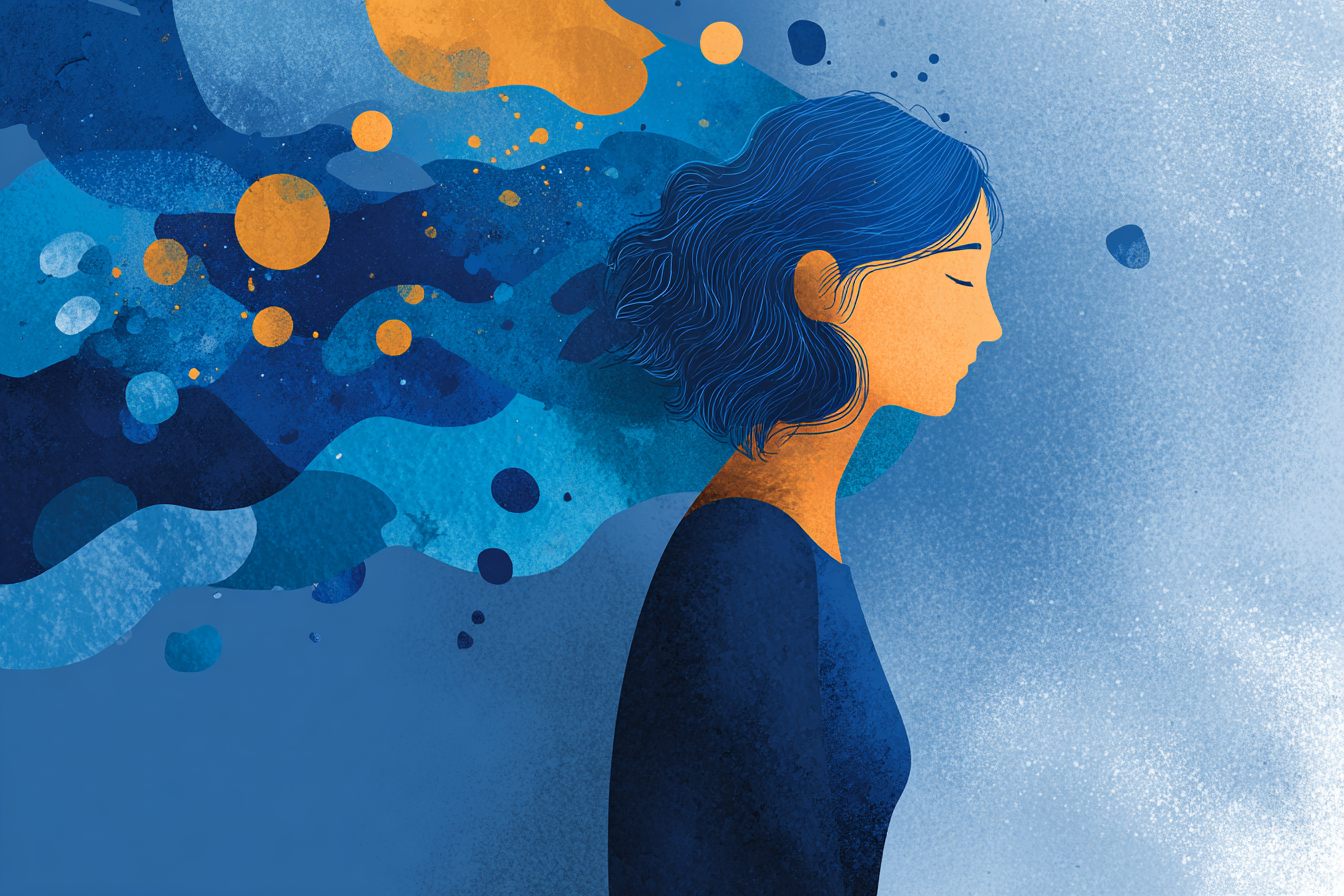
The difference isn’t about feeling «sadder» or being «weaker.» It’s biological, functional, and measurable. According to the DSM-5-TR—the diagnostic manual that psychiatrists worldwide use to distinguish mental illness from normal human pain—depression requires symptoms to persist for at least two weeks and cause «clinically significant distress or impairment in social, occupational, or other important areas of functioning.» In plain terms: it’s not just that you feel terrible; it’s that you can no longer do the things that make you human.
When Two Weeks Becomes a Boundary
The two-week threshold isn’t arbitrary. It’s the point where temporary neurochemical fluctuations harden into something that rewires your brain’s architecture. Normal sadness is an emotion, like weather passing through. Depression is a state, like a climate that changes the landscape.
But here’s where most people get stuck. Grief can look identical to depression on the surface. You lose a parent, and suddenly you’re not sleeping, not eating, and wondering if life has meaning anymore. The DSM-5-TR acknowledges this overlap—it’s culturally contextual. The key distinction lies in the *breadth* of the collapse. Grief tends to come in waves, often triggered by reminders of the loss, with moments of levity or even laughter breaking through. Depression is pervasive, unrelenting, and often disconnected from any specific trigger. You might have every reason to be happy on paper—new job, loving partner, good health—and still be unable to lift your head from the pillow.
The Five-Symptom Threshold
Sadness is just one color in depression’s palette. To meet clinical criteria, you need at least five symptoms from a specific list, sustained throughout those two weeks. Think of it as a perfect storm rather than isolated rain.
These symptoms read like a checklist of bodily betrayal: sleep changes (either insomnia or sleeping fourteen hours and still feeling exhausted), appetite shifts (suddenly repulsed by food or eating compulsively without pleasure), cognitive fog (the words on your screen swimming together), and anhedonia—a fancy term for when nothing feels good anymore, not even the things that used to save your life.
Most dangerously, there’s the suicidal ideation. Not necessarily a plan, but the passive, persistent thought that everyone would be better off without you, or that falling asleep and not waking up wouldn’t be so bad. This is where sadness and depression diverge into different species entirely. Sadness says, «I hurt because something bad happened.» Depression says, «I am fundamentally broken, and this will never end.»
The Hidden Epidemic in Plain Sight
If this sounds rare, it isn’t. The CDC estimates that roughly 7% of American adults experience major depression annually—that’s one in fourteen people standing in line at the grocery store, driving past you on the highway, sitting in the cubicle next to yours. Among young adults aged 18–29, rates climb even higher, particularly for women and those with prior trauma histories.
Yet 60% of these individuals never seek treatment, according to research from the National Center for Biotechnology Information. They convince themselves they’re just lazy, just dramatic, just going through a phase. They wait for the two-week mark to pass, then the two-month mark, until the depression becomes their baseline—»just how I am»—rather than a treatable medical condition.
This is tragic because the prognosis is actually encouraging. Treatment success rates hover between 70% and 90% when people do seek help. Depression is one of the most responsive conditions in all of medicine, yet stigma keeps it locked in the shadows.
The Red Flags That Override the Calendar
Here’s the crucial exception to the two-week rule: if you’re experiencing suicidal thoughts, the timeline doesn’t matter. Day three is just as urgent as month three. The 988 Suicide & Crisis Lifeline exists precisely because depression can escalate before the clinical threshold technically applies.
Seek immediate help, too, if you notice functional impairment—the inability to work, parent, or maintain basic hygiene. If you haven’t showered in a week because the effort feels insurmountable, or if you’re missing work not because you «don’t feel like going» but because you literally cannot get out of the car in the parking lot, you’ve crossed from sadness into something that requires intervention.
Seasonal Affective Disorder follows similar rules—yes, it comes and goes with the light, but it still requires that two-week minimum of impairment to qualify as clinical depression rather than «winter blues.»
How to Tell Which One You’re Carrying
If you’re reading this wondering which camp you fall into, there’s a practical tool: the PHQ-9, a nine-question screening used by clinicians worldwide. It asks about sleep, concentration, energy, and self-worth. Score above a 10, and you should probably talk to someone. Score above a 15, and you almost certainly need treatment.
But screening tools aside, ask yourself this: Can I still access joy? Even in deep grief, a funny meme might crack through for three seconds. Even in heartbreak, a warm cup of coffee might taste okay. Depression removes that access entirely. It’s like trying to tune into a radio station and hearing only static, no matter how high you turn the volume.
Sadness is a response. Depression is a disease. One heals with time and support; the other heals with treatment—therapy, medication, lifestyle interventions, or some combination thereof.
Breaking the Silence Before It Breaks You
We treat depression differently than we treat a broken leg, though both are injuries. You wouldn’t wait two months to see if a fractured bone healed itself. You wouldn’t tell someone with pneumonia to «just think positive.» Yet we apply these impossible standards to mental health because the injury is invisible.
The research is clear: early intervention works. The longer depression persists untreated, the more it alters neural pathways, making recovery harder. That two-week window isn’t just diagnostic—it’s preventative.
If you’re past that mark, if the symptoms are piling up like unread mail, if you’re Googling «sadness versus depression» at 3 AM wondering if you’re broken—treat that curiosity as data. Your brain is signaling that something is medically wrong, not morally wrong.
Help is available through the SAMHSA National Helpline at 1-800-662-4357, or the 988 crisis line if you’re in immediate danger. Depression is a liar that tells you you’re alone. The data—and the millions who have recovered—tell a different story entirely.