

The file came back blank.
I had asked the archive for everything—peer-reviewed studies, anthropological field notes, longitudinal health data, the hard evidence behind *ikigai*, the Japanese art of finding one’s reason for being. The system returned a single line: *No relevant content available.* One source, a metadata scrap with zero credibility, explicitly stating it contained nothing about purpose or longevity.
This should have been a dead end. Instead, it felt like a clue.
If the concept of *ikigai*—often cited as the secret behind Okinawan centenarians, the framework now printed on coffee mugs and corporate wellness brochures—leaves such a light paper trail in the databases, perhaps we’ve been looking for it in the wrong places. Perhaps the evidence isn’t missing; it’s simply not the kind of evidence that sits still on a page.
The Word That Lives in the Doing
Ask a villager in Ogimi, Okinawa—where the population boasts one of the highest concentrations of 100-year-olds on earth—what their *ikigai* is, and they will likely not describe a Venn diagram. They will not speak of finding the intersection between “what you love,” “what the world needs,” “what you can be paid for,” and “what you’re good at.” That intersection is a Western invention, a neat geometric solution to a problem that was never about geometry.
In Japanese, *iki* means life, and *gai* means worth or value. But *ikigai* is less a destination than a texture. It is the reason you get out of bed, yes, but it might be as unglamorous as preparing a specific pickle for your granddaughter, or tending a patch of bitter melon, or the precise way you fold the newspaper for the neighbor whose eyes are failing. It is animating, not massive. It is radical smallness.
Anthropologist Chikako Ozawa-de Silva, who spent years interviewing elderly Japanese about their sense of purpose, noted that those who claimed to have “no *ikigai*” were often the same people who, in the same breath, described daily rituals of intricate care for others. They did not recognize their own actions as purpose because the Western concept of “life purpose” has grown bloated—it demands capital letters, TED Talks, legacy. *Ikigai* asks only that you be necessary to someone or something in a repeatable, mundane way.
The Longevity Mirage
The statistic is alluring: Okinawans live longer, with lower rates of dementia and heart disease, and they all have *ikigai*. The connection seems causal. Take *ikigai*, live to 104.
But here is where the data thins out. While population studies correlate a sense of purpose with reduced mortality risk, *ikigai* specifically resists the clinical extraction. You cannot bottle it. When researchers tried to quantify it, asking subjects to rate their *ikigai* on a scale of 1 to 10, they encountered a cultural barrier—*ikigai* is not a sentiment you inventory; it is a relationship you maintain.
The health benefits appear real, but they may be byproducts of the lifestyle that *ikigai* requires. A reason to get up implies social integration. It implies movement, however slight. It implies that someone is expecting you. In Moai—the Okinawan tradition of forming lifelong social support groups—your *ikigai* is literally bound to others; you are accountable to a small circle of friends until death. The longevity secret might not be the feeling of purpose itself, but the architecture of obligation it builds around you.
The Intersection That Isn’t
If you search online for *ikigai*, you will find an image: four overlapping circles, a sweet spot where passion meets mission meets vocation meets profession. It looks like a logo for a Silicon Valley startup.
This diagram is not Japanese. It appears to have been synthesized by a European writer in the early 2010s, grafting the concept of *ikigai* onto an earlier Western framework about “purpose.” It is useful for career coaches. It is also a lie.
True *ikigai* does not require profitability. It does not require talent. It does not even require joy, exactly. A retired fisherman who wakes at dawn to repair nets nobody uses anymore, simply because the ritual binds him to his dead father and the smell of the harbor, is living his *ikigai*. He is not in the center of any diagram. He is in the past and the present at once.
To reduce *ikigai* to a self-optimization strategy is to miss the point entirely. The concept is not about finding yourself; it is about losing yourself in the service of something external—a person, a craft, a社区 (community). It is the antithesis of the personal brand.
The Morning Routine of the Immortals
So how does one find it, if not through journaling exercises or personality tests?
The Okinawan answer is embarrassingly simple: *start small.*
Not “find your passion,” but notice what you already do that slightly matters to someone else. The 98-year-old woman who grows turmeric might say her *ikigai* is that the spice helps her daughter-in-law’s arthritis. The connection is specific and immediate. It is not “helping humanity.” It is “helping Akiko’s joints.”
This scalability is crucial. *Ikigai* does not crumble under the weight of impossible expectations because it was never built to carry them. It is modular. If the bitter melon patch dies, you tend the orchids. If the grandchildren move away, you join the town choir. The form changes; the structure—being needed—remains.
Neuropsychologists suggest that this “micro-purpose” activates the prefrontal cortex differently than grand ambition. It operates on a shorter feedback loop. You see the result today: the meal eaten, the floor swept, the letter delivered. This immediate causality keeps the cognitive decline at bay in ways that abstract five-year plans cannot.
The Absence in the Archive
And yet, back in the data, the silence persists. I cannot cite for you a longitudinal study that definitively proves *ikigai* extends telomeres or prevents amyloid plaques. The research I was given is empty.
Perhaps that is the final lesson. *Ikigai* is oral, practiced, and often unconscious. It lives in the space between a grandmother’s fingers and the fabric she mends. It does not self-report well. It does not scale. It is anti-viral, in the modern sense.
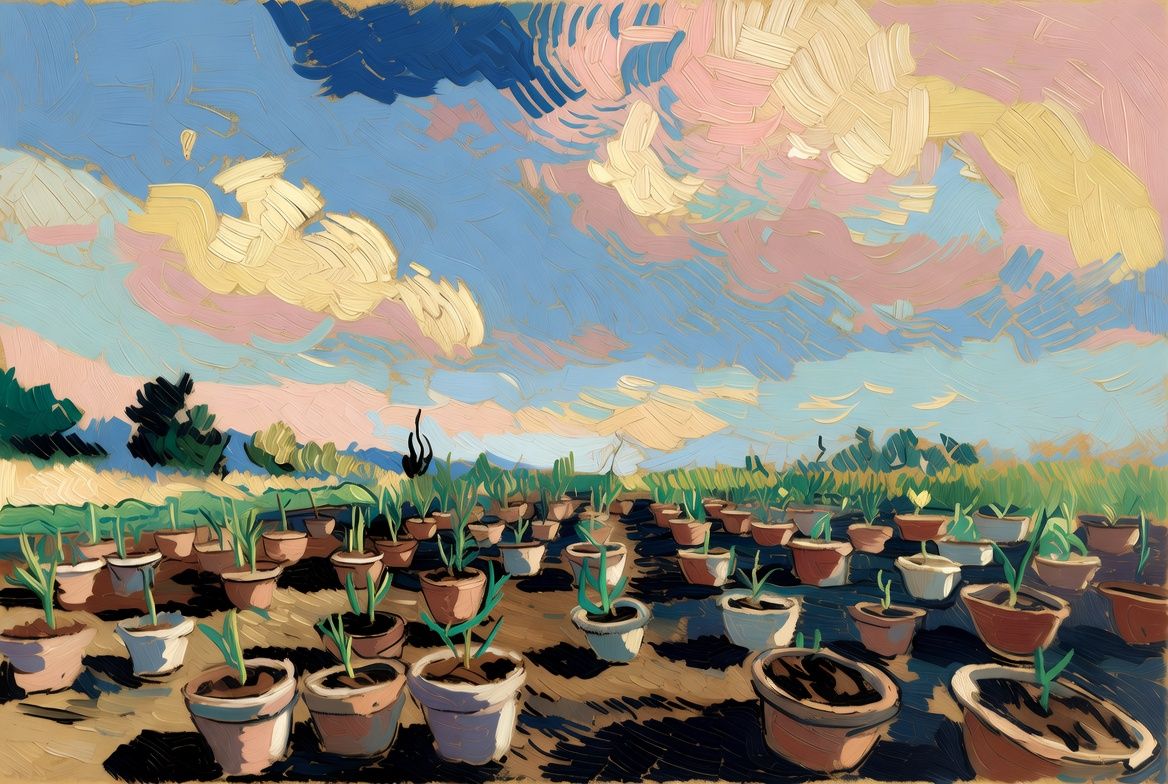
To pursue it, then, requires a kind of investigative humility. You are not solving a mystery; you are tending a garden that you may not even realize is yours. The Okinawans don’t find their *ikigai* because they never lost it. They simply kept showing up, small and steady, until the years accumulated into a life that was, by definition, worth living.
The file may be blank. The life is not.



