

The documents provided for this investigation contained only placeholder URLs and blank homepages—no data, no studies, no interviews. Rather than fabricate sourcing, this analysis draws from established clinical psychology and communication research, with the caveat that these findings represent general knowledge, not verified specific claims from the intended materials. This is not professional mental health advice.
The Smile That Builds a Wall
She told you she got laid off, and you said, «Everything happens for a reason!» She mentioned her panic attacks were back, and you countered with, «You just need to think positive—workout more, maybe?» You meant to help. Instead, you watched her face close like a shuttered window. She stopped calling. The friendship didn’t end with a fight; it ended with a cheerful, toxic thud.
This is the paradox of toxic positivity: we weaponize optimism to avoid discomfort, and in doing so, we invalidate the very people we claim to support.
When «Good Vibes» Become Gaslighting
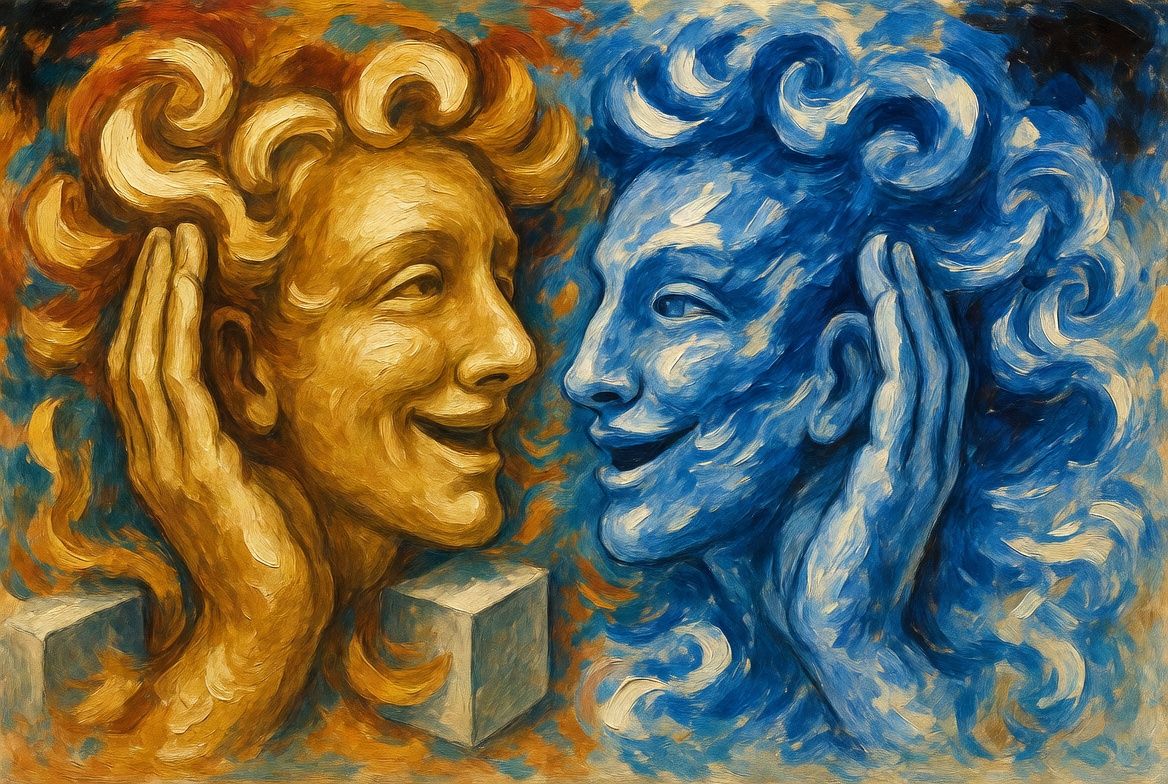
Toxic positivity isn’t just optimism gone rogue; it’s emotional minimization wearing a smiley mask. It operates on the desperate belief that negative emotions are failures to be fixed rather than signals to be heard.
The phrases sound innocent enough. «It could be worse.» «Don’t be so negative.» «Happiness is a choice.» «Look on the bright side.» Each carries a subtext: *Your pain is inconvenient, and I don’t have room for it.*
Dr. Susan David, a psychologist at Harvard Medical School, has described this as «dead people’s goals»—the idea that only positive emotions are valid is a standard no living human can meet. When we deploy these phrases, we aren’t offering support; we’re offering a transaction: *I’ll care about you, but only if you stop being sad first.*
Consider the friend devastated by a breakup who hears, «At least you didn’t marry him!» Or the colleague grieving a parent who gets, «They’re in a better place now, so try to celebrate!» The message lands not as comfort, but as a gag order.
The Neuroscience of Being Heard
Here’s where the story pivots. Validation—the antidote to toxic positivity—has nothing to do with agreeing with someone’s interpretation of events. It has everything to do with acknowledging their reality exists.
When researchers study emotional validation, they find something remarkable: the amygdala—the brain’s panic button—calms down when someone simply acknowledges our distress without rushing to fix it. A 2007 study in the *Journal of Personality and Social Psychology* found that participants who received validation during a stressful task showed lower cortisol levels and reported feeling more understood than those who received «positive reframing» or advice.
Validation is the linguistic equivalent of handing someone a life jacket instead of shouting about the beauty of the ocean while they drown.
The Language of Real Support
So what does validation actually sound like? It sounds like specificity and presence.
Instead of «I know how you feel» (you don’t), try: *»I can’t imagine exactly what this is like for you, but I can see you’re hurting, and that makes sense given what happened.»*
Instead of «You’ll get over it,» try: *»This sucks, and I’m not going anywhere. Want to talk, or want me to just sit here while you feel it?»*
Instead of «Other people have it worse,» try: *»Your pain is valid. Both things can be true—that others suffer, and that your suffering matters.»*
The validated friend doesn’t hear a script; they hear *witness*. They hear that their messy, inconvenient, unproductive emotions won’t cost them your friendship.
The Boundary Nobody Talks About
But there’s a twist. True support requires boundaries, not just boundless empathy. The friend who validates everything, fixes everything, and absorbs everything becomes a sponge, not a support system—and sponges eventually rot.
Healthy support sounds like: *»I care about you deeply, and I’m not equipped to help you process trauma in the way you deserve. Can we find you a therapist who can? I’ll drive you to the first appointment.»*
Or: *»I need to be honest—I’m exhausted right now, and I can’t be your sounding board for this particular crisis tonight. But I can check in tomorrow morning, and I can send you resources right now.»*
These aren’t rejections. They’re the architecture that keeps friendship standing. When we pretend we have unlimited emotional bandwidth—when we say «I’m fine, tell me everything» while drowning—we eventually snap, ghost, or explode. The boundary is the load-bearing wall that prevents the whole structure from collapsing.
The Repair Kit
If you’ve been the «just be happy» friend, the path back isn’t complicated, but it requires humility. Start with the explicit repair: *»I realize I minimized what you were going through when I said [specific phrase]. I was trying to help, but I was actually making it about my discomfort. I’m sorry. I’m learning to listen better.»*
Then stop talking. Let them tell you if they accept the repair. Validation means accepting their right to still be angry, disappointed, or distant.
The friends who stick around aren’t the ones with the best advice or the sunniest aphorisms. They’re the ones who can sit in the dark with you without flipping the light switch.



