
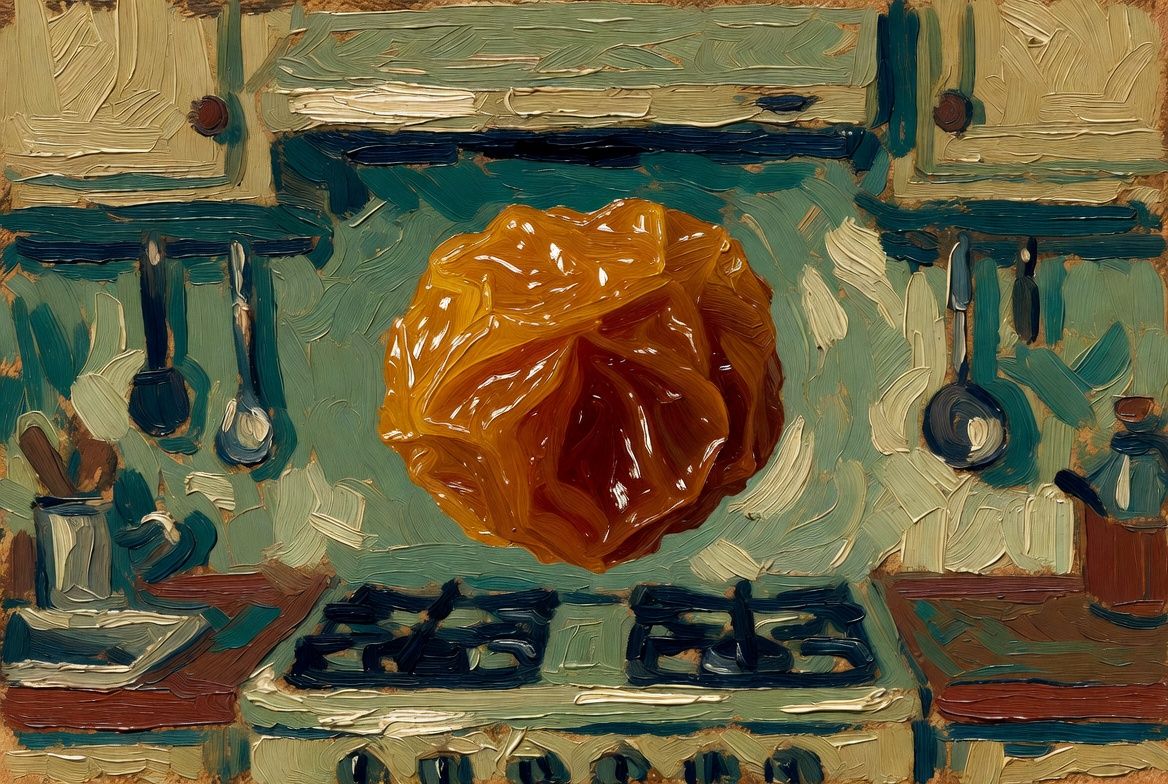

The Raisin Test: Most People Fail Before They Begin
Place a single raisin in your palm. Look at it—really look. Notice the valleys and wrinkles, the way light catches its amber surface. Now smell it. Place it on your tongue but don’t bite. Feel the texture, the burst of sweetness when you finally crush it between your teeth.
If this exercise sounds absurdly simple, that’s precisely the point. In the forty-five seconds it takes to eat one raisin mindfully, most people realize they’ve spent decades consuming thousands of meals without ever truly tasting them. We’ve become a culture of swallowers, not eaters—scrolling through phones while shoveling lunch, eating dinner in transit, consuming an entire bag of chips during a television binge only to feel physically full but sensorially empty.
This is where mindful eating begins: not with another rule about what you can or cannot eat, but with the radical act of paying attention.
Your Mouth Has Been Running on Autopilot
The human body possesses a sophisticated system for regulating food intake—hormones signaling hunger, stretch receptors reporting fullness, taste buds evaluating nutrition. Yet we’ve learned to override these signals with remarkable efficiency. We eat because the clock says noon. We finish everything on the plate because wasting food feels morally wrong. We reach for snacks because emails induce anxiety, not because our stomachs are empty.
Mindful eating practitioners call this «automatic pilot»—the state where hand moves to mouth, jaws chew, and throat swallows while consciousness remains elsewhere, planning tomorrow’s meeting or replaying yesterday’s argument. The practice asks a disruptive question: What happens if you show up for your own meals?
The mechanics are straightforward but demanding. Before lifting the fork, check in: What does hunger feel like right now? Is it a gnawing in the stomach, lightheadedness, irritability? Rate it on a scale of one to ten. Then, engage the senses. Notice the steam rising from the soup, the crunch of the apple, the way flavors evolve from the first bite to the last. Put the utensil down between bites. Chew until the food loses its identity as «carrot» and becomes simply texture and sweetness.
Sounds elementary, yet try it for one meal. The resistance is immediate—the urge to check the phone, to read, to plan, to do anything except experience the act of nourishing yourself.
Hunger Is Not a Math Problem
Mindful eating often gets confused with its cousin, intuitive eating, and the two practices share DNA. Both reject the spreadsheet approach to nutrition—the calorie tracking, the macro counting, the moralizing language of «cheating» and «being good.» But where intuitive eating focuses broadly on rejecting diet culture and honoring internal cues, mindful eating zeroes in on the micro-moment: the bite happening right now.
This distinction matters because mindful eating isn’t necessarily about eating less, though for many, awareness naturally reduces consumption. When you actually taste your food, the fourth piece of pizza loses its appeal. When you notice the subtle shift from «satisfied» to «stuffed,» you stop. But the goal isn’t restriction; it’s alignment.
The practice borrows heavily from Buddhist eating meditation traditions, where monks consume meals in silence, contemplating the origins of each ingredient—the soil, the rain, the hands that harvested. Secular versions might involve simply eating breakfast without the morning news. Either way, the effect is physiological as much as psychological.
The Chemistry of Awareness
Here’s where it gets interesting from a biological standpoint. Digestion doesn’t begin in the stomach; it starts in the head. The «cephalic phase» of digestion—salivation, enzyme production, gastric secretion—responds to the sight, smell, and anticipation of food. When you eat while stressed or distracted, your body operates under sympathetic nervous system dominance—the fight-or-flight mode that treats lunch like a threat to survive rather than nourishment to absorb.
Research suggests that eating under chronic stress or distraction may blunt these preparatory responses, leading to poorer digestion and nutrient absorption. Conversely, the parasympathetic «rest and digest» state—cultivated through those deep breaths before a meal—optimizes the body’s ability to process food.
More intriguing is the practice’s impact on what researchers call «eating behaviors» rather than just «eating habits.» Mindful eating doesn’t change your grocery list overnight, but it interrupts the binge-restrict cycles that characterize disordered relationships with food. By removing the morality from eating—chocolate cake is not «sinful,» carrots are not «virtuous»—the practice drains the emotional fuel from compulsive overeating. You eat the cake. You taste the cake. You notice when the pleasure diminishes. You stop.
The Ritual of the Common Meal
Practically speaking, mindful eating operates on a spectrum from formal to informal. At its most structured, it becomes eating meditation: twenty minutes with a small plate of food, eaten in silence, attention anchored to sensation. At its most casual, it’s the «three-bite check-in»—pausing mid-meal to assess fullness levels before continuing.
Some practitioners use what dietitians call the «S.T.O.P.» method: Stop before reaching for food, Take a breath, Observe physical hunger and emotional state, Proceed with awareness. Others employ the Japanese principle of *hara hachi bu*—eating until 80 percent full—a concept that requires enough attention to recognize the subtle edge before satiety becomes discomfort.
But the most transformative technique might be the simplest: eating with your non-dominant hand. The awkwardness forces slowness. It breaks the mechanical hand-to-mouth rhythm that allows us to consume entire meals while reading reports or driving.
When the Cookie Crumbles
Critics argue that mindful eating is a luxury for the privileged—assuming access to food secure enough to savor, time enough to chew, bodies not traumatized by food insecurity or eating disorders that make internal cues unreliable. They’re not entirely wrong. The practice requires a baseline of food security and physical safety. You cannot meditate your way out of a genuine eating disorder without clinical support, nor does awareness alone address food deserts or metabolic disorders.
Moreover, mindfulness can become another weapon in the diet arsenal if approached rigidly. Eating slowly becomes eating «correctly.» Awareness becomes obsession. The anti-diet practice ironically becomes a diet with rules to follow and failures to judge.
The antidote is gentleness. Mindful eating works not because it enforces perfection, but because it cultivates curiosity. Ate the entire pint of ice cream while watching Netflix? Instead of self-flagellation, the practice asks: What was happening in my body at bite one versus bite twenty? When did the pleasure peak? What need was I attempting to meet with mint chip?
The Body Whispers Before It Shouts
After weeks of practice, something subtle shifts. You begin noticing the specific texture of hunger—sometimes it’s physical emptiness, sometimes it’s boredom wearing a disguise, sometimes it’s dehydration. You recognize that «full» isn’t a binary switch but a gradient, a subtle pressure beneath the ribs, a slowing of pace, a sigh that signals satisfaction.
This is the transformation promised not by weight loss commercials but by contemplative traditions: a return to the body as a source of wisdom rather than an object to be managed. The relationship changes from antagonistic—food as enemy, body as project—to conversational. You eat. You listen. You respond.
The raisin exercise isn’t about the raisin. It’s about reclaiming the twenty minutes a day— statistics suggest we spend over an hour eating daily—that you were sleepwalking through. In a culture designed to extract profit from your inattention, choosing to taste your food might be the most subversive act available.



