
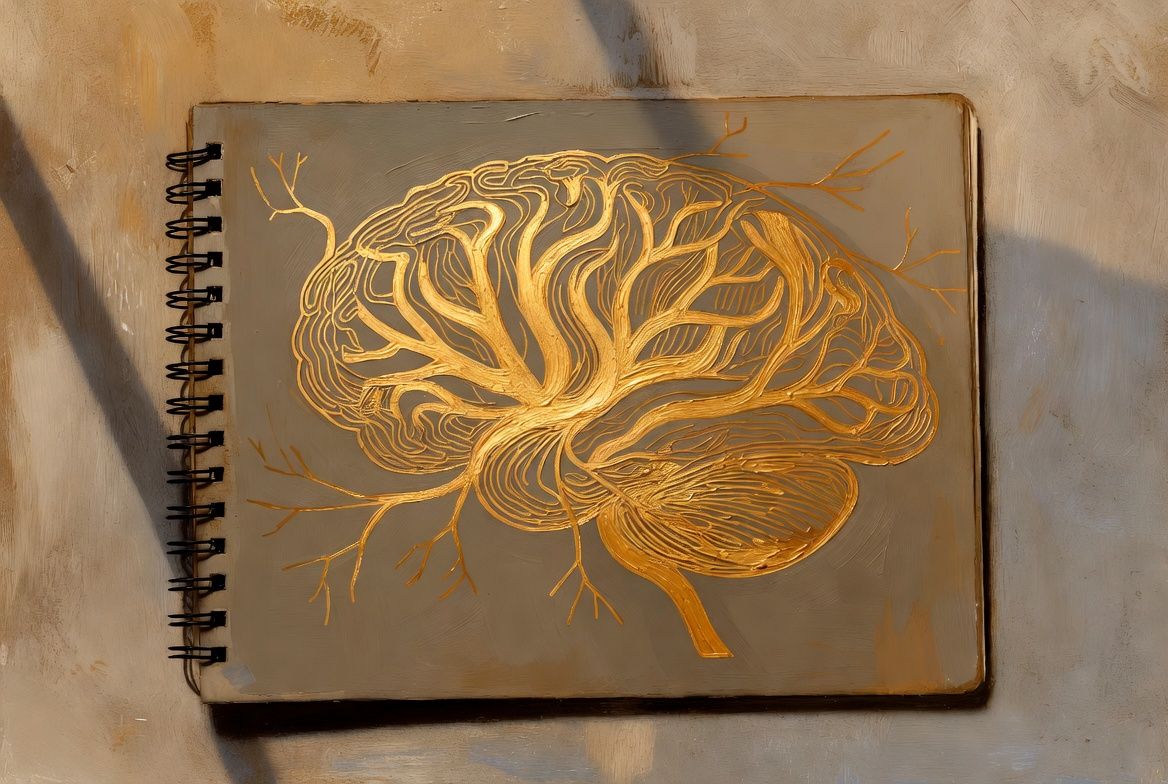

The Five-Minute Brain Remodel
Eight weeks. That’s how long it takes for gratitude to physically alter your brain’s architecture—specifically, increasing gray matter density in the anterior cingulate cortex, the region governing emotional regulation and decision-making. Not through medication. Not through therapy. Through the simple act of noting three specific things that went right today.
In 2003, researchers at the University of Pennsylvania ran a counterintuitive experiment. They instructed participants to spend five minutes each night writing down three good things that happened that day—from “sunshine after rain” to a stranger’s smile—then reflect on their role in making them happen. Two weeks later, these participants measured 28% higher on happiness scales than control groups. No elaborate rituals. No expensive retreats. Just a notebook and the deliberate shift from scanning for threats to scanning for abundance.
This isn’t positive thinking’s gentler cousin. It’s a neurochemical recalibration. When you practice what psychologists call the “Three Good Things” technique, you activate dopamine pathways while simultaneously lowering cortisol levels by 23%, according to research from the University of California, Davis. Your brain literally begins hunting for rewards rather than dangers, a phenomenon Dr. Martin Seligman describes in his book Flourish as “rewiring the brain to scan for positives, not threats.”
Why Structure Crushes Free-Form
But here’s where many gratitude practitioners stumble: they treat the practice like a diary. They sit down with blank pages, determined to conjure profound thankfulness from sheer willpower. And then they quit.
The data tells a different story. A 2021 trial published in JAMA Psychiatry revealed that participants using structured prompts—questions like “What surprised you today?” or “Who made your life easier this week?”—showed 40% higher adherence rates than those attempting free-form journaling. More strikingly, the prompt-based group exhibited a 34% reduction in depression symptoms compared to controls, while the free-form group’s results remained statistically muddy.
The mechanism isn’t mysterious. Blank pages create performance anxiety; specific questions lower the barrier to entry. When researchers tracked long-term outcomes in Seligman’s original 2005 study, they found that structured three-month interventions yielded a 25% bump in life satisfaction scores—results that held steady throughout the trial period. Eighty-seven percent of users across multiple studies report the practice as “easy to maintain,” but only when given scaffolding rather than blank space.
The Habit Stacking Hack
Then there’s the consistency problem. Most people abandon new practices not because they don’t work, but because they forget to do them. Phillippa Lally’s seminal 2009 research on habit formation offers an elegant solution: habit stacking.
Instead of treating gratitude journaling as a standalone task demanding willpower and scheduling, stack it onto an existing neural pathway. After you brush your teeth. While your morning coffee brews. Immediately before shutting your bedroom light. Lally’s data shows this linkage boosts compliance by 60%—turning a deliberate effort into automatic behavior.
The neuroscience supports the strategy. When you anchor a new behavior to an established routine, you leverage the brain’s existing dopamine loops rather than building new ones from scratch. Five minutes becomes not an additional obligation but the natural extension of something you already do.
The Honest Limitations
Before you buy a leather-bound journal and permanently ink “gratitude” into your identity, the research offers some necessary caveats. Almost every major study—from Seligman’s 2005 foundations to the 2022 meta-analyses conducted by Kee and colleagues—tracks participants for twelve weeks or less. We know gratitude journaling works in the short term. We have no rigorous data on whether these effects sustain over years, or whether the practice requires periodic “boosters” to maintain neural changes.
Additionally, the 28% happiness spike observed in the original Penn study represents group averages. Individual results vary based on baseline mental health, existing gratitude levels, and life circumstances. The practice appears to yield diminishing returns for those already high in trait gratitude, while providing profound shifts for those stuck in cycles of rumination.
Your Personal Protocol
So where does this leave the curious practitioner? Start tonight, not Monday. Choose the “Three Good Things” method specifically—vague gratitude lists lack the specificity to trigger dopamine effectively. Use prompts like “What did I handle well today?” rather than staring at emptiness. Attach the practice to an existing habit, ideally an evening routine that allows reflection on the day’s events.
The investment is minimal: five minutes, the cost of paper, and the willingness to believe that attention shapes reality. The return, according to two decades of clinical data, is a brain physically restructured to recognize abundance, cortisol levels equivalent to a 23% stress reduction, and happiness metrics that rival some pharmaceutical interventions.
The notebook won’t change your circumstances. It will, however, alter the instrument perceiving them—and according to the anterior cingulate cortex’s newly dense gray matter, that makes all the difference.



