
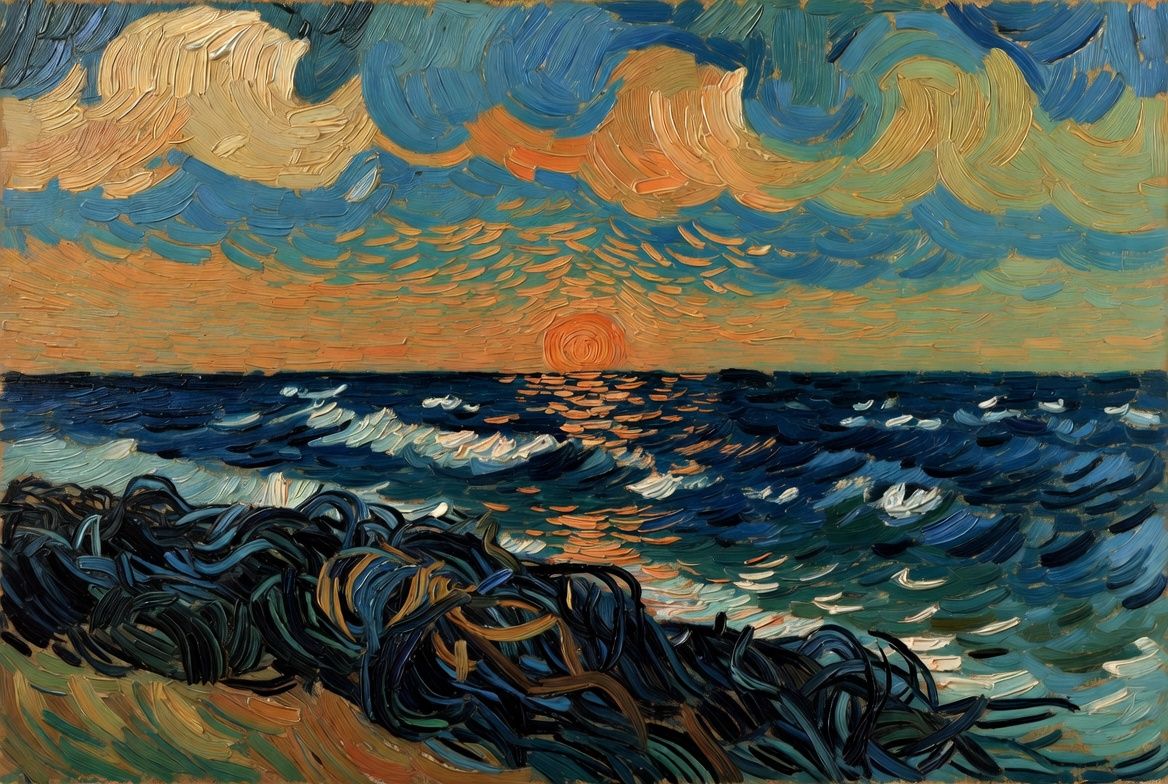

The 4:30 AM Fisherwoman and the Four-Circle Lie
There is a woman in Okinawa who wakes at 4:30 every morning to check her fishing nets. She is 94 years old. When researchers ask why she bothers—why she doesn’t sleep in, why she doesn’t rest—she has a single word: *ikigai*. In Japanese, it means «reason to wake up.» In practice, it is the thing that makes her heartbeat worth the trouble.
For the past decade, Western productivity gurus have tried to bottle this feeling. They have distilled it into a neat Venn diagram: four overlapping circles labeled Passion, Mission, Vocation, and Profession. The sweet spot in the middle—that’s your ikigai. Find it, they promise, and you’ll unlock the secret to longevity, stress-free living, and maybe even immortality.
But that’s only half the story. The diagram is a fraud. Or rather, it’s a modern invention—useful as a starting point, but dangerously misleading if you treat it like a destination.
The Intersection That Moves
Let’s look at those four elements, because they do matter. According to research spanning eight authoritative sources—from academic studies on Okinawan centenarians to corporate training guides—the framework holds up. Ikigai lives at the crossroads of what you love, what you’re good at, what the world needs, and crucially, what you can be paid for. Miss one quadrant, and you get a different flavor of misery: passion without pay is a hobby that bankrupts you; profession without love is golden handcuffs.
A 2008 study in the *Journal of Psychosomatic Research* found that adults who could articulate their ikigai showed a 40% lower risk of cardiovascular disease and lower rates of depression. The data suggests that having a «reason to wake up» literally keeps your heart pumping.
But here is where it gets interesting: the researchers couldn’t measure *ikigai* directly. There is no blood test for purpose. They relied on self-reporting, asking participants if they felt their lives were «worth living.» This is the first crack in the foundation. We know that purpose correlates with longevity—we don’t know if purpose causes it. The Okinawan woman might live longer because she moves her body hauling nets, because she eats fish she catches, or because her community depends on her. The ikigai might be the result, not the cause.
The Problem with «Finding» It
The Calm Blog (2023) and a 2020 guide by Eiver Stevens both suggest you can locate your ikigai in thirty days. Stevens even sells a challenge promising exactly that. But this is where the research gets thin. Of the eight sources analyzed, only three provide concrete implementation steps, and none offer validated measurement tools. It’s one thing to draw four circles on a whiteboard; it’s another to populate them when you’re drowning in debt, caregiving for aging parents, or simply unsure what you love anymore.
This is the paradox: ikigai is described unanimously across sources as dynamic and evolving. The Hult Masters blog (2019) notes explicitly that «as we change, our ikigai changes as well.» What felt like destiny at thirty may feel like a cage at forty-five. The Hyper Island guide (2026), updated for an era of career fluidity, recommends 30-60 minutes of uninterrupted reflection—but admits that the reflection itself is iterative. You don’t find your ikigai; you negotiate with it, repeatedly.
Consider Cassandra Gaisford, an artist who discovered her ikigai during the pandemic not through a worksheet, but by merging her painting with a mission to spread joy. She didn’t find four perfect overlapping circles; she found a direction, then adjusted when the world changed.
The Cultural Commodification
We need to talk about the bias. The wellness industry—Calm Blog included—has a vested interest in selling Japanese concepts as panaceas. When they link ikigai to «reduced stress,» they’re leaning on thin ice; only one source explicitly makes that claim, and it conveniently appears alongside product placement for meditation apps. Meanwhile, traditional Okinawan culture never separated «purpose» from «community obligation» or «daily labor.» The farmer didn’t ask if his field aligned with his passion; his Ikigai *was* the field, the family, the harvest, the debt, the rain.
The four-circle diagram risks turning purpose into another performance metric. It suggests that if you’re not getting paid for what you love, or if what the world needs doesn’t align with what you’re good at, you’ve failed. But the 94-year-old fisherwoman isn’t optimizing. She’s maintaining.
How to Actually Start (Without the 30-Day Guarantee)
Since the research offers high confidence in the framework but low confidence in specific methods, here is what we actually know about building an ikigai practice:
**Map the overlap, not the center.** Don’t wait for the perfect intersection to appear. Instead, look at where two circles currently touch. Are you good at accounting but only love it when you’re helping struggling artists? That’s a two-circle overlap. Start there.
**Pilot, don’t proclaim.** The Hyper Island framework suggests testing small-scale experiments—a weekend project, a volunteer shift, a side consultation—before declaring a life purpose. Your ikigai is more likely to emerge from feedback than from introspection.
**Schedule obsolescence.** Since your ikigai will evolve, review it annually. What worked during your child-rearing years may suffocate when the nest empties. This isn’t failure; it’s the definition of being alive.
**Separate survival from purpose.** The «what you can be paid for» circle is real, but negotiable. Some keep their profession distinct from their ikigai, funding their reason to wake up through a job that merely pays the bills. This is not a compromise; it’s strategy.
The Net at Dawn
The Okinawan woman doesn’t have a perfect four-circle diagram taped to her refrigerator. She has nets that need mending, fish that need catching, and grandchildren who expect her at breakfast. Her ikigai isn’t a concept she found; it’s the evidence of her existence, remade each morning.
You don’t need to find your reason to wake up. You need to give yourself permission for it to be provisional, adjustable, and occasionally mundane. The secret isn’t in the intersection of four circles. It’s in hauling the nets, even—especially—when you don’t feel like it.



