
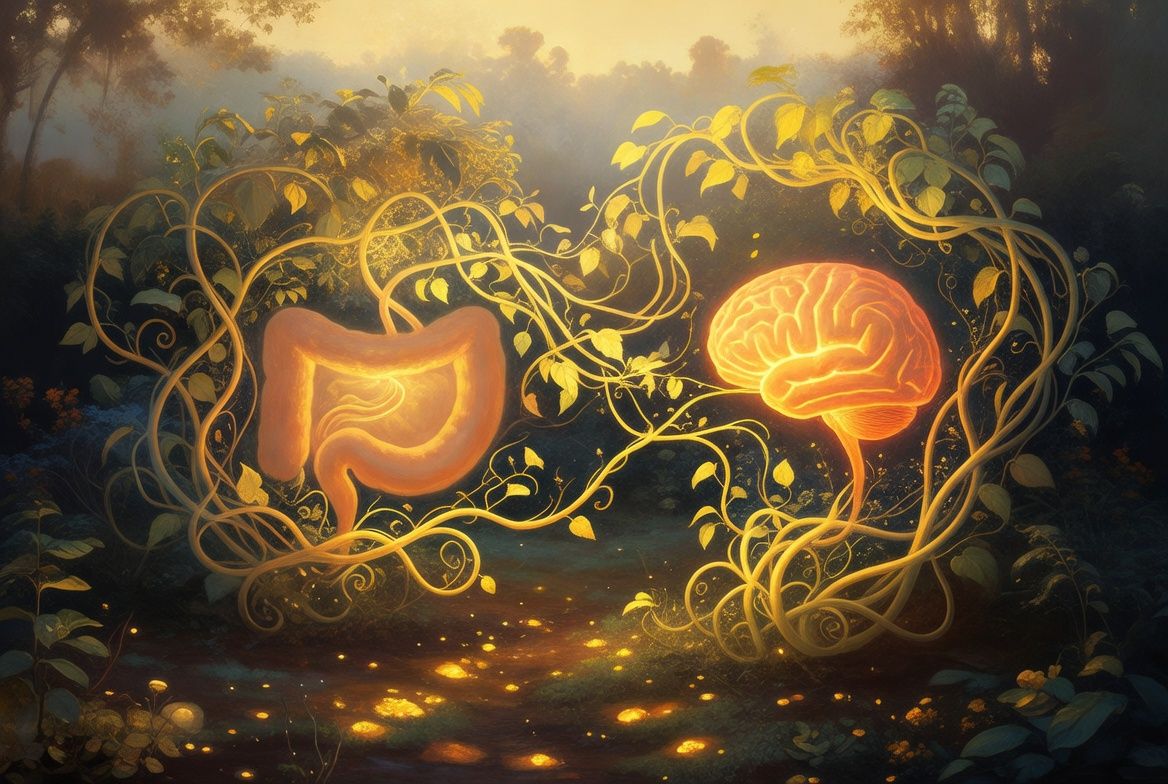

Your intestines manufacture 80% of your serotonin, the chemical that keeps despair at bay. That means your mood depends more on your gut bacteria than on your last therapy session—a reality that upends the fantasy of happiness as something that happens «between your ears.»
We have been sold a lie about joy. Pop psychology tells us to chase the dopamine hit, to maximize pleasure and minimize pain until we arrive at some eternal bliss state. But neuroscientists know better. Your brain didn’t evolve to make you happy; it evolved to keep you alive. Happiness, it turns out, is a delicate hack of ancient survival circuitry, and understanding this distinction transforms wellbeing from a mystery into a skill you can actually practice.
The Chemical Quartet That Doesn’t Care About Your Good Mood
Four neurochemicals orchestrate your experience of joy, but none of them were designed for sustained euphoria. Think of them as evolutionary tools that have been repurposed for modern contentment—like using a spear-tip as a screwdriver. It works, but you need to understand the mechanics.
Dopamine is not your pleasure chemical; it is your *anticipation* chemical. It spikes not when you achieve the goal, but when you pursue it. Evolution crafted this molecule to send mammals scrambling after calories and mates, rewarding the chase rather than the capture. This explains the hollow aftermath of retail therapy: your brain flooded with dopamine while clicking «purchase,» not while wearing the sweater.
Serotonin operates as a status tracker. In evolutionary terms, it rewards you for holding valuable social rank—keeping you calm when you’re dominant, making you anxious when you’re not. Modern humans have redirected this ancient status-checker toward feelings of «significance» and self-worth. The twist? Most of it is brewed in your digestive tract. The bacteria in your gut manufacture tryptophan, the precursor to serotonin, creating a direct pipeline between your microbiome and your mental stability. Skip the kombucha, and you’re not just risking stomach issues—you’re starving your brain’s brake pedal for anxiety.
Oxytocin, the so-called «love hormone,» does facilitate trust and bonding, but it also fuels tribalism and suspicion of outsiders. Meanwhile, endorphins—the body’s homemade morphine—exist primarily to mask pain while you escape the predator, not to fuel your runner’s high. These chemicals don’t flow continuously; they deliver short spurts that reinforce specific survival behaviors. Chasing constant happiness through chemical means is like trying to keep your car’s rev counter permanently in the red—it burns out the engine.
Why Forty-Five Days Makes or Breaks Your Brain
Here is where the story pivots from depressing determinism to genuine hope. Your brain is not hardware fixed at birth; it is wetware that rewires itself through repetition. Neuroplasticity—the ability of neurons to forge new connections—means that happiness is less a personality trait and more like learning to play guitar: awkward at first, automatic later.
But the timeline is brutal. According to research compiled by Loretta Breuning at the Inner Mammal Institute, building a new neural circuit requires approximately forty-five days of daily repetition without fail. Miss a day, and the myelin—the fatty insulation that speeds up neural transmission—doesn’t wrap properly. This biological constraint explains why «gratitude journals» and meditation apps feel futile for the first month: you are literally watching grass grow, if grass were made of axons and synaptic connections.
The plasticity window narrows with age. Myelin production peaks before age eight and again during puberty, which explains why childhood experiences imprint so heavily and why breaking toxic patterns becomes mechanically harder—not impossible, just slower—as you accumulate birthdays. Your brain is trainable, but it is not endlessly malleable, and it prefers efficiency over comfort.
The Dopamine Trap and the Serotonin Balance
If happiness were simply a matter of maximizing happy chemicals, cocaine would be a vitamin. The uncomfortable truth is that wellbeing requires *balance*, not maximization—specifically, the delicate interplay between dopamine and serotonin.
Excess dopagenic activity doesn’t create joy; it creates compulsion, risk-taking, and the psychotic edge of addiction. Meanwhile, serotonin deficiency manifests not just as sadness but as the gnawing certainty that you are socially insignificant. The two systems exist in tension: serotonergic neurons in the striatum inhibit dopamine secretion, acting as a regulatory governor. You cannot simply «boost» one without consequence to the other.
This is why artificial interventions—nootropic stacks, supplements promising to «increase dopamine naturally,» shortcuts—often backfire. Your brain maintains homeostasis. Flood it with external precursors, and it downregulates natural production, creating dependency. The same mechanism drives antidepressant discontinuation syndrome: when you outsource your serotonin regulation, your own production machinery atrophies.
The Rise of Brain Typing: Medicine Gets Personal
This is where the field gets interesting, and slightly dangerous. Dr. Pradeep Albert and a growing cadre of clinicians are pushing beyond one-size-fits-all mental health interventions toward «brain typing»—categorizing individuals by distinct patterns of neural connectivity and activity, particularly amygdala reactivity and prefrontal cortex engagement.
The premise is seductive: if your neurochemical architecture is unique, your treatment should be too. Quantitative EEG mapping, neurocognitive testing, and analysis of sleep-wake cycles supposedly reveal whether you’re a «dopamine-dominant» seeker prone to addiction, or an «oxytocin-thirsty» bonding type vulnerable to social anxiety. From there, protocols can be calibrated—neurofeedback to train specific brainwaves, transcranial magnetic stimulation to modulate specific circuits, lifestyle interventions matched to your biological reality.
But honesty requires a caveat. While the underlying neuroscience of individual variation is solid, «brain typing» as a clinical product remains proprietary and largely untested in peer-reviewed literature. It represents a paradigm shift toward personalized neuro-wellness, yet it risks becoming an expensive justification for boutique interventions that may not outperform the basics: sleep, movement, sunlight, and connection.
What Actually Works (and the Numbers Behind It)
Despite the allure of high-tech brain scans, the evidence-backed interventions remain stubbornly analog. Ten to forty minutes of brisk exercise triggers endogenous endorphin and serotonin release. Fifteen to thirty minutes of morning sunlight stimulates vitamin D production and serotonin synthesis while regulating circadian rhythms. Seven to nine hours of sleep allows for glymphatic clearance of neurotoxic waste and neurotransmitter replenishment.
Social connection specifically targets oxytocin, though the research on gender differences here remains contentious; some sources claim oxytocin plays a larger role in female physiology, while others suggest this is an oversimplification of complex, context-dependent effects. Regardless, physical touch and trusted social interaction remain the only reliable oxytocin agonists that don’t require a prescription.
Goal pursuit—breaking large ambitions into small, daily wins—keeps dopamine firing in sustainable bursts rather than addictive spikes. And crucially, these behaviors must be maintained for at least six weeks before the neural architecture shifts from conscious effort to automatic habit.
The Honest Limits of Our Knowledge
We must acknowledge the gaps in this narrative. Much of the accessible literature on happiness neuroscience derives from secondary sources—educational blogs and clinical websites rather than primary fMRI studies. The claim that it takes exactly forty-five days to build a neural circuit comes from Breuning’s evolutionary models rather than double-blind trials. The assertion that women respond more strongly to oxytocin than men appears in some patient literature but lacks robust replication.
Moreover, the sources driving the «brain typing» conversation have commercial stakes in the outcome. When a clinic offering $3,000 qEEG assessments tells you that generic therapy is obsolete and you need a personalized neural map, it serves their balance sheet as much as your wellbeing.
What we know with high confidence is this: happiness is biologically constructed, not mystically bestowed; it emerges from specific, malleable circuits; and it requires balance rather than intensity. What remains speculative is whether we can shortcut forty-five days of disciplined practice with technology, or whether the ancient machinery of survival can ever be truly optimized for modern thriving.
Your brain remains a hedonic treadmill retrofitted for contentment. But unlike other animals, you can read the manual—and with forty-five days of consistency, you can start rewriting it.



