

Your stomach tightens at 2:47 PM every Thursday. It’s not the coffee. It’s the text from your cousin—the one who needs to «vent» about your aunt for forty-five minutes before asking if she can borrow money again. Your shoulders crawl toward your ears. Your jaw locks. And yet, you pick up the phone.
This is your body’s boundary alarm system, and you’ve been ignoring it for months.
We’ve been taught that boundaries are签到statements of aggression—verbal walls that declare war on relationships. But the research paints a different picture. According to a 2020 study of Dutch workers cited by HelpGuide, people with clear personal boundaries experience 30% less emotional exhaustion and 20% higher happiness than those who let their limits blur. The paradox? The sharper your boundaries in toxic relationships, the lighter you feel. The softer your walls in healthy ones, the deeper your connections grow. The trick is knowing which is which before your body starts collecting the debt.
The Playbook You Didn’t Realize Was Shared
Toxic people aren’t improvising. Across multiple therapeutic frameworks, the manipulation tactics follow unnervingly predictable scripts. Karsten Noack, a communications specialist who has worked extensively with victims of narcissistic abuse, catalogues the red flags like entries in a criminal code: blame-shifting that turns every conflict into your fault, guilt-tripping that weaponizes your empathy, gaslighting that makes you doubt the conversation you just had, and the silent treatment that punishes you for having needs.
Your body knows these tactics before your mind labels them. As one 2025 analysis notes, physical stress signals—stomach tightness, tension headaches, unexplained fatigue—are often the first boundary violations you register. You don’t need a psychology degree to detect toxicity; you need to stop muting your somatic alarm system.
But here’s where it gets interesting. Hailey Magee, a boundaries coach whose work distinguishes between toxic and healthy dynamics, argues that the rigid, non-negotiable boundaries necessary for survival in toxic relationships will actually poison healthy ones. In a healthy friendship or partnership, flexibility isn’t weakness—it’s the oxygen of connection. The Gottman Institute research she cites confirms that compromise in secure relationships feels imperfect but mutual: everyone gains something, everyone loses something, and everyone feels understood.
The danger lies in applying toxic-relationship rigidity to healthy bonds, or worse, offering toxic relationships the flexibility that only enables the abuse.
The Four-Step Escalation Ladder
Once you’ve identified the pattern, what do you actually say? Therapists and researchers converge on a graduated enforcement model that functions like a circuit breaker—tripping before the emotional house burns down.
**Level One: The Clear Statement.** This isn’t a negotiation. Noack recommends direct «I» statements stripped of apology: «I am not comfortable discussing this. Let’s change the topic.» Notice what’s missing? The over-explaining. The «because I’m really stressed right now and it’s not personal but…» that invites debate. You aren’t requesting permission; you’re stating fact.
**Level Two: The Consequence.** When the boundary is tested—and it will be—you deploy the pre-declared consequence with emotional flatness. «I asked you not to criticize my parenting in front of the kids. If you continue, we’re leaving.» The power here isn’t in volume; it’s in consistency. As Mark Manson notes in his 2021 boundary guide, boundaries without consequences are merely suggestions.
**Level Three: Distancing.** This is the «gated fence» approach—limited interaction, scheduled contact, monitored communication. You’re not gone, but you’re guarded.
**Level Four: Severance.** Complete disengagement. Not as revenge, but as acceptance. The Cradle of Hope, a therapeutic resource center, offers a sobering metric here: True hope requires objective evidence of change—someone actively seeking help, improving skills, demonstrating sustained effort over time. Without that data, staying is just slow-motion damage.
The 2025 research identifies seven toxic personality types—from the Narcissist to the Emotional Drainer—but the response remains consistent across the taxonomy: clarity, then escalation, then exit if respect isn’t forthcoming.
The Inner Game: Protecting the Territory Behind the Wall
Setting the boundary is only half the battle. The other half happens in the silence after you hang up the phone.
Toxic relationships train you to internalize the gaslighting. Jennifer Keluskar, a therapist writing in 2025, notes that when boundaries are pushed back against, most people experience it as a personal attack—a threat to their worthiness. The reframe that changes everything? Viewing pushiness not as malice, but as a skills deficit. Your cousin isn’t evil; she’s emotionally incompetent. This isn’t forgiveness; it’s tactical detachment. When you stop personalizing the violation, you retain the power.
This is particularly crucial because boundaries and self-esteem operate as a bidirectional loop, according to HelpGuide’s analysis. Low self-esteem creates porous boundaries; enforced boundaries rebuild self-esteem. You don’t wait until you feel worthy to say no; you say no until you feel worthy.
Therapists also warn against what they term «false hope»—the belief that if you just explain yourself clearly enough, the toxic person will finally understand. The Cradle of Hope’s guidance is blunt: hope without objective progress is just denial wearing a prettier mask.
Reading the Fine Print: What the Experts Aren’t Saying
There’s a meta-narrative here that requires transparency. Four of the seven substantive sources analyzed—Noack, Magee, Manson, and HelpGuide—promote paid services: coaching packages, online courses, therapy referrals. This creates a potential commercial bias toward professional intervention as the primary solution.
The credentials vary. Noack offers reduced-fee support for narcissistic abuse survivors and monthly free consultations, acknowledging economic barriers. HelpGuide cites peer-reviewed research (Pluut & Wonders, 2020) alongside affiliate links to BetterHelp, creating a mix of academic credibility and commercial incentive. The advice itself aligns with therapeutic consensus, but the underlying message sometimes whispers: *you can’t do this alone*.
Can you? The longitudinal data is absent. No studies track boundary-setters over five years to see who thrives and who relapses. What exists is therapeutic consensus and anecdotal reporting—from the Dutch workers who reclaimed 30% of their emotional energy, to the survivors who report lower cortisol after establishing limits. It’s compelling, but it’s not predictive.
The Calibration Exercise
So where does this leave you? With a calibration challenge rather than a rigid rulebook.
Start with the somatic audit. When your phone buzzes, does your body brace? That’s data. Track it for a week without judgment.
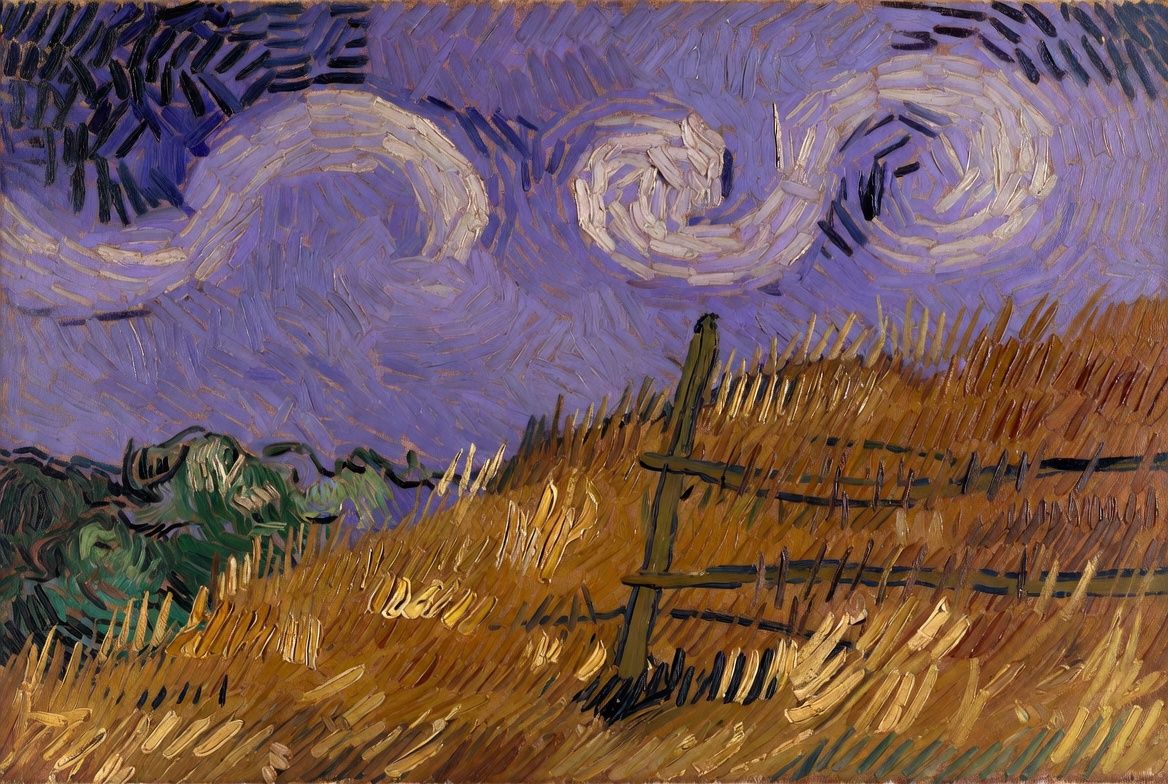
Then apply the spectrum test. Is this relationship characterized by exploitation and confusion (toxic), or mutual growth with occasional friction (healthy)? Assign your boundary rigidity accordingly. Rigid for toxicity—concrete walls with no doors. Flexible for health—fences with gates that swing both ways.
Draft your «I» statements now, before the next Thursday text arrives. «I feel overwhelmed when you discuss finances after 9 PM.» «I won’t stay in conversations where I’m being yelled at.» Pair each with a specific consequence you can execute without rage—simply as a logistical fact.
And finally, release the burden of their reaction. As HelpGuide emphasizes, you are not responsible for how another person responds to your boundary. Your only job is the clear transmission of your limit. The rest—their anger, their guilt-tripping, their sudden catastrophic need—is their emotional algebra to solve.
Your stomach knows when 2:47 PM arrives. The question is whether you’ll trust it this time.



