
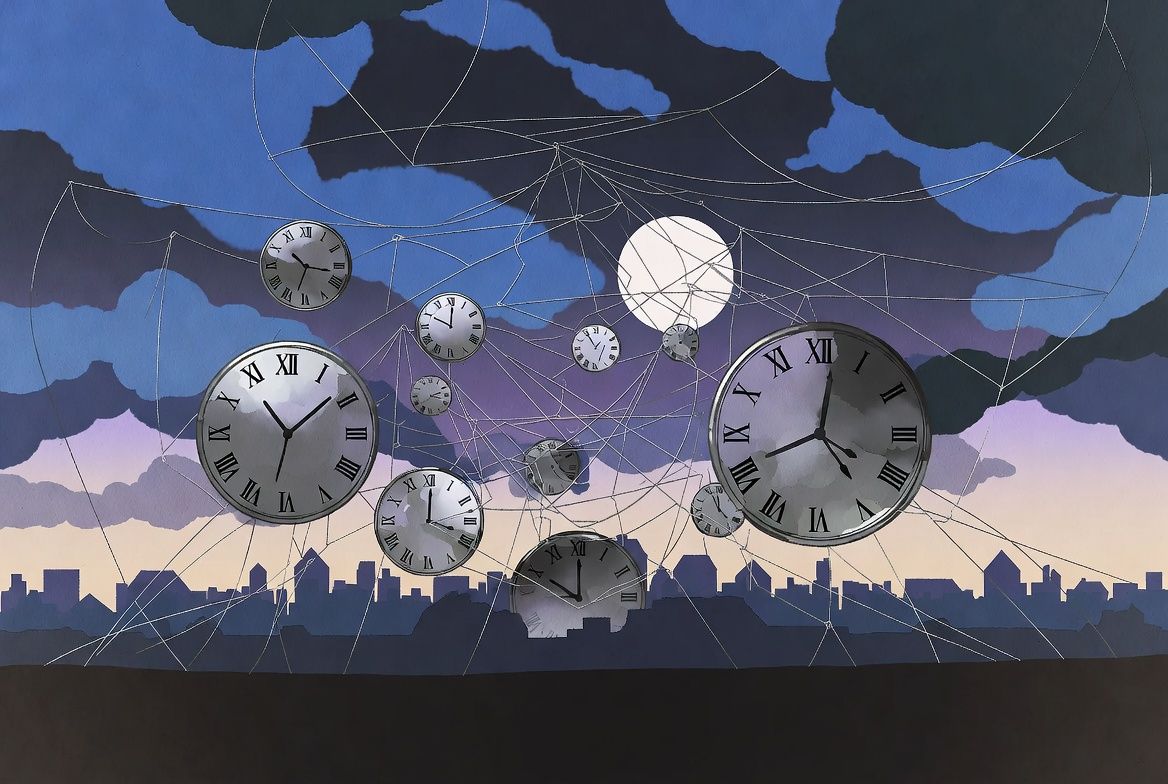

The Tuesday Problem: Why Three-Quarters of Us Can’t Name Our Own Anxiety Triggers
You probably think you know exactly what makes you anxious. The crowded subway. Your boss’s emails. The sound of your bank account balance dropping. But according to research published in npj Digital Medicine, between 70 and 85 percent of people who track their moods consistently discover at least one anxiety trigger they never knew existed—often something as specific as «Tuesday afternoons» or «texts from my sister that arrive while I’m eating.»
This isn’t because we’re stupid. It’s because anxiety operates like a fog machine. When the alarm bells ring, we’re too busy reacting to play detective. The threat feels immediate, existential, biological. We notice the heart racing, not the pattern that the racing only happens after nights when we slept less than six hours, or exclusively during weeks when we’ve skipped exercise, or strangely, every time we drink that particular brand of oat milk latte that happens to be served at the coffee shop near our ex’s apartment.
The gap between feeling and knowing is where daily mood tracking does its best work. It transforms the nebulous cloud of «I just feel bad» into a forensic map. And the map often reveals architecture we didn’t build consciously.
The Magic of Naming Your Demons
Here’s where it gets interesting. The act of recording your mood isn’t just administrative—it’s neurological. When you pause to label a feeling with specific language («I feel anxious because I anticipate criticism,» rather than «everything sucks»), you activate your prefrontal cortex, the brain’s rational command center.
Lieberman and colleagues demonstrated this in 2007, showing that emotional labeling reduces activity in the amygdala, the brain’s panic button. It’s as if naming the monster shrinks it. This «labeling effect» creates a crucial millisecond of distance between stimulus and reaction, just enough space to ask: Wait, is this threat real, or is this Tuesday?
But the real discovery happens when you track secondary factors alongside your mood. Sleep quality. Physical movement. Caffeine intake. Social media scrolling time. Researchers like Matthew Walker have shown how sleep deprivation decouples the prefrontal cortex from the amygdala, essentially leaving your rational brain offline when you need it most. When you log «anxious» alongside «slept 4 hours,» the correlation becomes undeniable. You’re not broken; you’re exhausted. The trigger isn’t existential dread; it’s your bedtime.
When Your Phone Knows You’re Anxious Before You Do
Modern mood tracking has evolved far beyond the «smiley face diary» your therapist might have suggested in 2010. Apps like BlueThoughtDaily and the clinical-grade Radar-MDD don’t just ask how you feel—they aggregate. They pull data from your accelerometer (how much you moved), your typing patterns (how many times you delete and retype), your sleep cycles, even your vocal tone during calls.
Then there’s the AI layer. Tools analyzed by Therapai in 2025 can detect subconscious emotional shifts by analyzing linguistic patterns, facial micro-expressions, or tonal stress in voice recordings. The algorithm might notice that your speech pace increases by 15 percent on days you later report as «fine,» flagging a pre-conscious anxiety spike before you’ve consciously registered it. It’s like having a smoke detector for your nervous system.
The RADAR-MDD study in 2023 found that bringing this granular data into therapy sessions fundamentally changes the clinical conversation. Instead of relying on the «recall bias»—where patients remember last Wednesday as «pretty good» when it was actually a disaster—therapists see the hourly fluctuations. They can spot that your depression spikes not during work stress, but during the unstructured Sunday afternoons you claimed were «relaxing.»
The Dark Side of the Data
But this is only half the story. The research contains a warning that app marketers rarely advertise: more than half of the studies reviewed in 2024 noted temporary increases in rumination, shame, or guilt when users confronted their low mood data.
Staring at a chart that objectively proves you’ve been «anxious» for twelve consecutive days can feel less like empowerment and more like evidence of your own failure. The data doesn’t lie, but our interpretation of it can be brutal. Without the guidance to understand that emotions are data, not destiny, the journal becomes a mirror that reflects only flaws.
Technical barriers compound the psychological risks. App glitches that lose three weeks of logs. Privacy anxiety about your darkest moments floating in a cloud server. The burnout of maintaining a perfect streak. The research suggests that user-friendly design and strict GDPR or HIPAA compliance aren’t just IT concerns—they’re mental health safeguards.
The Real Work Begins After the Pattern Emerges
So what do you do with Tuesday? Once the app reveals that your anxiety spikes every Tuesday at 3 PM, the real investigation starts. Is it the weekly check-in meeting? The caffeine crash from Monday’s poor sleep? The anticipatory dread of Wednesday?
The most effective users don’t just collect data; they interrogate it with professional support. They bring their charts to therapists who can contextualize the patterns—distinguishing between «I need to quit my job» and «I need to eat lunch before 2 PM.» They combine digital insights with somatic practices, noticing how Tuesday feels in the body, not just on the screen.
Daily mood tracking isn’t a panacea. It won’t cure anxiety any more than a speedometer fixes a car engine. But it removes the invisibility cloak from triggers that have been operating in your blind spots, sometimes for decades. It transforms the question from «Why do I feel this way?» to «What changed between Monday and Tuesday?»
And in that specificity lies agency. Because you can’t manage what you can’t see—but once you see it, you can finally name it, navigate it, and sometimes, delete it entirely.



