
The Statistical Phantom That Convinced Us Happiness Was Half Genetic
There’s just one problem: the numbers were never real.
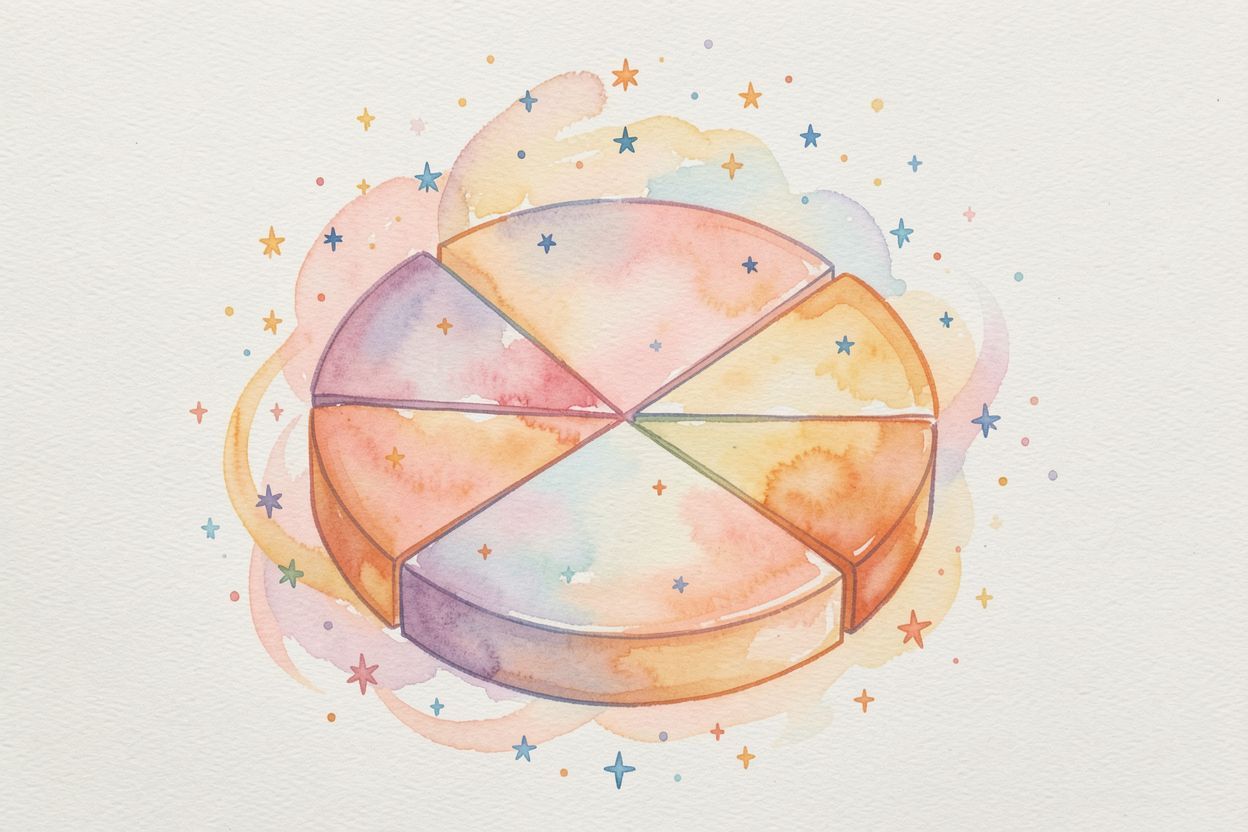
Lyubomirsky now admits the model was a «gross oversimplification» that has «outlived its usefulness.» But the damage was done. For nearly two decades, the «50-10-40 rule» has floated through TED Talks and Instagram infographics as settled science, convincing millions that happiness operates like a budget spreadsheet where you simply need to optimize the voluntary column. The truth, backed by newer re-analyses of the original datasets, is far more radical—and far more restrictive.
The 50 percent genetic figure wasn’t derived from genetic sequencing but from demographic studies conducted in the 1970s. When researchers Brown and Rohrer revisited those original datasets in 2019, they found something disturbing: the foundational studies only measured basic demographic variables—age, income, education—not the complex web of life circumstances that actually shape wellbeing. When they included broader variables like health, housing quality, and neighborhood safety, the circumstances slice ballooned from 10 percent to between 18 and 26 percent.
But that’s only half the deception. The 40 percent «volitional» slice was never a promise of personal agency; it was a statistical residue. In population genetics, these percentages describe variance *between* people, not the composition of an individual’s happiness. As psychologist Ed Diener has clarified, applying these figures to a single person’s emotional life is «thoroughly unreasonable.» You cannot parse your own Tuesday afternoon into 50 percent immutable destiny and 40 percent gratitude journaling.
Why Your Genes Cast a Longer Shadow Than the Pie Chart Suggested
If the popular model understated circumstances, it dramatically understated genetics. Twin studies now suggest that for *stable, chronic* happiness—the baseline mood you return to after the promotion glow fades—heritability runs between 70 and 80 percent, not 50. This isn’t a typo. It’s a paradigm shift.
But here’s where the story gets interesting. High heritability does not mean immutability, a distinction that has confused researchers and the public alike. Intelligence is highly heritable, yet education demonstrably raises IQ. Height is genetic, yet the Dutch grew 20 centimeters in four generations through nutrition changes. Your genetic «set point» is better understood as a set *range*—a spectrum of potential happiness states determined by your DNA, but not your destiny.
The COVID-19 pandemic provided a natural experiment in this plasticity. When global circumstances shifted dramatically, the genetic influence on happiness dropped significantly. When environments become extreme—whether through plague, war, or economic collapse—genetic predispositions matter less, and environmental factors matter more. Your genes provide a probabilistic baseline, not a prison sentence.
The Tyranny of the Hedonic Treadmill
Even if the percentages were wrong, the underlying mechanism they described is brutally real. Humans possess what psychologists call a «psychological immune system»—a relentless tendency to return to baseline after both tragedy and triumph. Lottery winners show no increased happiness eighteen months after hitting the jackpot. Marriage boosts wellbeing for approximately two years before reverting to baseline. Even paraplegics, after an initial plunge, often return to near-previous happiness levels.
This is hedonic adaptation, and it operates through two pathways that sound like corporate buzzwords but describe emotional mechanics: declining positive emotions and rising aspirations. The new car becomes the old car. The raise becomes the new normal. Meanwhile, negative events linger longer because evolution prioritized threat detection over pleasure maintenance—the «bad is stronger than good» principle.
The implications are sobering. Chasing happiness through circumstantial changes—bigger homes, better titles, romantic relationships—is biologically doomed to fade. The original model claimed circumstances accounted for only 10 percent of variance; the real figure might be higher, but the effect is transient regardless. You’re not buying happiness; you’re renting it by the month.
The Real 15 Percent: How Change Actually Works
So where does this leave the quest for genuine improvement? If the 40 percent volitional slice was a statistical mirage, what’s the actual potential for personal growth?
Recent meta-analyses suggest intentional activities—gratitude practices, acts of kindness, flow-inducing hobbies—explain approximately 15 percent of happiness variance, not 40. This smaller figure represents both a humbling correction and a more honest map. It suggests you can move the needle, but not rewrite the scale.
The mechanism isn’t willpower; it’s neuroplasticity. London taxi drivers who memorize the city’s labyrinthine streets develop measurably thicker hippocampi. Long-term meditators show increased cortical thickness in regions governing emotional regulation. Your brain literally reshapes itself based on sustained practice, creating biological infrastructure for higher baseline mood. But this requires consistency measured in months, not the «21 days to a new you» promised by habit bloggers.
The key to making these gains stick—the holy grail that the original pie chart missed—lies in combating adaptation itself. Sustainable happiness isn’t achieved through a single intervention but through what researchers call «continued appreciation» and «continued variety.» You must savor the promotion while actively seeking new challenges. You must practice gratitude while rotating the objects of your gratitude. It’s less like flipping a switch and more like tending a fire against a wind that never stops blowing.
Differential Susceptibility: Why Your Friend’s Gratitude Journal Doesn’t Work for You
Perhaps the most profound shift in happiness research involves the interaction between genes and environment—what scientists call gene-environment interplay. Some people possess genetic variants, like the 5-HTTLPR short allele, that make them more sensitive to *both* negative and positive environments. These aren’t vulnerability genes; they’re plasticity genes. In terrible conditions, they suffer more. In nurturing conditions, they flourish more.
This explains why happiness interventions produce wildly different results across populations. A gratitude practice might boost one person’s mood by 20 percent while doing nothing for another. The future of wellbeing lies not in universal prescriptions but in «precision happiness»—tailoring interventions to individual genetic propensities and personality types. The person-activity fit, as Lyubomirsky terms it, determines whether your effort yields transformation or waste.
The Architecture of Lasting Change
Can you actually become happier? The answer is yes, but with caveats that would make a lawyer blush. You cannot escape your genetic starting position, but you can operate at the upper bound of your range. You cannot prevent hedonic adaptation, but you can slow it to a crawl through strategic variety and meaning-making. You cannot change your circumstances in ways that last, but you can change your activities in ways that compound.
The path forward requires abandoning the pie chart’s false precision. Real progress demands sustained, effortful engagement specifically designed to thwart adaptation: pursuing intrinsic goals (personal growth, connection) over extrinsic ones (money, status); injecting novelty into positive routines; engaging in prosocial behavior that creates meaning resistant to habituation; and most crucially, understanding that happiness is not a destination but a dynamic equilibrium.
Your happiness set point isn’t fixed, but it isn’t freely adjustable either. It’s more like a thermostat with a sticky dial—movable, but requiring significant force, strategy, and the humility to know when you’re pushing against your own biology. The scientists who drew the original pie chart weren’t lying; they were approximating. Two decades later, we know the approximation was wrong. The comfort is that the truth, while more complicated, is still hopeful—you can become happier, but you must work smarter, not just harder, and certainly not in the ways the infographic promised.