
The dread usually hits around 4 p.m. You’re folding laundry or staring into an open refrigerator, and suddenly Sunday stops feeling like a day off and starts feeling like the充电器 at 1%—insufficient to power what’s coming. Researchers at the University of Exeter have confirmed what millions feel in their bones: «The Sunday Scaries» aren’t a meme, they’re a measurable phenomenon. Worry spikes, cortisol creeps up, and the brain switches from rest mode to dread mode as the workweek looms.
But here’s the paradox that makes Sundays particularly brutal: most of us are handling the dread wrong. We treat the day like a binary choice—either productivity marathon or Netflix coma—when the research suggests that neither extreme actually prepares us for Monday. The most effective Sunday rituals aren’t about escaping reality or hustling through a laundry list. They’re about strategic nourishment that addresses what scientists call the «80% problem»: the reality that we waste four out of five daily thoughts on recurring mental loops that drain us before the week even starts.
The Brunch Trap: Why «Relaxing» Sundays Often Backfire
Look at your Instagram feed on a Sunday afternoon and you’ll see the commercialized ideal: mimosas with friends, farmers market flowers, elaborate skincare routines. Yet according to wellness researchers, many activities marketed as «self-care» actually leave us more depleted by Sunday night. The three-hour brunch, the passive scrolling, the «easy» social obligations—these often function as emotional junk food, providing immediate dopamine while depleting deeper energy reserves.
This isn’t just anecdotal. Therapeutic analysis suggests that what looks like rest often isn’t. When we engage in socially performative relaxation—the kind that requires makeup and small talk—we’re still managing impressions, still «on.» True soul-nourishment requires a different category of activity, one that breaks the mental patterns consuming 80% of our cognitive bandwidth.
The distinction matters because Sunday serves a dual psychological function. It’s both recovery from what happened and preparation for what’s coming. When we treat it purely as escapism, we wake Monday morning with mental residue cluttering our heads. When we treat it purely as preparation—laundry, meal prep, inbox zero—we enter the week already exhausted.
The Dual Track: Why You Need Both Sponge and Scalpel
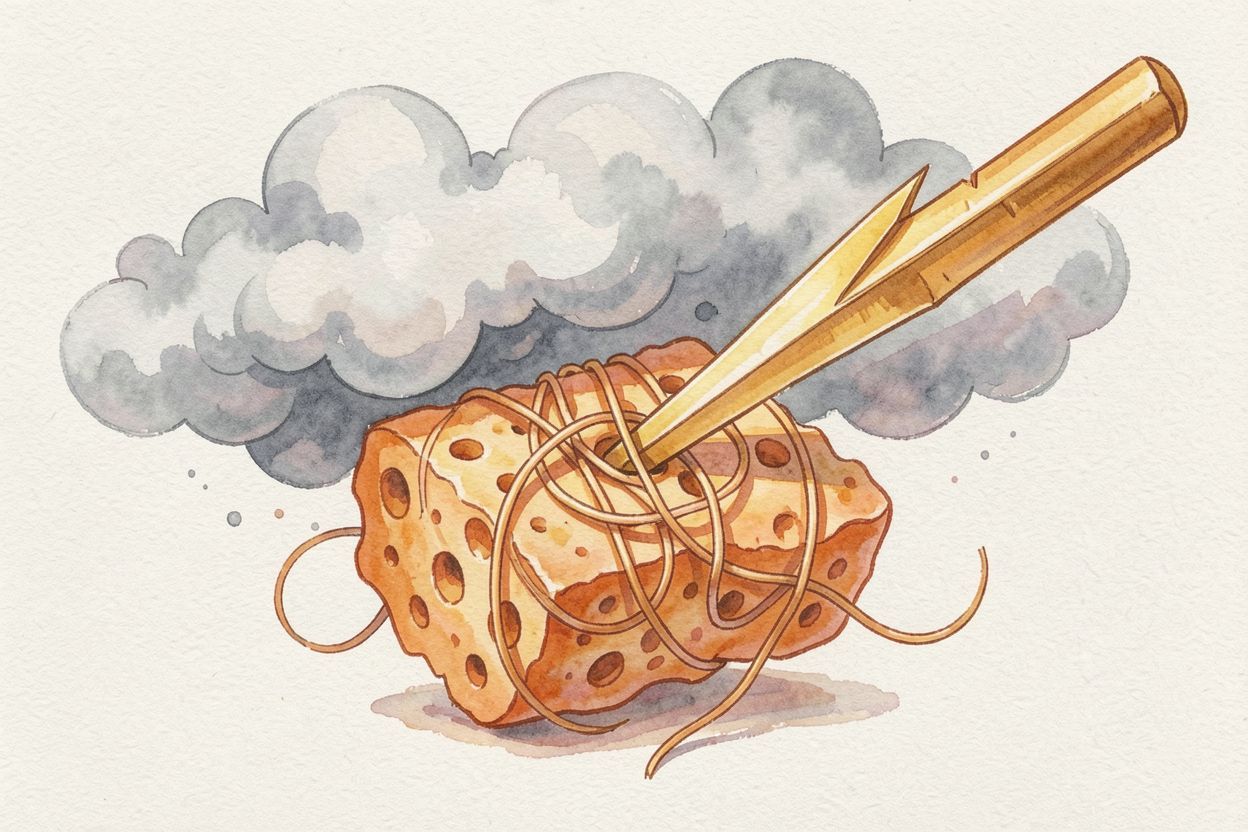
The highest-quality Sunday resets, according to wellness practitioners and organizational psychologists, combine what one researcher calls «the sponge and the scalpel»—absorbing practical stress while performing precise emotional maintenance. This isn’t about having a «productive weekend»; it’s about strategic sequencing.
The formula that actually works involves four to six manageable practical tasks—laundry, meal planning for five days, a fifteen-minute schedule review, a family check-in—paired deliberately with genuine psychological nourishment. The practical tasks aren’t the self-care; they’re the foundation that allows self-care to exist. When you’ve selected produce for the week and clarified who’s driving carpool, you create the mental space necessary for the deeper work: the gratitude journaling that actually resets your threat-detection system, or the two hours in green spaces that, according to Lindywell Wellness research, measurably lowers cortisol and improves physical health markers.
But here’s where it gets interesting: the order matters less than the balance. Some people need to discharge the practical anxiety first—clearing the decks before they can sit with a meditation app. Others need the nourishment before they can face the grocery store. The research is emphatic on this point: there is no template. What works is personalization, even if that means your Sunday resets fluctuate weekly based on energy levels.
The Sleep Controversy: Morning People vs. The lie-in Loyalists
If there’s one battle that divides Sunday reset devotees, it’s the alarm clock. One faction insists on maximizing morning hours—waking with sunrise to capture the «fresh start» energy. The other faction treats Sunday as the one day to sleep without guilt, arguing that sleep deprivation compounds the Sunday Scaries more than any unemptied dishwasher ever could.
The research sides emphatically with Team Sleep, though it hedges on timing. Sleep, according to longitudinal health data, matters more than food or exercise for baseline human function. Yet the «right» amount of weekend sleep remains individual. The contradiction in the research is honest: some high-performers report that sleeping in leaves them groggy, while others find it essential for emotional regulation.
The compromise emerging from effective practitioners? Consistency in quality over quantity. If you’re waking with a hangover of anxiety, you’ve missed the window. If you’re catching up on arrears from the week, you’re probably on the right track. The key is treating sleep not as the thing you do after everything else, but as the gravitational center of the ritual.
Nature as Non-Negotiable: The 120-Minute Rule
Among all the Sunday prescriptions, one metric appears with surprising consistency: 120 minutes. That’s the weekly dose of green space exposure—parks, gardens, hiking trails, even urban trees—that research links to tangible health improvements and mental distress relief. It doesn’t have to happen all at once; four half-hour walks work as well as one long hike.
This finding cuts against the aesthetic version of self-care that dominates wellness culture. You don’t need a skincare fridge or a $200 bathrobe. You need contact with systems larger than yourself—photosynthesis, weather, dirt. The mechanism isn’t entirely understood, but the data suggests that nature exposure breaks the 80% mental loop, forcing the brain to process sensory information it can’t predict or control.
For those who can’t access wilderness, the research offers a modification: micro-moments. Five minutes of touching a tree trunk, ten minutes of cloud-watching, even tending houseplants with intention. The nourishment comes from attention shifting outward, interrupting the internal monologue of Sunday anxiety.
Why Your Best Friend’s Routine Might Drain You
The most important—and most ignored—finding across self-care research is that personalization is non-negotiable. The yoga class that saves your colleague might spike your social anxiety. The meticulous meal prep that organizes your sister’s week might feel like a never-ending chore-fest to you.
This explains why so many Sunday resets fail. We adopt rituals that look restorative from the outside—bullet journaling, elaborate bath ceremonies, family phone calls—without interrogating whether they actually lower our specific stress markers. The research suggests conducting a simple audit: notice which activities leave you feeling like you have more energy, versus which leave you feeling like you performed relaxation for an audience.
Soul-nourishing rituals, by definition, resist Instagramification. They might look like «jourdoodling» (combining journaling with blind contour drawing), or hugging trees (literally), or simply sitting in silence without the pressure to optimize the moment. The common thread is that they interrupt the cortisol cycle rather than masking it.
The Monday Morning Test
Ultimately, the only metric that matters for a Sunday ritual is how you feel Monday at 9 a.m. Not how aesthetic your evening was, not how clean your kitchen is, but whether you enter the week with reserves. The research is clear: effective Sunday self-care lowers cortisol, improves mood through endorphin release, and creates cognitive benefits that protect against memory decline.
But these benefits don’t come from perfection. They come from consistency in intention, even when execution is messy. Fifteen minutes of genuine connection beats an hour of performative rest. Two hours in nature outweighs an afternoon of «productive» social media management.
The Sunday Scaries may be real, but they’re not mandatory. The antidote isn’t a more elaborate routine—it’s a more honest one. Start with sleep. Add nature. Clear the decks enough that you can breathe. Then, and this is crucial, do the thing that actually makes you feel like yourself, even if it makes no sense to anyone else. That’s the ritual that nourishes.