
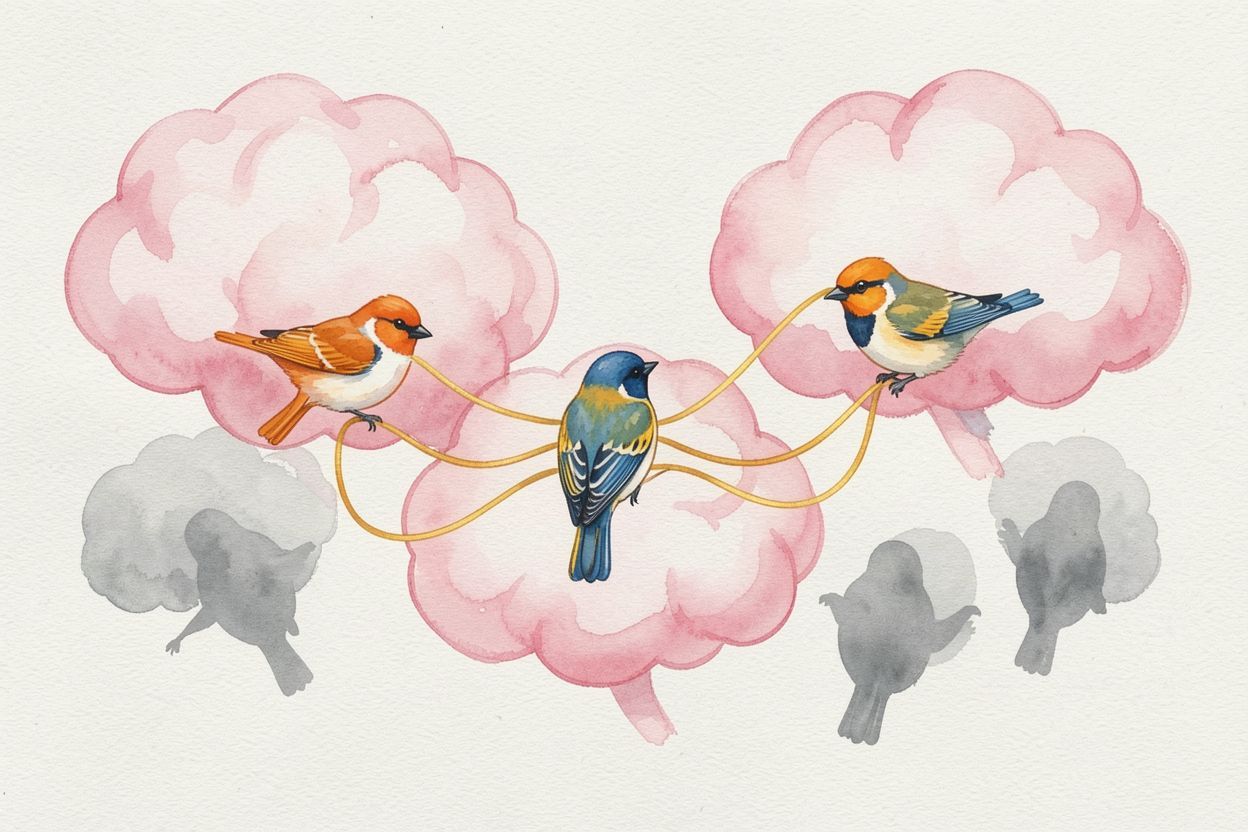

The Happiness Hack That Takes Less Time Than Brushing Your Teeth
Mark Twain claimed he could live for two months on a single good compliment. He never specified how long it took to deliver one, but modern researchers have clocked it: about five minutes, give or take. That’s the peculiar promise floating through the wellness industry right now—that happiness can be compressed into a handful of micro-habits, each no longer than a commercial break, capable of rewiring your brain before your coffee cools.
But here’s the twist the Instagram infographics won’t tell you: that exact list of “five habits, five minutes” doesn’t actually exist in the research. Not in the UC Berkeley studies. Not in the Yale happiness labs. Not in the American Heart Association’s protocols. It’s a content creation template, a headline writer’s fever dream. Yet beneath the marketing gloss, something real is happening. The science of tiny actions is robust; it’s just messier, more interesting, and ultimately more forgiving than the bullet points suggest.
Why Your Brain Loves «Too Small to Fail»
The neural mechanics are surprisingly straightforward. When you perform a micro-habit—say, three deep breaths before checking email or a 90-second gratitude jot—you’re not just managing your mood. You’re conducting live neurosurgery on your own basal ganglia.
«Micro-habits are tiny, 5-minute-or-less actions that can create a massive impact,» explains researcher Liz Moody, host of a podcast analyzing these behaviors. The mechanism isn’t willpower; it’s pathway-building. Each repetition lays down myelin, insulating neural circuits until the behavior becomes automatic. The American Heart Association calls this «habit stacking»—attaching a new, tiny behavior to an existing trigger, like taking three mindful breaths immediately after brushing your teeth.
The mathematics are brutal in your favor: a 1% daily improvement compounds to being 37 times better after one year. Not 37% better—37 times. The catch? Intensity is the enemy. The habits must be «too small to fail,» so minuscule that your prefrontal cortex doesn’t mount its usual resistance campaign.
The Trinity: Three Habits That Actually Survived Peer Review
Sift through the noise, and three practices emerge with actual academic armor.
First, the «Three Good Things» protocol. Originally developed by positive psychology founder Martin Seligman, the exercise asks you to write down three positive events from your day and, crucially, why they happened. UC Berkeley’s Greater Good Science Center found this practice increased happiness immediately, with benefits persisting at follow-ups six months later—even when tested across diverse global populations. The purists insist on ten minutes, but researchers admit the core benefit likely survives a five-minute truncation. «By remembering and listing three positive things,» Berkeley notes, «you tune into the sources of goodness in your life.»
Second, the strategic nothingness of tiny breaks. Dr. Laurie Santos, the Yale professor whose happiness course became the university’s most popular ever, discovered something counterintuitive: giving yourself just two to five minutes between tasks creates disproportionate well-being gains. These micro-pauses combat «time famine»—that dizzying sense of never having enough hours—by signaling to your nervous system that you’re not in constant flight mode.
Third, the avian intervention. In perhaps the most charming finding in modern psychology, Santos also found that watching birds improves well-being for up to eight hours afterward. Not hours of birdwatching—just minutes of observing sparrows at a feeder or pigeons on a windowsill. It acts as a natural mindfulness exercise, anchoring attention to the present without the friction of formal meditation.
The Grey Zone: Where Anecdote Meets Biology
Beyond the holy trinity, the evidence gets softer, but the stories get better.
Take the morning sunlight protocol. Within an hour of waking, five minutes of indirect natural light regulates melatonin and cortisol, potentially stabilizing mood and sleep cycles for the entire day. Verywell Mind reports this as almost pharmaceutical in its precision, though the original research tracks longer exposure times.
Then there’s the compliment economy. Giving genuine praise creates what researchers call a «virtuous circle» of oxytocin release for both giver and receiver. It requires no app, no subscription, and roughly the time it takes to wait for an elevator.
Even pet interaction gets a nod—talking to your dog or cat for five minutes apparently lowers cortisol, though here we stray deep into anecdotal territory, with studies relying more on owner self-reports than double-blind trials.
The Fifth Habit Is Honesty
Here’s where this article must diverge from the listicles. The research is clear that consistency trumps uniqueness. The American Heart Association doesn’t prescribe five specific rituals; it teaches a method—the stacking. The podcasters promising nine habits (all under five minutes) never actually list them in the available transcripts. The «five» in «five micro-habits» is a narrative convenience, not a neurological necessity.
What the data actually supports is a portfolio approach: pick three that fit your life, add a fourth if you’re ambitious, and remember that missing a day doesn’t unravel the neural pathways you’ve built. The 5-minute constraint itself is somewhat arbitrary—some practices work in two, others need ten. The magic number is consistency, not chronometry.
Starting Tomorrow (Not Next Monday)
If you want to test this without becoming a self-help cliché, try the Santos Stack: two minutes of birdwatching while your coffee brews, followed by a deliberate two-minute break before you open your laptop, capped by writing one good thing that happened yesterday on a sticky note. Total time: under five minutes. Scientific validity: surprisingly high.
The happiness industry will keep selling you five perfect habits because lists sell. But your brain doesn’t care about the perfect list. It cares about the repetition, however modest, however brief. As the research keeps proving, you don’t need to overhaul your life to change it—you just need to outlast your own urge to optimize.


