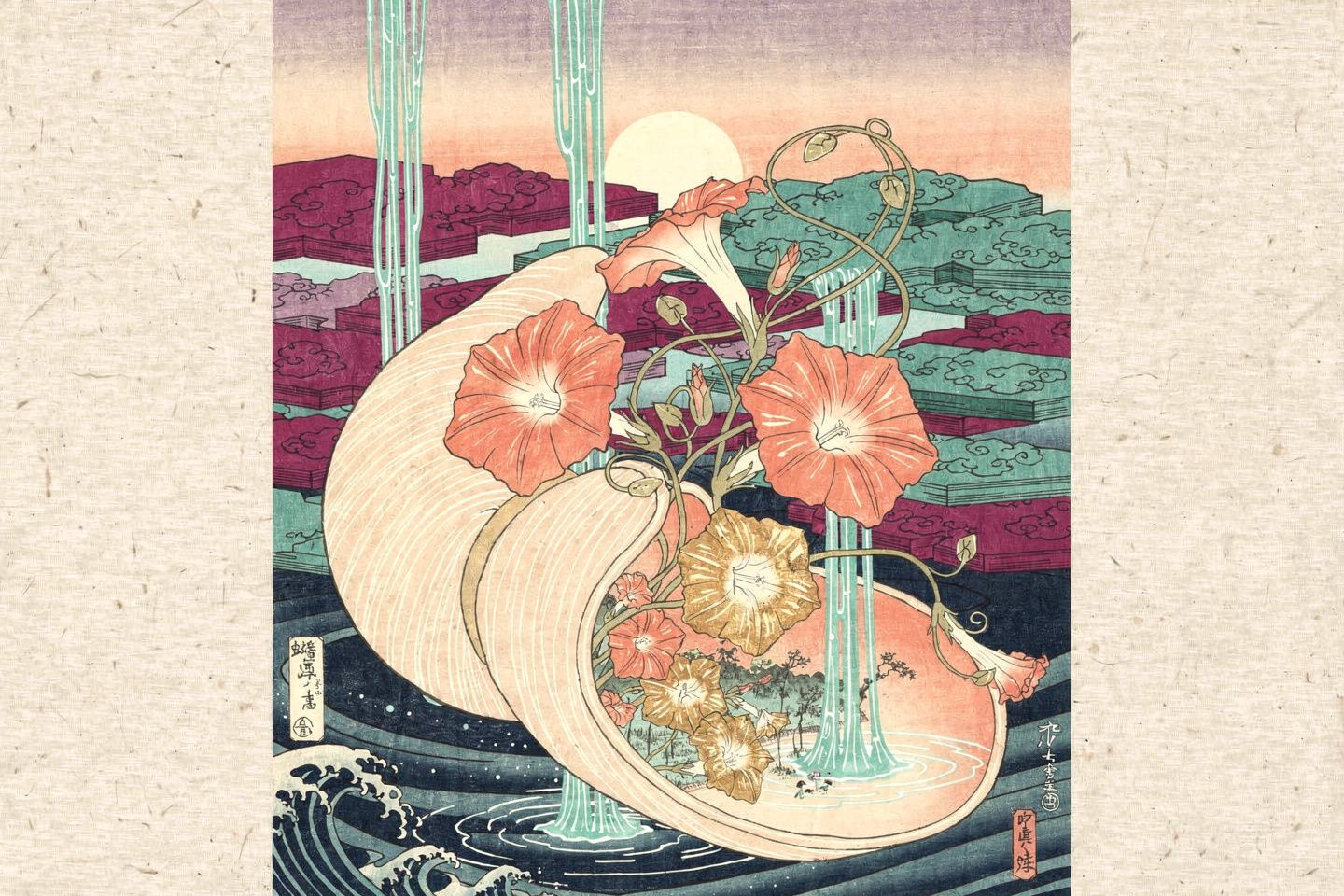

The Diagram That Lied to You
You have almost certainly seen the image: four overlapping circles labeled «what you love,» «what you’re good at,» «what the world needs,» and «what you can be paid for,» their intersection gleaming with the promise of your perfect life’s purpose. It has populated LinkedIn posts, corporate retreats, and self-help best-sellers for nearly a decade, presented as an ancient Japanese secret to enlightenment. Here is the uncomfortable truth: that diagram is about as authentically Japanese as a California roll.
The graphic was born not in a Kyoto monastery but in the mind of Spanish entrepreneur Andrés Zuzunaga, who sketched it in 2011 as a «purpose diagram» for career alignment. Three years later, British blogger Marc Winn watched Dan Buettner’s TED Talk about Okinawan longevity, plucked the word «ikigai» from the presentation, and stapled it onto Zuzunaga’s four circles. By 2016, when authors Héctor García and Francesc Miralles published *Ikigai: The Japanese Secret to a Long and Happy Life*, the hybrid creature had gone viral. The result? A profound cultural translation error that has left millions anxiously hunting for a singular, monetizable life mission while missing the actual philosophy entirely.
The Psychiatrist and the Leprosy Ward
To understand what ikigai actually is, we must travel back to 1966, to the book *On the Meaning of Life* by Dr. Mieko Kamiya, a psychiatrist who spent years treating leprosy patients cast out from Japanese society. These were individuals stripped of economic utility, social standing, and physical health—the antithesis of the successful career the Western diagram demands. Yet Kamiya observed something curious: many found a «joy that springs up from the bottom of one’s stomach,» a forward-looking conviction that persisted despite suffering.
Kamiya called this *ikigai*, and she drew a sharp distinction between it and happiness. Happiness, she argued, is temporary and externally conditioned—a sunny day, a pay raise, a compliment. Ikigai is resilient. It is the reason you open your eyes in the morning even when you are miserable. In the Western framework, a leprosy patient with no job and no «marketable skills» would be failing at life. In Kamiya’s framework, they could be living with profound purpose.
This is where it gets interesting. The word itself predates Kamiya by centuries, originating in the Heian period (794–1185 CE). It combines *iki* (life, living) with *gai* (worth, value, effect). Etymologically, *gai* connects to *kai*—seashells, which functioned as currency and held tangible worth in ancient Japan. But over time, the concept migrated away from material exchange and toward what Japanese call *seikatsu*—everyday life—not *jinsei*, a grand lifetime destiny.
The «Only I Can Do This» Distinction
If you want to find your authentic ikigai, forget the Venn diagram’s demand for economic viability. In a 2010 national survey, only 31% of Japanese people identified their work as their ikigai. The rest found it in raising children, caring for aging parents, gardening, community rituals, or conversations with friends—activities that generate deep conviction but not income.
Neuroscientist Ken Mogi, author of *The Little Book of Ikigai*, describes the feeling as a sense that «only I can do this work»—not because you are the best in the competitive marketplace, but because you occupy a unique position in your particular web of relationships. A grandmother watching her grandchildren, a man sweeping the train station platform with meticulous care, a teenager teaching coding to neighborhood kids—these are ikigai. As Spanish author Anaïs Bock notes in her critique of the diagram, the Western version is considered «fundamentally wrong» by Japanese scholars because its emphasis on payment excludes the very activities—family care, unpaid craft, local service—that traditionally anchor a life worth living.
But that’s only half the story. The Western model also misunderstands the temporality. Where the diagram suggests a static destination—the perfect career you must find—traditional ikigai is fluid. It evolves as you move from parenting to retirement, from health to illness, from one community to another. It is not a product but a process.
The Okinawan Mystery Is Not What You Think
The longevity statistics are real and striking. Okinawa, Japan’s southern prefecture, hosts centenarians at three times the Japanese national average. Researchers attribute part of this to *ikigai*, estimating that a strong sense of purpose correlates with two to seven additional years of life expectancy through stress buffering and sustained social engagement.
However, the Blue Zones research reveals something the Instagram infographics omit: Okinawan ikigai is rarely grandiose. Elders articulate their purpose not as «disrupting the tech industry» but as tending a garden, caring for a great-grandchild, or meeting with their *moai*—a traditional mutual support group. The purpose is modest, daily, and socially embedded. It is not a «side hustle» or a personal brand. It is the 97-year-old woman who says she wakes up to water her morning glories, or the centenarian fisherman who knows his specific bay needs his particular knowledge.
This is the crucial distinction the Western mind resists. We have been trained to monetize everything, even spirituality. When we encounter a concept like ikigai, our first instinct is to optimize it, career-ify it, turn it into a competency framework. But as clinical psychologist Akihiro Hasegawa’s research confirms, authentic ikigai aligns with *seikatsu*—the sum of small daily joys—not with *jinsei*—a heroic life mission.
The Five Pillars and the Monday Morning Test
So if not the diagram, then what? Ken Mogi proposes five pillars for locating your ikigai in the wild: Start small; Liberation from self; Harmony and sustainability; Joy of little things; and Being present here and now.
Notice what is missing. There is no pillar about identifying your unique market value or networking strategically. Instead, the practice asks you to notice where you already lose track of time, where you feel the «irreplaceable contribution» Kamiya described, and crucially, where you can serve without calculation of return.
If you want to apply this without boarding a plane to Okinawa, try the Monday morning test. Rather than asking «What is my passion?» or «What can I be paid for?», ask: What makes me want to open my eyes tomorrow? It might be the particular way you arrange flowers, the specific neighbor who relies on your check-ins, or the unfinished陶瓷 (pottery) project on your table. As Mogi notes, you do not need to master these things; the pursuit itself, even clumsy and unpaid, can be the ikigai.
The Dangerous Misunderstanding
There is a cost to the Venn diagram’s dominance. By framing purpose as the intersection of passion and profit, it creates anxiety. When you cannot find a job that perfectly combines all four circles—and almost no one can—you feel you have failed at the very project of living. You become a «work in progress» rather than a being already embedded in meaning.
The Japanese government recognized this distortion in 2022 when it published an official ikigai webpage emphasizing daily life over career achievement. The message was clear: stop hunting for the perfect job and start noticing the small, useful things only you can do right now.
The irony is that the diagram promises sustainable happiness while delivering the opposite—restless optimization. The authentic concept offers something tougher and more durable: the knowledge that your life matters because of how you sweep the floor, how you listen to a friend, how you tend to the small patch of earth that is yours. It is not a strategy for success. It is a reason to get up.