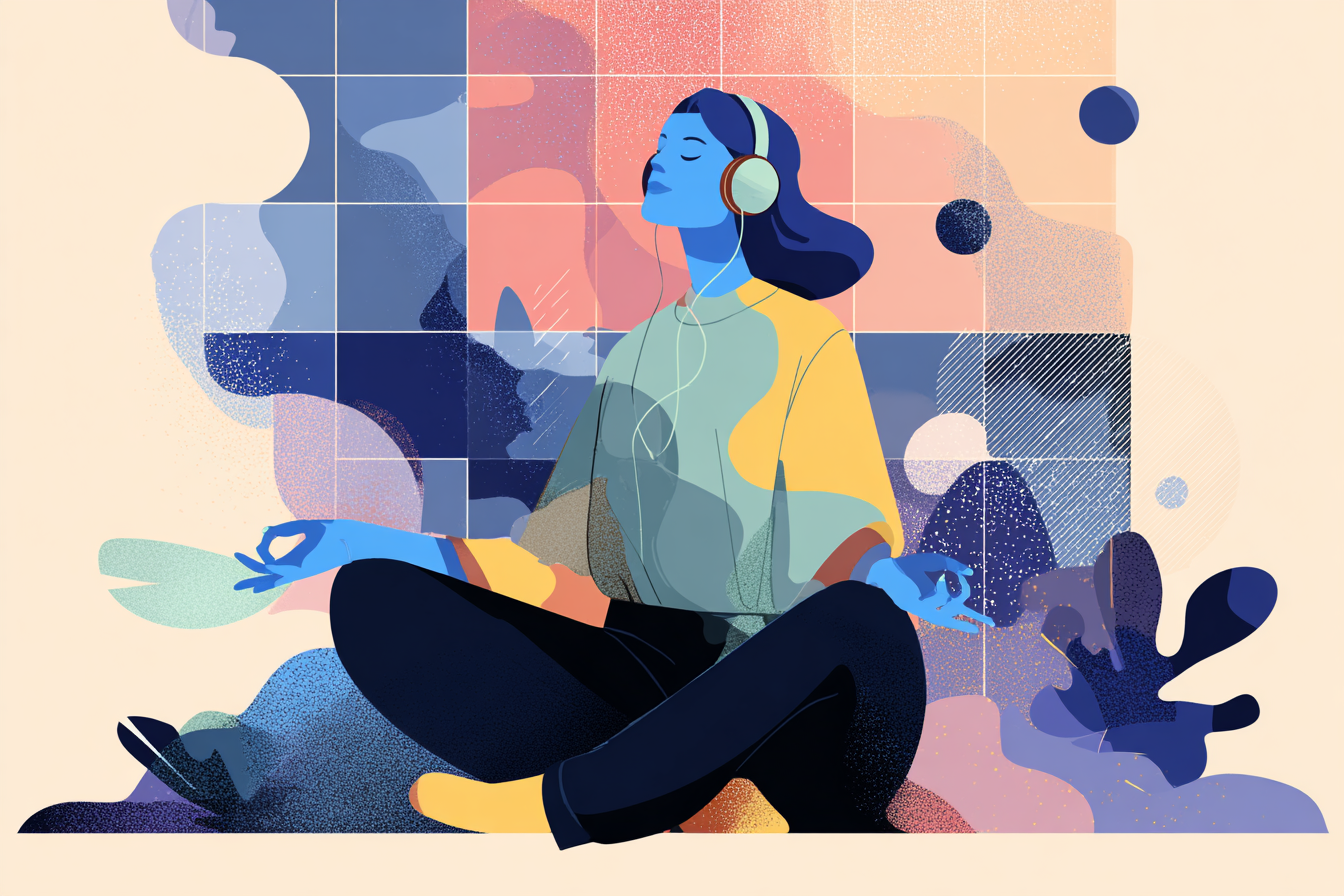

The Strangest Subscription Service: Paying Strangers to Tell You to Breathe
You have been breathing unconsciously since the moment you left the womb. Your autonomic nervous system handles roughly 20,000 breaths daily without invoicing you a cent. Yet here you are, considering downloading an app where a former marketing executive in Venice Beach will charge $12.99 monthly to remind you that air moves in and out of your lungs.
The contradiction feels absurd. But that’s exactly why guided meditation works—because the hardest thing for a beginner isn’t learning a new skill; it’s unlearning the compulsion to be skilled at something.
Most people quit meditation within two weeks. Not because they lack discipline, but because they attempt it backwards. They sit cross-legged in silence, wait for their thoughts to evaporate like morning fog, and when the mental chatter continues—and it always continues—they conclude they’ve failed. The modern wellness industry, with its stock photos of women with perfect topknots levitating above yoga mats, has peddled a dangerous fiction: that meditation is about achieving mental blankness.
The reality is squishier, noisier, and far more interesting.
Why Your Brain Sabotages the Silence
When you close your eyes and attempt to «clear your mind,» your brain doesn’t relax; it panics. Neuroscientists at Yale and the University of Bergen discovered that the default mode network—the brain’s psychological «autopilot» responsible for rumination and self-referential thinking—actually increases activity when novices attempt traditional silent meditation. Without an anchor, your mind treats the void like a blank document and immediately starts typing your grocery list, that awkward conversation from 2019, and whether raccoons have thumbs.
This is where guided meditation diverges from the stereotype. Instead of demanding emptiness, it offers specificity. A voice—human or synthesized—provides a moving target for your attention. Listen to the sounds in the room. Notice the weight of your shoulders. Count backward from ten. These aren’t relaxation techniques; they’re cognitive lures, baited hooks designed to catch your mind before it avalanches into anxiety.
Think of silent meditation as being tossed into the ocean and told to swim. Guided meditation is the swimming instructor who lets you hold the kickboard. Both get you wet; only one keeps beginners from drowning.
The 90-Second Threshold Nobody Talks About
Here’s what the Instagram gurus omit: your first session will likely feel pointless. Not transcendent. Not blissful. Just… administratively dull.
Research from the University of California suggests that novice meditators require approximately six to eight sessions before their brains begin showing measurable changes in amygdala reactivity—the neurological seat of fight-or-flight. But something curious happens around the 90-second mark of a guided practice, long before those structural changes occur.
At roughly minute one-and-a-half, most beginners experience what researchers call «the drop.» Your breathing unconsciously deepens. Your heart rate variability—an indicator of stress resilience—begins to synchronize with the guide’s cadence. You haven’t reached enlightenment; you’ve simply stopped trying so hard. The paradox of guided meditation is that it succeeds precisely when you stop caring whether you’re meditating «correctly.»
The trick is surviving the first 89 seconds. Most guided sessions for beginners front-load the instruction with body scans or breath counts specifically to bridge this gap. When Andy Puddicombe, the co-founder of Headspace and a former Buddhist monk, designed the app’s foundational course, he structured the first ten sessions to never exceed three minutes. Not because three minutes is magically transformative, but because it’s shorter than the resistance your ego can sustain.
The Voice in Your Head Has an Accent
Not all guidance is created equal, and the marketplace reflects our deepest anxieties about vulnerability. You can now be soothed by Scottish wilderness guides, ASMR artists whispering into binaural microphones, or AI-generated voices calibrated to frequencies allegedly resonant with your particular trauma history.
The evidence on effectiveness is murkier than the marketing suggests. A 2022 meta-analysis published in JAMA Internal Medicine found that live-guided meditation (an actual human in the room) showed significantly stronger effects on reducing anxiety than app-based recordings, though both outperformed silent solo practice for beginners. However, the adherence rates—actually showing up—favored the apps. Convenience, it seems, often trumps efficacy.
More intriguing is the «voice trust» phenomenon. People tend to stick with the first voice that doesn’t annoy them within thirty seconds. Whether that’s Tara Brach’s psychotherapeutic warmth or a stern Zen master decreeing existential truths matters less than consistency. Your brain needs a familiar narrator to trust before it will lower its defenses.
But there’s a shadow side to this outsourcing of inner silence. Critics, including some Buddhist teachers, warn that guided meditation creates a «helplessness of attention»—a dependency where practitioners cannot self-regulate without external prompting. It’s the difference between learning to cook and becoming dependent on meal kits. The research is split: some studies suggest guided practice eventually transfers to unguided competence; others indicate that beginners who start with apps often plateau, unable to sit in silence without the crutch of narration.
The Embarrassing Secret of «Successful» Meditators
If you interview consistent practitioners—those annoying friends who claim they «can’t start their day without it»—they’ll describe benefits that sound suspiciously like side effects of sitting still: better sleep, less reactive emails, fewer Sunday night stomach aches. What they rarely confess is the boredom.
Guided meditation for beginners works not because the guidance is profound, but because it permits you to be bored without being alone. Boredom, that rare experience in an age of infinite scroll, is the gateway drug. When you remove the option to check your phone, answer an email, or optimize your existence, your brain eventually stops hunting for dopamine and starts manufacturing its own. This is the «benefit» hiding behind all the mindfulness buzzwords: you’re simply remembering how to exist without productivity.
The practice isn’t about becoming peaceful. It’s about becoming familiar with your own restlessness without flinching.
Start With the Smallest Possible Bet
You don’t need a cushion facing east, a subscription service, or a weekend retreat in Joshua Tree. You need a voice—any voice—and a willingness to fail silently for ninety seconds.
Begin with guided sessions under five minutes, preferably at the same daily anchor point: immediately after coffee, or right before your afternoon energy crash. Don’t meditate because you want to become enlightened; meditate because you want to observe the exact texture of your own impatience without fixing it.
The voice guiding you isn’t transporting you somewhere else. It’s simply proving that you can survive your own company without checking out. That skill, it turns out, is worth far more than $12.99 a month.